Monday, May 22, 2024

Hormuz Strait Disruption Delays CNC Tool & Mold Shipments to Europe/Middle East by 12–18 Days
by
Published
Views:
On 31 May 2026, U.S. military operations in the Strait of Hormuz forced 118 commercial vessels to reroute and left five ships non-operational—triggering a surge in global oil prices and prompting structural reconfiguration of Red Sea–Persian Gulf shipping networks. This incident has directly impacted maritime transport of CNC machining equipment, precision tooling, and hardware components moving between Asia and European or Middle Eastern markets via the Suez Canal.
Confirmed Event Facts
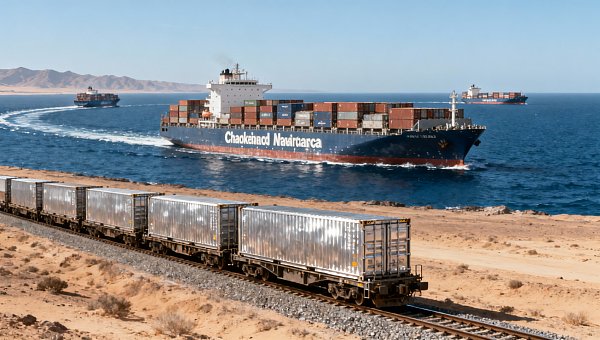
As of 31 May 2026, U.S. naval activity in the Strait of Hormuz caused 118 merchant vessels to alter course; five vessels were reported incapacitated. The disruption contributed to sharp increases in international crude oil prices and initiated a realignment of maritime logistics across the Red Sea and Persian Gulf. Shipping lanes for CNC machinery, precision molds, and related hardware components bound for Europe and the Middle East—traditionally routed through the Suez Canal—have been significantly affected. Multiple China–Europe rail freight operators reported surges in urgent booking requests. However, rail transport currently carries a 35% premium over sea freight, with delivery timelines exhibiting greater volatility—impacting overseas distributors’ inventory planning and end-customer delivery commitments.
Impact Across Supply Chain Roles
Direct Exporters & Importers
These enterprises face immediate delays in fulfilling orders for CNC tools and molds destined for EU or GCC markets. Transit time extensions (12–18 days) risk breaching contractual delivery windows, increasing exposure to penalty clauses and customer dissatisfaction.
Raw Material & Component Procurement Firms
Procurement teams sourcing critical subcomponents—such as hardened steel inserts, carbide cutting tips, or servo-driven mold actuators—must now reassess lead times from Asian suppliers. Extended ocean transit undermines just-in-time replenishment models and may trigger safety stock adjustments.
Machining & Precision Manufacturing Companies
Manufacturers relying on imported CNC machines, rotary tables, or high-precision metrology equipment face delayed commissioning schedules. Longer wait times affect capacity ramp-up plans, production line balancing, and new product introduction timelines.
Logistics & Freight Forwarding Providers
Supply chain service providers are managing increased demand for multimodal alternatives—including rail and air consolidation—but must navigate volatile pricing, limited rail container availability, and inconsistent documentation handling across border checkpoints in Central Asia.
Key Operational Priorities for Enterprises
Reassess Delivery Commitments & Procurement Calendars
Re-evaluate all open purchase orders and sales contracts with scheduled deliveries between June and September 2026. Adjust internal procurement planning cycles to accommodate minimum +12-day buffer for sea freight; factor in additional variability when booking rail alternatives.
Validate Multimodal Documentation & Compliance Readiness
Confirm that export declarations, CE marking documentation, ATEX compliance files (where applicable), and EN ISO 9001–certified manufacturing records are fully aligned with both maritime and rail customs requirements across Kazakhstan, Belarus, Poland, and Germany.
Strengthen Supplier Communication on Lead Time Transparency
Require Tier-1 suppliers to provide updated, date-stamped lead time forecasts—not only for finished goods but also for long-lead raw materials (e.g., P20 or H13 tool steels) and certified calibration reports for measurement instruments shipped with equipment.
Review Incoterms® Allocation of Transport Risk
Verify whether current contracts use Incoterms® 2020 rules appropriate for disrupted routes—e.g., shifting from CIF to DAP for rail shipments or incorporating explicit force majeure clauses covering geopolitical maritime restrictions in Clause 7.2 of the contract.
Industry Observation: Beyond Short-Term Rerouting
Analysis shows this event is accelerating structural shifts—not merely logistical detours. From an industry perspective, it highlights growing sensitivity of high-precision capital equipment supply chains to narrow maritime chokepoints. What deserves closer attention is how rapidly rail-capable certification frameworks (e.g., TSI conformity for rail-compatible packaging, EN 12663-2 structural load testing for containerized machinery) are becoming de facto prerequisites—not optional enhancements—for exporters targeting EU and EAEU markets. Observably, manufacturers investing in modular packaging design, dual-mode transport documentation, and pre-certified logistics partners are experiencing smoother transitions. It is more appropriate to understand this as a catalyst for upstream standardization—not just a transient delay.
Strategic Implications for the Precision Engineering Sector
This disruption underscores that reliability in global tooling and mold supply chains no longer hinges solely on production capability or cost efficiency—it increasingly depends on integrated transport resilience, regulatory agility, and cross-modal compliance readiness. While the Strait of Hormuz situation remains fluid, its lasting effect may be a recalibration of ‘lead time’ from a purely operational metric to a multidimensional indicator encompassing certification validity, route diversification, and documentation portability.
Source Attribution & Ongoing Monitoring Guidance
This article synthesizes information provided in the original briefing: title, event date (31 May 2026), and factual summary. Specific official source links were not provided in the input and should be verified continuously. Stakeholders are advised to monitor updates from the International Maritime Organization (IMO), European Union Agency for Railways (ERA), and national customs administrations—including evolving guidance on multimodal transit declarations, temporary tariff suspensions, and revised technical acceptance criteria for rail-shipped industrial equipment. Continued observation is warranted for policy implementation details, certification enforcement interpretations, tender specification amendments, and sectoral feedback on rail capacity allocation mechanisms.

The Archive Newsletter
Critical industrial intelligence delivered every Tuesday. Peer-reviewed summaries of the week's most impactful logistics and market shifts.