Monday, May 22, 2024

Japan’s April Industrial Output Up 2.3% YoY; Auto Electronics & Precision Mold Orders Rise
by
Published
Views:
On May 30, 2026, Japan’s Ministry of Internal Affairs and Communications reported that industrial production rose 2.3% year-on-year in April — significantly exceeding the market expectation of 0.7%. Notably, orders for automotive components, semiconductor packaging equipment molds, and SMT precision fixtures increased by 12.6% month-on-month. This development signals strengthening restocking demand among Japanese manufacturers and presents a short-term uplift for exports of related hardware components and precision tooling from China.
Event Overview
According to official data released by Japan’s Ministry of Internal Affairs and Communications on May 30, 2026, Japan’s industrial production index grew by 2.3% year-on-year in April 2026. The report further specified a 12.6% month-on-month increase in orders for automotive parts, molds used in semiconductor packaging equipment, and SMT (Surface Mount Technology) precision jigs and fixtures.
Industries Affected
Direct Exporters to Japan
Companies exporting automotive electronics, precision molds, or SMT tooling to Japanese manufacturers face immediate demand-side tailwinds. The 12.6% MoM order growth reflects active restocking — not just seasonal adjustment — suggesting near-term shipment volume and lead-time pressure may rise.
Raw Material Suppliers for Precision Tooling
Suppliers of high-grade tool steels, carbide blanks, or specialized coatings used in mold and jig manufacturing may see upstream order acceleration. Since mold and fixture production lead times often stretch 4–8 weeks, material procurement cycles are likely tightening ahead of final assembly.
Contract Manufacturers Serving Japanese OEMs
EMS (Electronics Manufacturing Services) and Tier-2/3 suppliers producing automotive ECUs, sensor modules, or packaging-integrated assemblies may experience revised forecast calls or expedited delivery requests — especially those with direct supply relationships to Japanese auto or semiconductor equipment makers.
Logistics & Trade Compliance Service Providers
Firms offering Japan-focused air freight consolidation, JIS-compliant documentation support, or customs brokerage for precision machinery/components may observe higher inquiry volumes for time-sensitive shipments, particularly for air-freighted molds and small-batch SMT tooling.
What Relevant Companies or Practitioners Should Monitor and Do
Track official revisions to Japan’s production outlook and inventory-to-sales ratio data
The Ministry of Economy, Trade and Industry (METI) releases monthly inventory and shipment statistics. A sustained rise in the inventory-to-sales ratio beyond April would suggest restocking is broadening — not isolated — and could extend demand momentum into Q3.
Monitor order patterns for specific product categories: automotive powertrain ECUs, flip-chip packaging molds, and fine-pitch SMT nozzles or vacuum chucks
These subcategories showed strongest traction in recent Japanese procurement surveys. Divergence between overall mold orders and these niche segments may indicate where capacity constraints or margin upside are emerging.
Distinguish between policy-driven signals and actual order conversion
The current uptick follows Japan’s April 2026 revision to its ‘Manufacturing Revitalization Roadmap’, but no new subsidies or tariff adjustments were announced concurrently. Therefore, this is best understood as operational restocking — not policy-triggered investment — meaning responsiveness matters more than long-term planning at this stage.
Pre-position logistics capacity and confirm material availability for key SKUs
Given the 12.6% MoM order jump, firms should verify stock levels and lead times for commonly used mold base materials (e.g., NAK80, SKD61), hardened stainless inserts, and custom-machined SMT nozzle sets — especially those with Japanese OEM part numbers.
Editorial Perspective / Industry Observation
Observably, this data point functions primarily as a near-term demand signal rather than evidence of structural recovery. The outperformance relative to consensus (2.3% vs. 0.7%) stems largely from inventory replenishment after Q1 underproduction — not new capex commitments. Analysis shows limited correlation so far with broader capital expenditure indices in Japan’s electronics or auto sectors. From an industry perspective, it is better interpreted as a tactical inflection in procurement rhythm, not a strategic shift. Continued monitoring of May’s preliminary output data — due June 30 — will clarify whether momentum holds or normalizes.
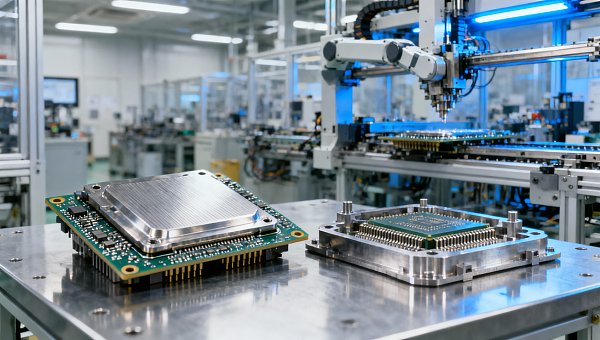
In summary, the April industrial production figure reflects a measurable, short-term rebound in Japanese manufacturing demand — concentrated in automotive electronics and precision tooling supply chains. It does not yet indicate a broad-based revival in domestic investment or export-led expansion. For stakeholders, the appropriate stance is responsive readiness: aligning capacity, logistics, and communication cadence with confirmed order patterns — not extrapolating from a single month’s data.
Source: Ministry of Internal Affairs and Communications, Japan (released May 30, 2026). Note: Further confirmation of trend sustainability is pending METI’s May 2026 industrial shipment and inventory data, scheduled for release on June 30, 2026.

The Archive Newsletter
Critical industrial intelligence delivered every Tuesday. Peer-reviewed summaries of the week's most impactful logistics and market shifts.