Monday, May 22, 2024

Top Europe-China Trucking Providers Tested: On-Time Delivery Stability Emerges as Key Selection Criterion for Export Manufacturers
by
Published
Views:
The exact event date was not specified; however, a comprehensive operational assessment titled Full-Dimensional Benchmark Report on Leading Europe-China Trucking Service Providers, released on 30 May 2026, has drawn significant attention from export-oriented manufacturers—particularly in the automotive parts and mechanical equipment sectors—due to its direct implications for supply chain resilience, compliance readiness, and cross-border delivery reliability.
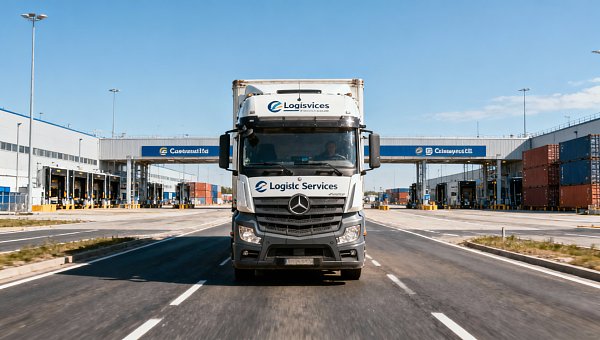
Key Findings from the 2026 Benchmark Report
Released on 30 May 2026, the report evaluated four leading Europe-China road freight service providers during the Q4 peak season. Testing focused on three critical operational dimensions: (1) warehouse booking resilience under high-volume pressure; (2) standardized handling procedures for oversized and heavy cargo; and (3) speed and transparency of claims processing. Among the four providers assessed, only two demonstrated end-to-end operational control across the entire transport chain. The remaining two exhibited documented delays exceeding 72 hours at key border checkpoints and cargo damage rates surpassing 8%.
Impact Across Supply Chain Roles
Direct Export Enterprises
These companies face heightened scheduling risk due to unpredictable transit times and elevated cargo loss exposure—especially when shipping high-value, time-sensitive components. Impact manifests most acutely in order fulfilment timelines, customer SLA adherence, and inventory buffer planning.
Raw Material Procurement Entities
Procurement teams must now reassess vendor logistics dependencies, as delayed inbound shipments of critical inputs can trigger production line stoppages. Attention should shift toward verifying upstream carrier integration and customs clearance autonomy—not just price or quoted lead time.
Manufacturing and Assembly Firms
For OEMs and Tier-1 suppliers, inconsistent loading/unloading protocols directly affect packaging integrity and post-arrival quality inspection outcomes. This increases the need for pre-shipment condition documentation and real-time cargo monitoring capabilities.
Supply Chain Service Providers
Third-party logistics (3PL) and freight forwarders are under growing pressure to validate sub-contractor performance rigorously. Their ability to guarantee service-level commitments now hinges on demonstrable control over terminal handovers, border coordination, and incident resolution—not merely network coverage.
Strategic Priorities for Enterprise Decision-Makers
Evaluate Full-Chain Operational Autonomy, Not Just Brand Reputation
Rather than relying on marketing claims, procurement teams should request auditable evidence of self-managed warehousing, customs brokerage, border transit coordination, and last-mile delivery—particularly for Q4 campaigns.
Require Standardized Handling Protocols for Oversized Cargo
Given the high incidence of damage among mechanical equipment shipments, enterprises should mandate documented SOPs for securing, lifting, and unloading heavy items—and verify training records and equipment certification for handling crews.
Assess Claims Response Frameworks Before Contract Finalization
A responsive, transparent claims process is no longer ancillary—it’s a core reliability indicator. Buyers should require defined response SLAs (e.g., acknowledgment within 4 business hours, preliminary assessment within 48 hours) and audit rights to historical claim resolution data.
Industry Perspective: A Shift Toward Operational Transparency Over Network Scale
Analysis shows that this benchmark report signals a structural inflection point: selection criteria for cross-border road freight are evolving from geographic reach and volume discounts toward verifiable, real-time operational control. Observably, manufacturers in capital-intensive sectors are beginning to treat logistics providers as extended manufacturing partners—requiring shared KPIs, joint root-cause analysis for delays, and integrated digital visibility. It is more appropriate to understand this as a de facto tightening of service-level governance, driven by rising total cost of ownership from hidden delays and damage—not regulatory mandate, but market-led standardization.
Toward Resilient Cross-Border Freight Sourcing
This report does not introduce new legislation or certification requirements—but it crystallizes an emerging operational threshold for competitiveness in European-bound exports. For manufacturers, the takeaway is pragmatic: logistics selection is now inseparable from production planning, quality assurance, and financial risk management. Rational sourcing decisions will increasingly weigh measurable performance metrics over legacy relationships or broad network claims.
Source Attribution and Verification Guidance
This article synthesizes information provided in the original briefing—including the title, release date (30 May 2026), and factual summary of the benchmark report’s scope and findings. Specific official source links were not provided in the input and should be verified continuously. Stakeholders are advised to monitor updates from EU customs authorities, China’s General Administration of Customs (GACC), international freight associations, and industry consortia for evolving guidance on cross-border road transport standards, documentation harmonization, and incident reporting frameworks.

The Archive Newsletter
Critical industrial intelligence delivered every Tuesday. Peer-reviewed summaries of the week's most impactful logistics and market shifts.