Monday, May 22, 2024

China’s Zero-Tariff Policy for 53 African Countries Takes Effect
by
Published
Views:
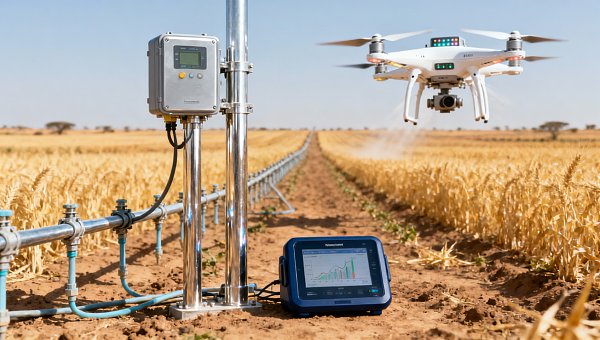
On May 1, 2026, China implemented a zero-tariff policy covering 98% of tariff lines for all 53 African countries with which it maintains diplomatic relations — excluding Eswatini, which lacks formal diplomatic ties. The measure directly affects exporters and importers of smart irrigation controllers, agricultural drones (Agri-Drones), harvest analytics terminals (Harvest Trends), and agricultural machinery — elevating price competitiveness and channel penetration efficiency for these products in African markets.
Event Overview
Effective May 1, 2026, China applied zero tariffs on 98% of tariff items for the 53 African countries that have established diplomatic relations with China. This policy does not extend to Eswatini, which remains subject to Most-Favoured-Nation (MFN) tariff rates. The covered products include agricultural machinery, smart irrigation controllers, Agri-Drones (full units), and Harvest Trends analysis terminals.
Industries Affected
Direct Exporters of Smart Irrigation Equipment
Manufacturers and exporters of smart irrigation controllers and related hardware benefit from immediate tariff elimination when shipping to the 53 eligible African markets. This lowers landed costs and strengthens pricing flexibility — particularly against non-Chinese suppliers still subject to MFN or preferential tariff schedules under other trade frameworks.
Agri-Drone Original Equipment Manufacturers (OEMs)
OEMs producing full-unit Agri-Drones for export face reduced entry barriers into targeted African markets. With zero tariffs applied at the border, lead times for customs clearance may shorten, and local distributors gain margin room for after-sales service bundling or localized technical support rollout.
Harvest Analytics Terminal Suppliers
Suppliers of Harvest Trends–type harvest analytics terminals — typically embedded software-hardware systems for yield forecasting and field-level decision support — see improved cost alignment with African agribusinesses’ budget constraints. Lower import duties may accelerate pilot deployments and integration into national digital agriculture initiatives.
African Importers & Distributors (Non-Eswatini Markets)
Importers in the 53 eligible countries gain predictable duty-free treatment for covered products, enabling more accurate landed-cost modeling and faster inventory planning. However, they must verify product eligibility under China’s Harmonized System (HS) code classifications and ensure origin documentation meets China’s certification requirements.
What Relevant Businesses or Practitioners Should Focus On
Monitor official HS code updates and implementation guidelines
While the policy covers “98% of tariff lines”, precise HS code coverage is subject to China’s official tariff schedule annexes. Exporters should cross-check product-specific codes against the latest Customs Tariff of the People’s Republic of China (2026 edition) before shipment.
Verify eligibility of destination markets and product scope
Eswatini is explicitly excluded due to absence of diplomatic relations. Firms serving Southern African markets must confirm whether their consignments are routed through or destined for Eswatini — as MFN rates still apply there. No transitional arrangements or exceptions have been announced.
Distinguish between policy announcement and operational readiness
The policy entered force on May 1, 2026, but actual customs application depends on local African port authorities’ system updates and staff training. Early adopters should test first shipments with small batches and track clearance timelines and documentation feedback.
Prepare origin certification and supply chain documentation
Zero-tariff treatment requires valid Certificate of Origin issued by authorized Chinese bodies (e.g., CCPIT or local customs). Exporters must ensure traceability from component sourcing to final assembly to meet origin rules — especially for Agri-Drones integrating imported sensors or firmware.
Editorial Perspective / Industry Observation
Observably, this policy functions primarily as a trade facilitation signal rather than an immediate market transformation tool. Its impact hinges on two factors: first, whether African customs administrations implement the tariff reduction uniformly across ports; second, whether local demand for smart irrigation and drone-based analytics has matured sufficiently to absorb increased supply. Analysis shows that while price competitiveness improves, adoption acceleration will depend more on financing mechanisms, after-sales infrastructure, and regulatory acceptance of drone operations than on tariff levels alone. From an industry perspective, this is better understood as a structural enabler — one that lowers a known barrier, but does not resolve adjacent constraints such as maintenance networks or data governance frameworks.
Conclusion
This zero-tariff policy marks a calibrated expansion of China’s trade engagement with Africa in precision agriculture technology. It does not constitute a blanket market opening, nor does it override non-tariff requirements. For stakeholders, it is best interpreted as a confirmed, time-bound opportunity to optimize pricing and logistics — not as a de facto demand catalyst. Rational assessment calls for aligning tariff advantage with on-the-ground commercial readiness, rather than assuming automatic volume growth.
Information Sources
Main source: Official announcement by China’s Ministry of Commerce (MOFCOM), effective May 1, 2026.
Note: Implementation details — including HS code lists, origin certification procedures, and African customs rollout status — remain subject to ongoing verification and may evolve through mid-2026.

The Archive Newsletter
Critical industrial intelligence delivered every Tuesday. Peer-reviewed summaries of the week's most impactful logistics and market shifts.