Monday, May 22, 2024

Second Tranche of 62.5B Yuan Ultra-Long-Term Treasury Bonds for Consumer Trade-In & Smart Farm Equipment Subsidies
by
Published
Views:
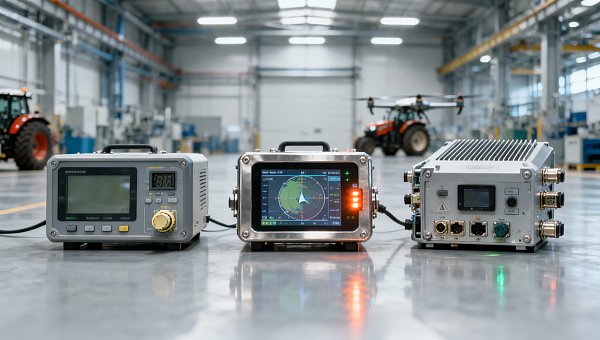
On May 4, China’s Ministry of Finance announced the allocation of a second tranche of 62.5 billion yuan in ultra-long-term special treasury bonds to support consumer goods trade-in programs—with explicit emphasis on boosting subsidies for smart agricultural equipment, including intelligent irrigation controllers,北斗 navigation terminals for tractors, and flight control modules for agricultural drones. This development signals tangible implications for manufacturers, exporters, and international importers—particularly those engaged in smart irrigation systems targeting Southeast Asia and Africa.
Event Overview
On May 4, the Ministry of Finance confirmed that 62.5 billion yuan from ultra-long-term special treasury bonds would be dedicated exclusively to the consumer goods trade-in initiative. The announcement specifically highlighted increased subsidy support for three categories of smart farm hardware: intelligent irrigation controllers,北斗 navigation terminals for tractors, and flight control modules for agricultural drones. No further implementation timelines, regional eligibility criteria, or application procedures were disclosed in the initial statement.
Industries Affected by This Policy
Direct Export Trading Enterprises
These enterprises are directly exposed to shifts in export-ready product demand and delivery expectations. The policy explicitly references shortened delivery cycles for domestic smart irrigation systems—projected at under 45 days starting Q3 2026—for Southeast Asian and African importers. This implies rising order volume visibility and tighter lead-time commitments, especially for firms already certified and compliant with export standards (e.g., CE, ISO 9001).
Smart Hardware Manufacturing Firms
Manufacturers producing the three subsidized components face immediate production planning implications. Subsidy eligibility requires alignment with national technical specifications—likely referencing GB/T standards for smart agriculture devices. Increased demand may pressure capacity utilization, component sourcing (e.g., GNSS modules, precision sensors), and firmware validation cycles.
Supply Chain & Logistics Service Providers
Providers supporting cross-border shipment of smart agri-hardware—including customs brokerage, compliance documentation, and last-mile distribution partners in ASEAN and African markets—may see higher transaction volumes and stricter documentation requirements. The 45-day delivery target for Q3 2026 suggests earlier coordination on export declarations, origin certification (Form A or RCEP), and pre-shipment inspections.
Channel Distributors & Local Integrators (Overseas)
Distributors in Southeast Asia and Africa who bundle Chinese smart irrigation systems with local installation, training, or after-sales services may experience accelerated procurement cycles. However, they must verify whether subsidy-linked pricing applies only to direct government-backed tenders or extends to commercial B2B sales—information not yet clarified in official releases.
What Relevant Enterprises or Practitioners Should Focus On
Monitor Official Implementation Guidelines
Current details are limited to the Ministry of Finance’s high-level announcement. Enterprises should track upcoming notices from the Ministry of Commerce and the Ministry of Agriculture and Rural Affairs—especially regarding subsidy eligibility criteria, application windows, and documentation requirements for export-oriented manufacturers.
Validate Product Eligibility Against Specified Categories
The policy names three precise product types: intelligent irrigation controllers,北斗 navigation terminals for tractors, and flight control modules for agricultural drones. Firms should confirm whether their offerings meet functional definitions (e.g., GNSS-based positioning accuracy, real-time soil moisture integration) rather than relying solely on branding or marketing terminology.
Distinguish Between Policy Signal and Operational Readiness
The 45-day delivery timeline for Q3 2026 is stated as an expectation—not a binding commitment. Enterprises should treat this as a forward-looking benchmark, not a contractual obligation. Internal readiness assessments (e.g., raw material buffer stocks, firmware localization, multilingual user manuals) should begin now, but public commitments should await formal rollout guidance.
Prepare for Documentation and Compliance Alignment
Exporters should proactively align with likely requirements: conformity assessment reports, CCC or CE marking (where applicable), bilingual technical documentation, and proof of domestic production origin. Early engagement with third-party testing labs familiar with both Chinese and ASEAN/African regulatory frameworks is advisable.
Editorial Perspective / Industry Observation
Observably, this policy functions primarily as a demand-side stimulus signal—not yet an operational program. It reflects a strategic pivot toward upgrading agricultural technology exports through fiscal leverage, rather than broad-based consumer incentives. Analysis shows the focus on three discrete, high-value hardware components suggests targeted industrial policy rather than general market support. From an industry perspective, the linkage between domestic subsidy mechanics and overseas delivery timelines indicates growing coordination across finance, agriculture, and commerce authorities—but actual impact remains contingent on implementation fidelity and inter-ministerial alignment. The policy is best understood as an early-stage inflection point for smart agri-hardware exporters, not an immediate revenue catalyst.
This announcement marks a deliberate step toward reinforcing China’s position in the global smart agriculture hardware supply chain—particularly in cost-sensitive, rapidly digitizing markets. Its significance lies less in immediate financial disbursement and more in its directional clarity: prioritizing interoperable, sensor-driven, and GNSS-enabled farm equipment. For stakeholders, the current phase calls for structured monitoring—not reactive scaling.
Source: Ministry of Finance of the People’s Republic of China (announcement dated May 4). Note: Implementation rules, subsidy rates, application processes, and eligibility verification mechanisms remain pending official release and require ongoing observation.

The Archive Newsletter
Critical industrial intelligence delivered every Tuesday. Peer-reviewed summaries of the week's most impactful logistics and market shifts.