Monday, May 22, 2024

Smart Irrigation Systems for Sustainable Agriculture: How Much Water Can You Save in 2026?
by
Published
Views:
As water scarcity, climate volatility, and rising input costs reshape global farming, smart irrigation systems for sustainable agriculture are becoming a strategic priority for enterprise decision-makers. In 2026, the key question is no longer whether to modernize irrigation, but how much water, energy, and operational risk can actually be reduced. This article examines the savings potential, core technologies, and benchmarking factors that matter most for scalable, data-driven agricultural performance.
The core search intent behind this topic is practical and strategic. Decision-makers want to know how much water smart irrigation systems can realistically save, where those savings come from, and whether the investment stands up operationally and financially.
For enterprise readers, the most important questions are not basic definitions. They care about measurable savings, payback periods, system reliability, integration with existing operations, scalability across regions, and the risks of choosing the wrong platform or deployment model.
The most useful content therefore includes benchmark water-saving ranges, technology selection criteria, cost-to-value logic, deployment scenarios, and governance considerations. Generic sustainability claims, overlong explanations of irrigation history, and vague smart farming rhetoric should be minimized.
How Much Water Can Smart Irrigation Systems Save in 2026?
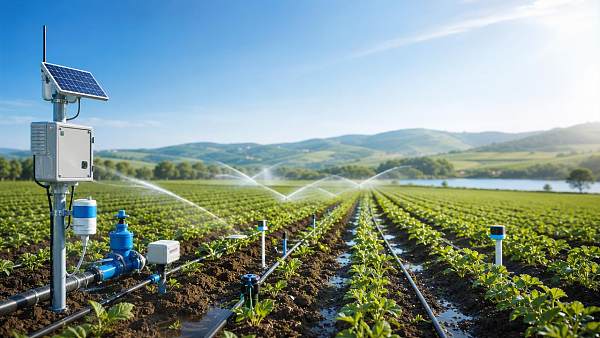
For most commercial operations, the realistic answer is substantial but variable. In 2026, well-implemented smart irrigation systems for sustainable agriculture commonly reduce water use by 15% to 35%, with some high-inefficiency sites achieving even greater savings.
Lower-range savings often apply to farms that already use drip irrigation and disciplined scheduling. Higher-range savings are more common where irrigation remains timer-based, where field variability is poorly understood, or where water losses are amplified by evaporation and over-application.
In permanent crops, vegetables, greenhouse production, and high-value row crops, savings are often easier to capture because irrigation timing strongly affects both yield and product quality. On broad-acre operations, outcomes depend more on infrastructure quality, field zoning, and connectivity.
Water savings should also be viewed alongside energy, labor, and agronomic benefits. Pumping less water reduces power consumption. Better timing lowers disease pressure in some crops. Automated control also reduces manual field checks and helps standardize irrigation decisions across multiple sites.
For enterprise buyers, the most credible forecast is not a headline percentage but a site-specific benchmark. The right question is: compared with our current baseline, under our soil, crop, and climate conditions, what level of avoidable irrigation can be removed without harming yield?
Where the Savings Actually Come From
Smart irrigation does not save water through a single feature. It saves water by reducing three common sources of waste: unnecessary irrigation events, excessive irrigation volume, and poorly timed irrigation that fails to match crop uptake or soil moisture conditions.
Unnecessary events are often caused by fixed schedules that continue after rainfall, during cooler periods, or when root-zone moisture remains sufficient. Weather-linked automation prevents many of these avoidable cycles and is often the fastest source of measurable savings.
Excessive volume is frequently a result of uniform irrigation across non-uniform fields. Sensor-informed zoning allows operators to irrigate different blocks according to actual need, rather than applying the same runtime to every section regardless of soil type or drainage profile.
Poor timing can be equally costly. Irrigating at the wrong hour increases evaporative loss and may push water below the root zone before plants can use it. Smart control platforms improve timing by combining evapotranspiration models, forecasts, and field feedback.
Leak detection and pressure monitoring also matter. In large agricultural estates, hidden losses from valves, pipes, emitters, and pumping anomalies can be significant. A digital system that flags abnormal flow or pressure deviations can recover water that traditional supervision misses.
Which Technologies Matter Most for Enterprise-Scale Irrigation Decisions?
Not every smart irrigation system offers the same value. For enterprise agriculture, the most important components usually include soil moisture sensing, weather integration, flow and pressure monitoring, remote control capability, analytics dashboards, and compatibility with existing irrigation hardware.
Soil moisture sensors are central because they provide direct evidence of root-zone conditions. However, their value depends on correct placement, calibration, and representative coverage. Poorly deployed sensors can create false confidence and undermine otherwise capable control systems.
Weather integration is essential for dynamic scheduling. Platforms that use local weather stations, satellite data, or high-resolution forecasts can adjust irrigation timing based on rainfall probability, heat, humidity, and evapotranspiration estimates rather than static assumptions.
Flow meters and pressure sensors provide operational visibility. They help identify underperformance, detect infrastructure issues, and verify whether irrigation commands are being executed correctly in the field. For enterprise operations, this is as much a governance tool as a water-saving tool.
Remote control and mobile access are increasingly non-negotiable. Multi-site agribusinesses need centralized oversight with local flexibility. The ideal platform allows headquarters, farm managers, and field technicians to work from a common data layer without losing accountability or response speed.
Finally, interoperability matters more in 2026 than isolated intelligence. A system should connect with pumps, valves, fertigation units, farm management software, and reporting tools. Decision-makers should avoid platforms that generate data but make integration or export unnecessarily difficult.
How to Estimate ROI Beyond Water Savings Alone
Water savings are the headline benefit, but they should not be the only basis for investment approval. A stronger business case includes energy reduction, labor efficiency, crop quality improvement, lower compliance risk, and reduced exposure to drought restrictions or volatile water pricing.
Start with the current irrigation baseline. Measure annual water use by crop, block, or facility. Then identify how much of that use is likely discretionary rather than biologically necessary. This distinction is critical because not all water can be saved without affecting outcomes.
Next, calculate the cost of water in a complete sense. Include extraction, pumping energy, treatment where relevant, maintenance, labor, and any regulatory or allocation costs. In many operations, the real cost of irrigation is materially higher than the water tariff alone suggests.
Labor economics also matter. Smart systems reduce manual valve operation, routine inspection rounds, and reactive troubleshooting. They can also improve decision consistency when experienced irrigation managers are stretched across multiple sites or when labor turnover is high.
Yield and quality effects should be modeled conservatively but not ignored. In high-value crops, avoiding both water stress and overwatering can improve marketable output, reduce defects, and support more predictable production windows. These benefits often rival direct water savings in total value.
For many enterprise deployments, simple payback can fall within two to five seasons, depending on crop value, existing inefficiency, energy intensity, and system scope. The highest returns usually come from sites with poor scheduling discipline, aging infrastructure, or expensive water delivery.
What Risks Should Buyers Watch Before Investing?
The biggest mistake is assuming that digital irrigation is automatically effective. Poor system design, low-quality sensors, bad field mapping, and weak change management can all erode expected savings. Technology does not replace agronomic judgment; it amplifies the quality of decisions.
One major risk is overbuying complexity. Some farms need advanced automation with predictive analytics. Others need reliable monitoring, alerting, and scheduling improvements first. A platform that exceeds the organization’s data maturity may create low adoption and disappointing utilization.
Another risk is underestimating infrastructure constraints. If pressure instability, clogged filters, leaking lines, or uneven water distribution are not addressed, software alone will not solve irrigation inefficiency. Smart control should be paired with a physical system health assessment.
Connectivity and cybersecurity deserve more attention than they often receive in agriculture. Remote sites may face unstable networks, and connected control systems can introduce operational vulnerabilities. Enterprise buyers should evaluate offline resilience, user permissions, audit trails, and vendor security practices.
Vendor lock-in is another concern. If agronomic data, irrigation history, and device compatibility are trapped inside a closed ecosystem, future expansion becomes harder and more expensive. Procurement teams should assess API access, data portability, and long-term integration flexibility upfront.
How Should Enterprises Benchmark Smart Irrigation Systems in 2026?
Benchmarking should go beyond product brochures. Decision-makers need a framework that compares systems on agronomic performance, technical reliability, integration readiness, service support, and total cost of ownership over the expected lifecycle.
At the agronomic level, benchmark how accurately the system translates field conditions into irrigation actions. Review sensor quality, calibration methods, forecasting logic, and decision rules. Ask whether the system can support crop-specific strategies instead of generic scheduling templates.
At the operational level, evaluate alert accuracy, failure rates, battery life, maintenance requirements, and ease of troubleshooting. Enterprise value depends on sustained reliability, not only on initial installation performance or pilot results from ideal conditions.
At the integration level, assess compatibility with existing pumps, filtration units, variable-rate equipment, and farm management platforms. In a multi-disciplinary environment, the best system is often the one that fits broader digital operations rather than the one with the longest feature list.
At the governance level, buyers should demand reporting that supports water stewardship targets, ESG disclosure, and internal performance reviews. For industrial-scale agriculture, traceable data is increasingly important for investors, regulators, customers, and supply chain partners.
This is where a cross-sector benchmarking mindset matters. As irrigation systems become part of wider operational technology environments, buyers should evaluate them with the same discipline applied in manufacturing, infrastructure, and industrial automation: standards alignment, system resilience, and verifiable performance metrics.
Which Farms and Use Cases Benefit Most?
Smart irrigation systems for sustainable agriculture create the strongest value where water is scarce, expensive, regulated, or operationally difficult to manage. High-value crops, greenhouse operations, orchards, vineyards, seed production, and large estates often see the clearest returns.
Farms with multiple zones, varying soil profiles, or geographically distributed assets are also strong candidates. In these settings, the ability to monitor and control irrigation centrally can reduce inconsistency that otherwise accumulates across teams and locations.
Regions with volatile rainfall patterns and increasing drought pressure are especially suitable for modernization. Climate instability raises the cost of scheduling errors, making adaptive irrigation more valuable than traditional routines built around historical seasonal averages.
That said, not every operation needs full automation from day one. Some organizations benefit most from a phased model: first establish metering and visibility, then add sensing and alerts, then move toward closed-loop control where confidence and data quality are sufficient.
What Should an Implementation Roadmap Look Like?
Enterprise adoption should begin with diagnosis rather than procurement. Establish the current water baseline, infrastructure condition, crop priorities, and management bottlenecks. Without this step, even a technically advanced system can be deployed in the wrong places for the wrong reasons.
Next, prioritize fields or facilities where the savings opportunity and strategic importance are highest. A focused pilot is useful if it is designed for repeatability, with clear KPIs such as water use per hectare, pump energy per cubic meter, labor hours, and crop response.
System design should include both agronomic and engineering input. Sensor placement, valve grouping, communication architecture, and dashboard design all influence whether insights become practical decisions. Cross-functional planning is essential for reliable results at scale.
Training should not be treated as an afterthought. Farm managers, irrigation specialists, technicians, and corporate stakeholders need role-specific workflows. Adoption rises when users understand not just how to operate the system, but how it supports their performance goals.
After deployment, governance matters. Review irrigation variance, alert history, maintenance issues, and realized savings regularly. Continuous calibration and seasonal adjustment are part of the operating model. Smart irrigation is not a one-time installation; it is a managed capability.
Conclusion: The Strategic Value of Smarter Water Use
In 2026, the answer to how much water can be saved is clear enough to support action: in many enterprise farming environments, smart irrigation systems can reduce water use by 15% to 35%, while also lowering energy waste, labor burden, and operational uncertainty.
But the real value is not the percentage alone. It is the ability to turn irrigation from a reactive utility into a measurable, optimizable operating system. For decision-makers, that shift improves resilience under tightening water constraints and rising production complexity.
The strongest investment cases come from disciplined benchmarking, realistic ROI modeling, and phased implementation aligned with infrastructure and agronomic realities. Enterprises that approach irrigation modernization with technical rigor will be better positioned to protect both productivity and water security.
For organizations building long-term resilience, smart irrigation systems for sustainable agriculture are no longer optional innovation projects. They are becoming core infrastructure for efficient, accountable, and sustainable agricultural performance.

The Archive Newsletter
Critical industrial intelligence delivered every Tuesday. Peer-reviewed summaries of the week's most impactful logistics and market shifts.