Monday, May 22, 2024

Solar Water Pump Manufacturer Checklist for Remote Irrigation Projects
by
Published
Views:
Choosing the right solar water pump manufacturer can determine whether a remote irrigation project delivers stable crop water supply or suffers repeated field failures. In off-grid agriculture, pump performance is only one part of the decision. Mechanical durability, photovoltaic matching, controls quality, spare parts access, and compliance discipline all affect lifecycle cost. This checklist is designed to support rigorous supplier evaluation for demanding remote irrigation deployments where service access is limited and downtime is expensive.
Why a Checklist Matters for Remote Irrigation Projects
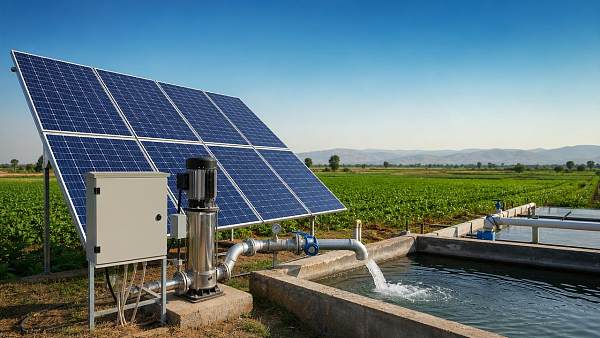
A remote irrigation system operates as a connected technical stack. The pump, motor, controller, solar array, storage tank, pipe network, and site conditions interact continuously. A capable solar water pump manufacturer must prove system-level understanding, not only component supply.
This matters across industries linked to water, energy, and infrastructure. Smart agriculture relies on stable water delivery, while ESG-driven projects require documented efficiency, reliability, and responsible sourcing. A checklist reduces selection bias and turns supplier comparison into a measurable engineering exercise.
Core Solar Water Pump Manufacturer Checklist
- Verify hydraulic performance using certified pump curves at multiple heads and flow rates, not a single rated point, and confirm testing conditions match expected field temperatures and irradiance levels.
- Check motor architecture carefully, including brushless DC or AC configurations, insulation class, bearing protection, and thermal management for continuous use in dusty, high-heat agricultural environments.
- Review controller quality by confirming MPPT logic, dry-run protection, overload response, soft start behavior, surge tolerance, and fault logging for remote troubleshooting and preventive maintenance planning.
- Confirm material suitability for the water source, including stainless steel grade, impeller composition, shaft sealing, corrosion resistance, and abrasion tolerance for sand, salinity, or chemical exposure.
- Request derating data for high ambient temperature, cable length, elevation, and seasonal solar variation so the selected pump can maintain usable output beyond nominal laboratory conditions.
- Assess photovoltaic compatibility by reviewing recommended panel voltage windows, array sizing ratios, wiring practices, and startup behavior under low morning irradiance or partial shading.
- Inspect manufacturing controls, including incoming inspection, torque control, leak testing, end-of-line validation, and traceability records tied to serial numbers and batch documentation.
- Confirm compliance with relevant standards and declarations, such as IEC-related electrical safety requirements, RoHS where applicable, and documented quality systems such as ISO 9001.
- Examine field reliability evidence through installation references, failure-rate data, warranty claim patterns, and long-duration operation records from climates similar to the target irrigation site.
- Evaluate spare parts strategy by checking lead times for controllers, seals, impellers, cables, sensors, and connectors, especially for projects in remote regions with weak logistics networks.
- Review documentation depth, including wiring diagrams, commissioning procedures, maintenance intervals, troubleshooting trees, and multilingual technical manuals that reduce installation error.
- Test supplier responsiveness by asking application-specific questions on bore depth, total dynamic head, storage tank elevation, and irrigation duty cycle, then comparing answer quality and speed.
Fast Comparison Table
Application Notes for Different Remote Irrigation Scenarios
Deep Borehole Irrigation
For deep wells, head calculation errors often cause underperformance. A qualified solar water pump manufacturer should validate total dynamic head, cable losses, static water level changes, and drawdown during peak extraction periods.
In these systems, motor cooling and borehole fit are critical. Confirm pump diameter tolerance, minimum water flow around the motor, and anti-sand design if groundwater contains suspended solids.
Surface Water Transfer for Open Fields
Canal, pond, and river pumping introduces debris, biological growth, and seasonal water level fluctuation. The chosen solar water pump manufacturer should specify inlet screening, suction limits, priming requirements, and enclosure protection against rain and insects.
Controller placement also matters. Remote surface installations benefit from weather-protected electronics, surge protection, and simple status indicators visible during routine field inspection.
Drip Irrigation with Storage Tanks
When pumping into elevated storage before drip distribution, focus on daily water volume rather than midday peak flow alone. Ask the solar water pump manufacturer to model expected output across a full solar day and typical seasonal variation.
This scenario benefits from stable controls and low-maintenance operation. Float switch integration, tank overflow logic, and low-light start behavior can significantly improve water availability consistency.
Commonly Overlooked Risks
Underspecified Water Quality
Many failures begin with incomplete water analysis. Salinity, iron content, silt load, and pH can shorten seal life, reduce impeller efficiency, and accelerate corrosion in an otherwise well-designed pump.
Unclear Warranty Boundaries
A short warranty is not always the main issue. More important is whether the solar water pump manufacturer clearly defines exclusions for dry running, lightning, wiring faults, or abrasive water conditions.
Weak Supply Chain Transparency
Controller chips, magnets, bearings, and stainless components may come from multiple tiers. Ask for visibility into critical sub-suppliers and business continuity planning, especially for multi-site agricultural programs.
Poor Data for Lifecycle Costing
Lowest purchase price rarely predicts best project value. Include replacement intervals, expected service visits, cable losses, solar oversizing needs, and downtime exposure when comparing suppliers.
Practical Execution Steps
- Build a supplier scorecard with weighted categories for hydraulics, controls, materials, compliance, lead time, and after-sales support.
- Issue the same technical questionnaire to each solar water pump manufacturer to keep comparisons consistent and auditable.
- Request a sample documentation pack before purchase, including manuals, certificates, spare parts lists, and commissioning instructions.
- Run a pilot installation in a representative field location, then monitor flow, head, temperature, and controller events for several weeks.
- Document escalation paths for failures, replacement part approval, and technical response time before signing long-term supply agreements.
Conclusion and Next Action
Selecting a solar water pump manufacturer for remote irrigation should be treated as a technical qualification process, not a simple catalog purchase. The strongest suppliers demonstrate verified pump performance, robust controls, disciplined manufacturing, and dependable service support.
Use this checklist to shortlist candidates, request comparable evidence, and test real operating fit against site conditions. A structured review reduces risk, improves irrigation uptime, and supports more resilient water and energy infrastructure across modern agricultural systems.

The Archive Newsletter
Critical industrial intelligence delivered every Tuesday. Peer-reviewed summaries of the week's most impactful logistics and market shifts.