Monday, May 22, 2024

Autonomous Tractor Factory Selection: What Impacts Delivery and Uptime
by
Published
Views:
Choosing the right autonomous tractor factory can determine whether your project stays on schedule or faces costly downtime. For project managers and engineering leads, factory capability is not just about production volume—it also shapes delivery reliability, component traceability, service responsiveness, and long-term uptime. This article examines the key factors that influence supplier performance, helping teams reduce procurement risk and make more resilient sourcing decisions.
Why does autonomous tractor factory selection affect both delivery and uptime?
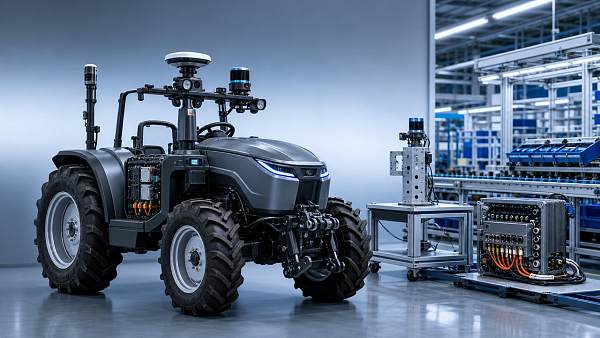
An autonomous tractor factory sits at the intersection of mechanical systems, embedded electronics, GNSS guidance, software integration, hydraulics, and field-service logistics. That means procurement decisions are no longer limited to frame quality or engine sourcing alone.
For project leaders, the real question is simple: can this supplier deliver machines on time, with consistent configuration control, and support them after commissioning? If not, even a competitive purchase price can become expensive very quickly.
In cross-sector manufacturing, delivery and uptime are linked. A delayed autonomy controller, a sensor validation issue, or weak harness traceability can stop shipment. The same weakness can later cause field failures, spare parts confusion, or software incompatibility.
- Delivery risk increases when the factory relies on unstable sub-suppliers for ECUs, navigation modules, cameras, LiDAR, connectors, batteries, or hydraulic components.
- Uptime risk rises when build records, firmware versions, calibration logs, and service documentation are not controlled at the unit level.
- Integration risk becomes critical when the factory cannot align agriculture-specific requirements with automotive-grade electronics discipline and industrial-quality process control.
This is where Global Industrial Matrix (GIM) adds value. By benchmarking across smart agri-tech, automotive and mobility, electronics, infrastructure, and precision tooling, GIM helps procurement and engineering teams evaluate an autonomous tractor factory as a system supplier, not just an equipment assembler.
What should project managers evaluate before shortlisting an autonomous tractor factory?
Before comparing quotes, teams should define a structured evaluation model. A capable autonomous tractor factory must demonstrate manufacturing readiness, supplier management, software governance, testing discipline, and after-sales infrastructure.
Core screening criteria
- Bill of materials stability: Ask how often key components change and what approval workflow exists for substitutions.
- Production planning maturity: Confirm whether lead times are based on real capacity, critical-part allocation, and test station throughput.
- Traceability depth: Check whether the factory records serial numbers for controllers, sensors, harnesses, actuators, and firmware versions.
- Validation coverage: Review environmental, vibration, ingress protection, EMC, and field endurance practices where relevant.
- Service readiness: Verify spare parts planning, remote diagnostics capability, technical manuals, and escalation response times.
A frequent mistake is to evaluate only unit price and nominal annual output. For an autonomous tractor factory, schedule reliability depends on bottleneck processes such as calibration, software flashing, functional test, and final acceptance under simulated or field-like conditions.
The table below gives project teams a practical scoring structure for autonomous tractor factory evaluation during supplier prequalification.
This framework helps teams compare suppliers using operational evidence rather than sales claims. It is especially useful when procurement, engineering, and operations need a common decision language.
Which factory capabilities most directly influence delivery schedules?
Delivery performance depends on more than assembly speed. In an autonomous tractor factory, schedule reliability often depends on the maturity of upstream planning and downstream release control.
The main delivery drivers
- Critical component availability. Autonomy systems depend on electronic modules that may have longer lead times than mechanical parts.
- Production balancing. If software flashing or sensor calibration is slower than chassis assembly, backlog builds quickly.
- Engineering change control. Frequent design revisions without strict release discipline can freeze shipping and create rework.
- Quality hold management. A factory with weak root-cause containment may stop multiple units for one recurring issue.
Project managers should ask for evidence of finite-capacity planning, shortage reporting cadence, and pre-shipment quality gates. Reliable factories can explain where bottlenecks occur and how they protect committed dates.
Questions worth asking in supplier review meetings
- What percentage of the lead time is driven by purchased electronics rather than in-house fabrication?
- Which process step is the release constraint: assembly, software load, calibration, test, or packaging?
- How are deviations handled if a substitute sensor or controller must be introduced?
- What shipment documentation is provided to support receiving inspection and commissioning?
These questions expose whether the autonomous tractor factory has true production control or simply optimistic lead-time assumptions. GIM’s cross-sector benchmarking is particularly useful here because electronics and mobility industries often provide stronger visibility methods than traditional equipment sourcing alone.
How does factory quality management translate into field uptime?
Uptime starts long before the machine reaches the field. Every uncontrolled interface inside the autonomous tractor factory can later become a downtime event: a connector exposed to vibration, a misrouted harness, an unverified firmware build, or a poorly sealed enclosure.
For engineering leads, the goal is not merely low defect counts at outgoing inspection. The goal is predictable behavior under real operating conditions such as dust, heat, moisture, repetitive shock, electromagnetic interference, and variable terrain loads.
The following table links factory controls to field uptime outcomes, giving teams a practical way to assess risk before signing with an autonomous tractor factory.
A strong quality system does not guarantee zero failures, but it significantly improves diagnosis speed and containment. That matters when a machine operates in narrow planting, spraying, or harvesting windows where downtime has outsized cost.
What standards and compliance signals should buyers look for?
Not every autonomous tractor factory will present the same certification profile, and requirements vary by region, machine architecture, and intended application. Still, buyers should assess whether the supplier works within recognized quality and documentation frameworks.
Useful compliance reference points
- ISO 9001 can indicate a formal quality management system with documented processes and corrective action structure.
- IATF-aligned discipline, even when not formally required, may suggest stronger change control and traceability for electronics-heavy assemblies.
- IPC-related practices can be relevant when electronic assemblies or cable integration quality materially affect performance.
- Regional machinery, EMC, and safety requirements should be reviewed early to avoid late-stage shipment blocks.
The key is not to collect certificates as a box-ticking exercise. The key is to confirm whether the autonomous tractor factory can translate standards into process discipline, documented validation, and serviceable product records.
GIM supports this evaluation by benchmarking across industries where compliance maturity often differs. That helps buyers identify gaps between a supplier’s claimed readiness and its actual operational controls.
How should teams compare low-cost and high-control sourcing options?
A lower quoted price from an autonomous tractor factory may be attractive, especially when budgets are tight. However, total project cost depends on logistics stability, commissioning effort, service burden, firmware support, and spare parts response.
Where hidden cost usually appears
- Engineering rework caused by undocumented hardware or software revisions
- Delayed launch because receiving teams must resolve incomplete documents or test records
- Higher field-service cost due to poor troubleshooting information and slow parts availability
- Seasonal revenue loss when machines are unavailable during critical operating periods
A more controlled factory may not always offer the lowest ex-works price, but it often reduces schedule volatility and lifecycle disruption. For project owners, that trade-off is usually worth modeling explicitly rather than assuming procurement savings translate into project savings.
What common mistakes do buyers make when selecting an autonomous tractor factory?
FAQ: How do we avoid the most common procurement errors?
The first mistake is treating the supplier like a conventional tractor assembler. Autonomous platforms require stronger controls around electronics, software versions, communication architecture, and functional validation. Buyers should inspect those areas directly.
FAQ: Is annual capacity enough to judge delivery reliability?
No. Stated annual capacity does not reveal whether the autonomous tractor factory has enough calibration benches, test fixtures, trained technicians, or secured electronic components. Always ask what process actually constrains weekly shipments.
FAQ: What should we review for uptime beyond warranty terms?
Review service manuals, fault-code access, spare parts lead times, firmware update procedures, and traceability records. Good warranty language cannot compensate for poor diagnostic support or long parts delays.
FAQ: When should compliance review start?
At the beginning of supplier evaluation. If safety, EMC, import, or documentation requirements are addressed too late, shipment approval can slip even after production is complete. Early review protects both timeline and budget.
How can GIM help de-risk autonomous tractor factory selection?
GIM is built for complex sourcing environments where agricultural machinery now overlaps with automotive electronics, industrial controls, precision manufacturing, and ESG-driven infrastructure demands. That cross-sector lens matters because autonomous equipment failures rarely stay within one discipline.
Using GIM’s benchmarking approach, project managers and engineering leads can evaluate an autonomous tractor factory against broader manufacturing signals: component traceability, process capability, standards alignment, supply risk concentration, and service-readiness indicators.
Why this approach is useful in practice
- It helps procurement teams compare suppliers beyond price sheets and brochure specifications.
- It gives engineering teams a structured way to challenge software, electronics, and validation risks.
- It supports leadership decisions with verifiable, cross-functional assessment logic rather than isolated vendor claims.
For organizations managing launch deadlines, fleet deployment, or regional sourcing diversification, that clarity can make the difference between a stable rollout and a prolonged recovery cycle.
Why choose us for autonomous tractor factory benchmarking and sourcing support?
If your team is comparing an autonomous tractor factory for a new program, capacity expansion, or supplier replacement, GIM can support a more disciplined selection process. Our value is not limited to market visibility; it comes from connecting manufacturing, electronics, mobility, agri-tech, and compliance intelligence into one decision framework.
You can consult us on specific sourcing questions such as parameter confirmation for autonomy-related subsystems, supplier shortlist screening, delivery cycle assessment, traceability expectations, standards mapping, and service-readiness review.
We also help teams structure technical comparison points before RFQ release, identify where custom configuration may affect lead time, and clarify what documentation should be requested for samples, pilot units, and commercial shipments.
If you need support with autonomous tractor factory evaluation, contact GIM to discuss product selection, delivery timelines, certification-related concerns, sample validation scope, or quotation alignment across multiple suppliers. A stronger sourcing decision starts with better technical visibility.

The Archive Newsletter
Critical industrial intelligence delivered every Tuesday. Peer-reviewed summaries of the week's most impactful logistics and market shifts.