Monday, May 22, 2024

EU Steel Tariffs Hit Smart Farm and Carbon Capture Supply Chains
by
Published
Views:
On May 21, 2026, the European Commission formally imposed provisional tariffs of up to 50% on selected Chinese steel products, a move that immediately draws attention from buyers and manufacturers relying on these materials for structural parts and equipment frames. For European assembly plants and third-party ODM partners serving Autonomous Tractors and Carbon Capture Tech applications, the development is worth close attention because it directly touches raw material cost exposure, bill-of-materials pressure, and delivery planning.
What has been confirmed so far
The confirmed information is limited but commercially important. According to the provided event summary, the temporary EU tariff increase applies to certain Chinese steel finished products and reaches 50%.
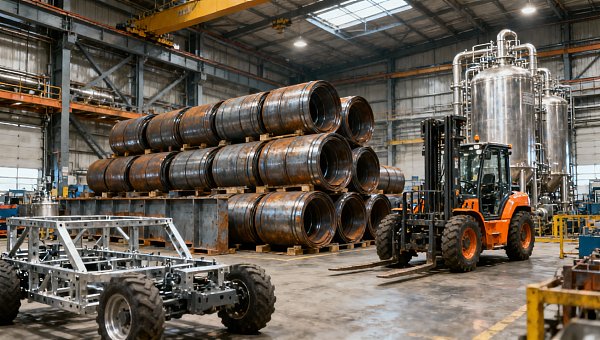
The covered materials include hot-rolled coil, structural steel, and alloy steel used for pressure vessels. These are not marginal inputs for industrial equipment production; they are core materials used in fabrication and structural manufacturing.
The event date is May 21, 2026. The summary also makes clear that the measure is expected to raise BOM costs and increase lead-time risk for manufacturers of Autonomous Tractors and Carbon Capture Tech equipment that depend on Chinese steel supply. The pressure is described as especially relevant for local European assembly plants and third-party ODM procurement arrangements.
Where the pressure is likely to appear first
Material sourcing teams face immediate cost recalculation
From an industry perspective, the first impact point is likely to be procurement. Companies that source the affected steel categories from China may need to reassess quoted input costs, existing sourcing assumptions, and short-cycle purchasing decisions. The issue is not only the tariff level itself, but also whether the affected materials sit inside core fabricated parts already tied to existing customer pricing.
Fabricators and equipment manufacturers may see BOM and scheduling strain
Analysis shows that downstream manufacturers of Autonomous Tractors and Carbon Capture Tech equipment are exposed where steel is used in frames, structural assemblies, and pressure-related equipment parts. If core inputs become more expensive or less predictable in delivery, the impact may surface in production planning, quotation validity, and component substitution discussions. This is especially relevant where steel inputs are deeply embedded in multi-stage manufacturing rather than purchased as spot commodities.
European assembly operations and ODM partners may need to revisit purchasing logic
Observably, the event matters not only to direct importers of steel, but also to companies assembling finished systems in Europe or managing outsourced manufacturing through ODM partners. Where procurement decisions were built around Chinese steel cost competitiveness, the tariff change may force a review of sourcing structure, contract allocation, and timing assumptions. What deserves closer attention is whether procurement adjustments can be made without creating new delivery bottlenecks.
Customer-facing teams should watch lead-time communication risk
For sales, project delivery, and account management functions, the issue may extend beyond material cost. If sourcing changes ripple into production timelines, customer communication around delivery windows, specification consistency, and price revision logic may become more sensitive. This is particularly relevant for equipment segments where structural parts are not easily replaced without technical or contractual review.
What companies should track now
Follow the exact scope of covered steel categories
Analysis shows that the practical effect of the measure will depend on whether a company uses the steel categories explicitly covered in the summary: hot-rolled coil, structural steel, and pressure-vessel alloy steel. Businesses should separate broad concern from item-level exposure and identify where these materials sit within current procurement and production flows.
Distinguish policy language from operational impact
What deserves closer attention is the difference between the announcement itself and the real business effect. A tariff headline can signal cost pressure, but the operational consequences depend on stock position, order timing, supplier commitments, and how far affected materials have already moved into fabrication. Companies should avoid treating all exposure as immediate or identical.
Review supplier documents, delivery cycles, and contract terms
For teams managing cross-border supply, it is practical to review supplier documentation, order status, and delivery-cycle assumptions tied to the affected materials. This is not simply a compliance exercise; it also helps companies understand where cost revision or scheduling friction may appear first, especially in ODM-linked supply chains.
Prepare customer and internal coordination scenarios
Observably, businesses exposed to the affected steel inputs may need clearer internal coordination between procurement, production, finance, and customer-facing teams. If BOM pressure or lead-time uncertainty rises, companies should be ready to explain whether the issue affects quoting, assembly schedules, or material planning, while avoiding premature conclusions before more detail is verified.
Why this matters beyond a single tariff notice
This section is an editorial observation rather than a statement of confirmed fact. It is more appropriate to understand this development as both a short-term operational issue and a policy signal that deserves continued monitoring. In the short term, the most visible effect is on cost and supply timing for manufacturers that still rely on Chinese steel in the covered categories.
At the same time, analysis suggests the event also signals that downstream equipment sectors cannot treat raw-material trade measures as isolated upstream policy changes. When key steels used in structural and pressure-related applications are affected, the transmission can quickly move into machinery manufacturing, local assembly, and outsourced production strategy.
That said, this should not yet be read as a final industry outcome. The current information confirms the tariff action and its likely pressure points, but not the full extent of downstream adjustment. For that reason, the development still belongs in the category of an industry dynamic that requires further observation.
How the market may best read this development for now
At this stage, the most balanced reading is that the tariff increase is a concrete cost and procurement signal for parts of the industrial equipment chain linked to Chinese steel, rather than a complete reshaping of downstream manufacturing conditions. It matters because the affected materials are foundational inputs, and because the exposure reaches beyond steel traders to equipment makers, European assembly sites, and ODM-linked sourcing models.
For industry participants, the immediate task is not broad speculation but exposure mapping: which materials are affected, which products depend on them, and where delivery or pricing risk could surface first. It is more appropriate to understand this as a live commercial issue with strategic implications, while reserving judgment on longer-term outcomes until further official detail and market response become clearer.
Basis of this article and what still needs verification
This article is based on the user-provided news title, event date, and event summary. The confirmed factual basis includes the May 21, 2026 timing, the European Commission's provisional tariff increase to 50% on selected Chinese steel products, the listed steel categories, and the stated relevance to Autonomous Tractors, Carbon Capture Tech equipment, European local assembly plants, and third-party ODM partners.
For this type of industry update, source types commonly worth checking include official announcements, company disclosures, industry association information, authoritative media reporting, and relevant standards or technical documentation. A specific official source link was not provided in the input, so the exact wording and any later clarification still require ongoing verification.
Further attention should be given to any subsequent official explanation of product scope, implementation detail, and whether the practical downstream effects on procurement and delivery timelines become more clearly defined.

The Archive Newsletter
Critical industrial intelligence delivered every Tuesday. Peer-reviewed summaries of the week's most impactful logistics and market shifts.