Monday, May 22, 2024

Is Precision Farming Equipment Worth the Cost in 2026?
by
Published
Views:
As input costs rise and sustainability targets tighten, many enterprise leaders are asking whether precision farming equipment for sustainable agriculture can truly justify its investment in 2026. From data-driven field optimization to reduced waste and stronger yield predictability, the value goes beyond technology alone. This article examines the costs, operational benefits, and strategic factors that decision-makers should weigh before adopting precision agriculture at scale.
Why are enterprise buyers revisiting precision farming equipment for sustainable agriculture in 2026?
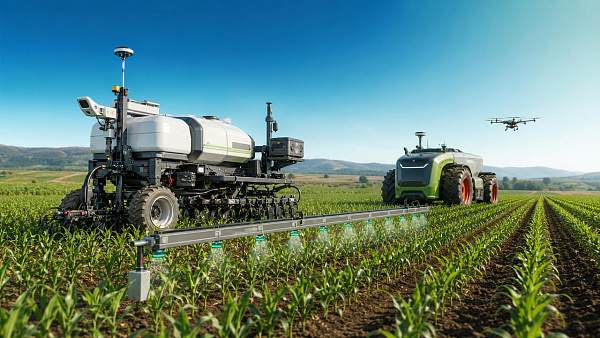
The 2026 investment question is not just about machinery price. It is about input volatility, labor shortages, traceability pressure, water risk, carbon reporting, and tighter expectations from processors, financiers, and regulators.
For large farms, agri-groups, food supply networks, and industrial procurement teams, precision farming equipment for sustainable agriculture has become part of a broader operating model. It links sensors, software, agronomy, machine control, and compliance data.
This matters in a cross-sector environment. Agricultural equipment increasingly depends on the same electronics, power systems, software architectures, and supply chains that shape automotive, industrial automation, and environmental infrastructure.
That is where Global Industrial Matrix brings practical value. GIM connects Smart Agri-Tech with Semiconductor & Electronics, Automotive & Mobility, Industrial ESG & Infrastructure, and Precision Tooling to benchmark technical risk and procurement fit more accurately.
- Rising fertilizer, fuel, and irrigation costs increase the financial value of variable-rate application, route optimization, and machine efficiency.
- Sustainability reporting pushes enterprises to document resource use, emissions intensity, and field-level operating decisions with better digital records.
- Procurement teams need clearer evidence on lifecycle cost, service availability, interoperability, and standard alignment before approving capital expenditure.
What exactly counts as precision farming equipment, and where does the value come from?
The category includes more than autonomous tractors. Precision farming equipment for sustainable agriculture typically combines positioning systems, telematics, onboard controllers, field sensors, imaging tools, variable-rate devices, and farm data platforms.
Enterprise value comes from turning field variability into measurable operating decisions. Instead of applying the same inputs everywhere, teams can allocate seed, nutrients, water, and machine time according to actual soil, crop, and weather conditions.
Core equipment layers that affect ROI
- Guidance and steering systems that reduce overlap, operator fatigue, and fuel waste during planting, spraying, and harvesting.
- Variable-rate application hardware that adjusts seeding, fertilizer, or chemical dosage by prescription map or real-time sensor input.
- Imaging and sensing tools, including drones and in-field sensors, that improve diagnosis of moisture stress, pest pressure, and nutrient imbalance.
- Data integration software that converts machine output into planning, traceability, audit support, and performance review.
The return is rarely generated by one device alone. It usually emerges from a coordinated system in which hardware reliability, software usability, agronomic logic, and service support all work together.
Which operating scenarios justify the investment fastest?
Some operations recover value quickly, while others need a phased rollout. The strongest use cases usually involve large acreage, repeated passes, expensive inputs, irrigation pressure, or strict reporting obligations.
The table below helps enterprise buyers assess where precision farming equipment for sustainable agriculture creates the clearest operational and financial leverage.
The key insight is that ROI often depends more on operating context than on equipment category. A buyer who starts with the right field problem usually makes a better decision than a buyer who starts with the newest feature set.
How should decision-makers compare cost versus total value?
Purchase price is visible. Total value is not. Enterprise teams should model precision farming equipment for sustainable agriculture through a full operating lens that includes deployment, training, integration, maintenance, and usable data quality.
A lower-cost device can become expensive if it lacks spare parts, software support, calibration stability, or compatibility with existing fleets. A higher-cost platform may be justified if it reduces downtime and strengthens field decision accuracy.
The comparison table below is useful for procurement reviews, especially when multiple business units or geographies are involved.
This is where cross-disciplinary benchmarking matters. GIM helps buyers compare not just agronomic promises, but the underlying electronics, control systems, tooling precision, and ESG implications that influence real-world cost of ownership.
What technical and procurement criteria should matter most?
When procurement teams evaluate precision farming equipment for sustainable agriculture, they should look beyond product brochures. The right shortlist balances field performance with supportability, compliance, and digital fit.
Practical selection checklist for enterprise procurement
- Define the target outcome first. Are you trying to reduce fertilizer intensity, stabilize irrigation, improve machine uptime, or strengthen traceability for downstream buyers?
- Map compatibility with current assets. Confirm whether equipment can connect with existing tractors, implements, software platforms, and telemetry infrastructure.
- Assess service ecosystem. Availability of field support, replacement parts, and remote diagnostics often decides whether a promising pilot becomes a scalable deployment.
- Check data governance. Enterprise operations need clarity on who owns machine data, how it is exported, and whether it can support internal reporting or supplier audits.
- Model phased rollout economics. A smaller pilot with measurable KPIs can produce stronger internal approval than a broad, under-structured rollout.
In a multi-industry setting, GIM’s advantage is the ability to benchmark technologies using system-level logic. For example, signal stability, controller durability, harness quality, and standards alignment often matter as much as agronomic software features.
How do standards, interoperability, and risk affect the investment case?
Enterprise leaders often underestimate how much value can be lost through poor interoperability. Precision farming equipment for sustainable agriculture should fit not only the field, but also the broader digital and compliance architecture of the business.
While equipment categories differ, buyers can still apply structured review against recognized industrial practices. References such as ISO-related process discipline, IATF-style quality thinking in supplier control, and IPC-like attention to electronic assembly integrity can sharpen procurement judgment.
Risk areas that deserve early review
- Connectivity gaps in remote regions can reduce the value of cloud-heavy platforms unless offline workflows are robust.
- Mixed fleets may create data silos if file formats, prescription tools, or guidance interfaces do not communicate reliably.
- Low-cost components may struggle under dust, vibration, heat, and washdown conditions, increasing failure risk during critical seasons.
- Sustainability claims may be difficult to defend if measurement methods, calibration routines, and audit trails are inconsistent.
This is another reason why technical benchmarking should extend across sectors. Lessons from mobility electronics, industrial controls, and environmental infrastructure can reveal hidden reliability or maintenance issues before contracts are signed.
What mistakes cause many precision agriculture projects to underperform?
Underperformance usually comes from execution gaps, not from the concept itself. Many enterprises buy precision farming equipment for sustainable agriculture before establishing data ownership, agronomy workflows, or adoption metrics.
Common misconceptions
- “More sensors automatically mean better decisions.” In reality, poor calibration or weak interpretation can create noise instead of insight.
- “Yield increase is the only measure that matters.” Input efficiency, labor planning, fuel savings, and compliance support often produce equally important value.
- “Any digital platform will integrate later.” Delayed integration often raises cost and makes historical data less usable.
- “A single vendor can solve every layer.” In practice, enterprises frequently need a system approach that aligns hardware, software, service, and reporting.
A disciplined pilot structure reduces these risks. Start with a high-cost, high-variability use case, define success metrics, document baseline performance, and validate service responsiveness before scaling to more sites or crops.
FAQ: what do enterprise buyers still ask before committing?
How should we decide whether precision farming equipment for sustainable agriculture is a capital project or a phased operating upgrade?
Treat it as a phased operating upgrade when workflow change, training, and integration will determine success more than hardware scale. Use a capital project model when irrigation automation, autonomous guidance, or multi-site deployment requires major infrastructure and governance planning.
Which metrics should be tracked in the first season?
Track overlap reduction, application accuracy, input use per hectare, machine idle time, service incidents, operator adoption rate, and traceability completeness. Yield should be included, but it should not be the only KPI used to judge value.
Are lower-cost alternatives enough for smaller pilots?
Sometimes, yes. If the pilot goal is to validate workflow fit, a narrower setup may be sufficient. But if your objective is enterprise-scale interoperability or ESG-grade reporting, low-cost tools can produce misleading results because they do not reflect future integration demands.
How long does implementation usually take?
Basic guidance or monitoring deployments may move quickly, but enterprise implementation often requires pre-season planning, operator training, connectivity checks, data mapping, and support readiness. The critical factor is not calendar speed alone, but readiness before peak field operations begin.
So, is the cost worth it in 2026?
For many enterprise operations, yes, but only when the investment is matched to the right use case, deployment maturity, and supplier evaluation framework. Precision farming equipment for sustainable agriculture is most compelling when it improves input discipline, resource resilience, and audit-ready operational visibility.
The weakest business case appears when buyers chase features without aligning field variability, machine compatibility, service support, and data strategy. The strongest business case appears when the equipment becomes part of a measurable operating system.
Why choose us for benchmarking, sourcing insight, and decision support?
Global Industrial Matrix helps enterprise buyers evaluate precision farming equipment for sustainable agriculture through a broader industrial lens. We do not assess farm technology in isolation. We connect agri-tech performance with electronics reliability, mobility-grade systems thinking, ESG infrastructure needs, and precision manufacturing realities.
If you are comparing suppliers, planning a pilot, or preparing a 2026 capital roadmap, we can support the decision with structured benchmarking and procurement-focused analysis.
- Parameter confirmation for guidance systems, sensing layers, data architecture, and environmental durability requirements.
- Product selection support based on application scenario, fleet compatibility, reporting goals, and operating budget.
- Delivery cycle review with attention to components, regional service coverage, and cross-border supply chain risk.
- Customized solution evaluation for phased implementation, mixed equipment environments, and sustainability reporting needs.
- Standards and certification discussion relevant to quality control, electronics integrity, and industrial procurement compliance.
- Quotation communication support that compares not only upfront pricing, but also lifecycle cost and operational fit.
If your team needs clearer guidance on selection criteria, implementation priorities, or supplier comparison, contact GIM with your target application, field conditions, current equipment base, and reporting requirements. That allows a more precise discussion around fit, risk, and investment timing.

The Archive Newsletter
Critical industrial intelligence delivered every Tuesday. Peer-reviewed summaries of the week's most impactful logistics and market shifts.