Monday, May 22, 2024

J-11BGH Upgraded with GaN AESA Radar, Boosting Export Readiness
by
Published
Views:
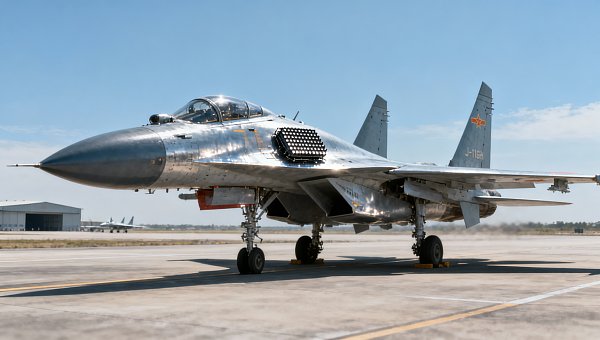
China’s naval J-11BGH fighter aircraft has completed integration of a gallium nitride (GaN) active electronically scanned array (AESA) radar, with confirmed operational parameters including 200 km detection range, simultaneous tracking of 20 targets, and guidance for 6–8 engagement units. Though the exact date of completion is not publicly disclosed, the upgrade signifies a material advancement in domestically produced high-reliability RF hardware for defense and industrial radar systems — particularly relevant to export-oriented defense integrators, RF component distributors, and high-assurance industrial sensor system developers.
Event Overview
The People’s Liberation Army Navy’s J-11BGH multirole fighter has been equipped with a new GaN-based AESA radar. Key verified specifications include a detection range of 200 km, capacity to track up to 20 airborne targets concurrently, and ability to guide 6–8 weapons simultaneously. The radar’s high-frequency microwave components, wide-temperature-range power management ICs, and anti-jamming RF filters are fully indigenously developed and manufactured. These components have achieved DO-160G Level D certification — a civil aviation environmental qualification widely recognized as a benchmark for ruggedized electronic hardware in demanding aerospace and defense applications.
Impact on Specific Industry Segments
Defense Export Integrators
These firms assemble or certify complete radar or avionics subsystems for overseas military customers. The GaN AESA radar’s DO-160G Level D certification directly supports compliance documentation for export tenders requiring certified environmental robustness. Impact manifests in reduced validation timelines for foreign airframe integration and strengthened technical credibility during bid evaluations — especially where Western-sourced GaN modules previously dominated high-tier proposals.
RF Component Distributors & Reps
Distributors handling high-performance microwave parts face shifting demand signals. With 100% domestic sourcing now validated for critical subcomponents (e.g., GaN MMICs, temperature-stable DC/DC converters), procurement workflows may shift toward local inventory holding and faster lead-time commitments. Impact includes tighter coordination requirements with Chinese OEMs on traceability, screening, and test report packaging aligned with DO-160G documentation expectations.
Industrial Radar System Developers
Manufacturers of ground-based weather, maritime surveillance, or critical infrastructure monitoring radars may now consider these certified modules as drop-in replacements or design anchors. The availability of DO-160G Level D–compliant GaN RF hardware opens pathways for dual-use certification paths — particularly where EMI resilience, thermal stability, and long-term reliability under variable ambient conditions are mandatory.
What Relevant Enterprises or Practitioners Should Focus On Now
Monitor official export licensing guidance related to DO-160G–certified avionics subassemblies
While DO-160G Level D certifies environmental performance, it does not automatically confer export eligibility. Observably, national export control authorities may issue updated classification notes or license exceptions for such hardware — especially when marketed outside traditional end-user restrictions. Track updates from China’s Ministry of Commerce and State Administration for Science, Technology and Industry for National Defense (SASTIND).
Assess compatibility of current radar platform designs with the published interface specs of the GaN AESA module set
The upgrade confirms functional readiness but does not disclose mechanical, electrical, or data-link interface documentation publicly. Current more suitable action is to request formal interface control documents (ICDs) from authorized Chinese OEM representatives before initiating integration feasibility studies — particularly for non-military radar platforms seeking rapid time-to-deployment.
Verify supply chain readiness for volume procurement, including screening protocols and DO-160G test report archiving
DO-160G Level D requires full environmental test reports per clause (e.g., vibration, temperature shock, lightning-induced transient). Analysis shows that readiness for volume orders hinges less on component availability than on consistent access to auditable, clause-specific test evidence. Firms preparing for pilot orders should confirm whether suppliers provide traceable, third-party-validated test logs — not just pass/fail declarations.
Editorial Perspective / Industry Observation
This upgrade is better understood as a capability signal rather than an immediate market inflection point. It confirms that China has closed the gap in certified, high-performance GaN RF hardware for radar — but commercial adoption beyond state-backed programs remains subject to end-customer acceptance, integration support maturity, and geopolitical risk assessment. From industry perspective, the DO-160G Level D certification matters more than the platform application: it provides a standardized, internationally referenced benchmark for reliability — one that enables cross-sector reuse (e.g., from naval fighters to wind turbine blade inspection radars). Continued observation is warranted on whether similar certifications appear for other GaN-based subsystems (e.g., EW jammers, SATCOM terminals) in coming quarters.
Conclusion: This development marks a measurable step in China’s capacity to deliver export-ready, high-assurance RF hardware — not just as proprietary military equipment, but as interoperable building blocks for global radar system integrators. It does not imply automatic market displacement, but rather expands the pool of technically qualified suppliers operating under internationally referenced environmental standards. Currently, it is more appropriately interpreted as a foundational enabler for future dual-use radar hardware exports — contingent on sustained certification transparency and documented field performance.
Source: Publicly disclosed technical parameters and certification status associated with the J-11BGH GaN AESA radar upgrade. No additional background, historical context, or unconfirmed program details are included. Note: Certification scope, export licensing status, and international customer adoption remain under observation and are not confirmed by available information.

The Archive Newsletter
Critical industrial intelligence delivered every Tuesday. Peer-reviewed summaries of the week's most impactful logistics and market shifts.