Monday, May 22, 2024

RF Module Supplier Checklist for Stable Supply and Quality
by
Published
Views:
Choosing the right rf module supplier is critical for business leaders balancing product quality, delivery continuity, and long-term procurement risk. In a market shaped by rapid innovation and global supply uncertainty, a practical supplier checklist helps decision-makers verify technical capability, quality systems, and production resilience before costly issues arise. This guide outlines the key criteria for building a stable, high-confidence sourcing strategy.
What should an rf module supplier checklist include first?
The first screen should cover technical fit, manufacturing maturity, and supply continuity. Many sourcing failures begin before samples are even tested.
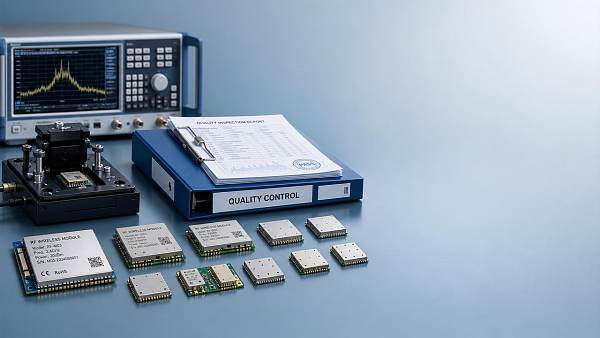
A capable rf module supplier should clearly define supported bands, protocols, output power, sensitivity, and certification status. Missing data is an early warning sign.
It is also important to confirm whether the supplier controls design, firmware, testing, and final assembly. Fragmented responsibility often creates slower problem resolution.
Start with a simple qualification checklist:
- Supported frequency bands and wireless standards
- Documented test methods and RF performance data
- Compliance with regional regulations
- Traceability of key components
- Standard lead time and surge capacity
- Change notification and lifecycle management process
In cross-sector manufacturing, RF modules may serve telemetry, industrial automation, smart mobility, agricultural monitoring, or environmental infrastructure.
That makes application context essential. A strong rf module supplier should ask about interference exposure, temperature range, vibration, enclosure material, and field update needs.
How do you verify quality beyond a sample that seems to work?
A working sample proves limited functionality. It does not prove process stability, lot consistency, or long-term reliability under real deployment conditions.
Ask the rf module supplier for structured evidence. Useful records include incoming inspection plans, process control points, burn-in data, and field failure analysis reports.
Quality systems matter even more when modules support safety-adjacent or uptime-sensitive equipment. Examples include connected vehicles, remote metering, and industrial gateways.
Key quality indicators to review
- Certification to ISO 9001, and where relevant, IATF 16949
- RF test coverage at module and finished product levels
- Environmental stress screening methods
- PCBA workmanship standards such as IPC references
- Corrective action response time and closure discipline
Consistency across lots should be checked through pilot runs, not just prototype units. Pilot data reveals antenna tuning variation, soldering drift, and firmware loading errors.
A dependable rf module supplier will usually share yield trends, outgoing quality targets, and test coverage summaries under a confidentiality agreement.
Which supply stability signals matter most in global sourcing?
Stable supply is not only about inventory. It depends on component sourcing strategy, factory flexibility, logistics resilience, and the ability to manage engineering changes calmly.
An rf module supplier should disclose whether critical chipsets are single-sourced or dual-sourced. This point has major impact during allocation cycles.
It is wise to review the supply chain down to the radio chipset, crystal, memory, and shielding components. Shortages often start with small upstream parts.
Questions that uncover hidden supply risk
- What percentage of material value comes from single-source components?
- Are approved alternates already validated?
- What is the standard response to component end-of-life notices?
- Can the supplier support buffer stock or bonded inventory?
- How are forecast changes handled within 8 to 12 weeks?
For industrial ESG and infrastructure projects, delayed communication modules can hold back entire systems. That includes sensors, controllers, and remote service platforms.
A resilient rf module supplier will maintain formal business continuity planning. Look for backup sites, alternate logistics routes, and crisis communication routines.
How should technical support and integration capability be compared?
The best RF hardware can still fail in deployment if integration support is weak. Radio performance depends on layout, shielding, antennas, firmware, and enclosure effects.
A qualified rf module supplier should provide design guides, reference layouts, antenna recommendations, and debugging support during bring-up.
Integration capability becomes especially important in compact devices. Automotive dashboards, precision agriculture nodes, and smart utility devices all have complex interference environments.
Support areas worth scoring
Support quality is often visible during pre-sales communication. Slow answers, vague drawings, or generic test reports suggest future execution problems.
What cost and contract factors are often overlooked?
The lowest unit price can hide higher total cost. Requalification, delayed approvals, firmware defects, and emergency resourcing are far more expensive later.
When comparing an rf module supplier, review total landed cost, not just quoted pricing. Include test effort, certification support, packaging, warranty, and logistics variability.
Contract terms should also address notification periods for design changes, minimum last-time-buy windows, and obligations for failure analysis support.
Common commercial blind spots
- No clear product lifecycle commitment
- Undefined revision control between samples and mass production
- Weak warranty language for intermittent RF faults
- No service-level expectations for technical escalation
For global programs, it also helps to define Incoterms, export control responsibilities, and data-sharing rules. These details reduce friction when schedules tighten.
What are the most common mistakes when choosing an rf module supplier?
One common mistake is selecting by sample performance alone. Another is assuming certification on the module removes all end-product testing needs.
Some teams also ignore lifecycle planning. A short-lived chipset can force redesigns long before the end equipment completes its service life.
Another mistake is failing to compare communication discipline. A reliable rf module supplier documents change control, issue tracking, and escalation routes clearly.
Finally, do not overlook regional manufacturing risks. Concentrated production may save money at first, but it can increase geopolitical and freight exposure.
Quick FAQ comparison table
A robust rf module supplier evaluation should combine quality, engineering, and continuity criteria into one decision framework. That approach reduces hidden risk across electronics, mobility, agriculture, and infrastructure applications.
Use this checklist to score candidates before final selection. Then validate findings with pilot production, documented audits, and a clear long-term supply agreement.
For organizations navigating complex industrial sourcing, structured benchmarking creates better outcomes than price-first selection. The right rf module supplier should strengthen both product performance and supply resilience.

The Archive Newsletter
Critical industrial intelligence delivered every Tuesday. Peer-reviewed summaries of the week's most impactful logistics and market shifts.