Monday, May 22, 2024

Circuit Components Selection Errors Often Show Up After Thermal Cycling
by
Published
Views:
Thermal cycling often exposes hidden weaknesses in circuit components long after initial validation, turning minor selection mistakes into costly failures across EV Tech, smart transportation, Agri-Tech, and other advanced systems. For teams evaluating hardware components, engine components, and climate technology within a resilient supply chain, understanding these risks is essential to improving reliability, compliance, and long-term operational performance.
In cross-sector manufacturing, a circuit that passes room-temperature bench tests can still fail after 500, 1,000, or 2,000 temperature swings between cold starts, peak loads, and outdoor exposure. These failures do not only affect semiconductors. They can also compromise connectors, solder joints, laminates, protective coatings, and embedded control boards inside pumps, tractors, battery systems, HVAC units, and environmental monitoring equipment.
For procurement teams, engineers, quality managers, and financial approvers, the real challenge is not simply choosing parts with acceptable datasheet values. It is selecting circuit components that remain mechanically stable, electrically consistent, and standards-aligned under repeated thermal stress across the full service life of the product. That is where technical benchmarking and disciplined selection criteria become critical.
Why Thermal Cycling Reveals Selection Errors So Late
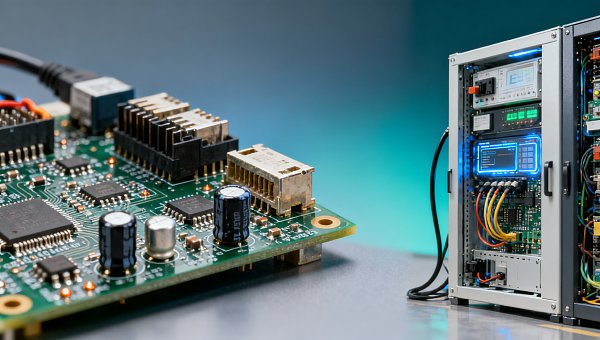
Thermal cycling is the repeated expansion and contraction of materials as temperature rises and falls. In industrial electronics, the cycle may range from -40°C to 85°C, -40°C to 125°C, or in some under-hood and power modules even higher. A component may survive static heat testing but fail when different materials inside the assembly expand at different rates over hundreds of cycles.
This delayed failure pattern is common because many selection mistakes are not obvious during incoming inspection or early validation. A capacitor may meet capacitance tolerance at 25°C, a connector may pass insertion tests, and a PCB laminate may appear dimensionally stable. Yet after 300 to 800 cycles, solder fatigue, microcracks, seal degradation, or contact resistance drift can begin to affect field performance.
In EV charging systems, smart mobility controllers, irrigation automation, and industrial ESG monitoring devices, thermal cycling is often combined with vibration, humidity, and power fluctuations. That combination makes marginal components fail faster. A part with only one weak margin can trigger broader system downtime, warranty cost, or safety review.
Typical failure mechanisms hidden during initial testing
The most frequent issue is mismatch in coefficient of thermal expansion between adjacent materials. Ceramic packages, copper traces, epoxy mold compounds, aluminum housings, and polymer seals all react differently to heat. Even a difference of a few ppm/°C can accumulate stress over 1,000 cycles.
Another overlooked factor is dwell time. A component tested for 15-minute high-temperature exposure may behave very differently under 45-minute dwell times in real service. The longer the dwell, the more likely moisture migration, solder creep, and housing deformation become.
Key warning signs before field failure
- Drift in resistance, capacitance, or insulation values after 200–500 cycles.
- Intermittent faults during startup, especially after overnight cold soak.
- Connector discoloration, seal hardening, or loss of contact force.
- Hairline cracks in solder joints, particularly on large package components.
The table below summarizes how hidden selection errors usually surface across industrial systems that operate in mixed thermal environments.
A common pattern across these failures is that the original part was not necessarily defective. It was simply selected for a narrower operating envelope than the end-use environment demanded. That distinction matters when building stronger sourcing and validation rules.
Where Cross-Industry Systems Face the Highest Thermal Cycling Risk
Thermal cycling risk is increasing because modern equipment combines electronics, power management, sensors, and environmental exposure in the same platform. A smart tractor, EV thermal management module, or filtration skid may contain control boards near motors, fluid lines, compressors, or engine-adjacent assemblies. That creates local temperature gradients that can exceed 40°C within a single enclosure.
In automotive and mobility applications, cold starts in winter and rapid heating during operation create aggressive stress profiles. Under-hood control modules and battery-adjacent boards may cycle several times per day. Over 3 to 5 years, that can mean tens of thousands of micro-expansion events, even if official test protocols cover only 500 to 1,000 major cycles.
In Agri-Tech and environmental infrastructure, outdoor equipment faces a different pattern. Day-night swings, direct solar loading, washdown, seasonal storage, and dust ingress combine with intermittent use. This makes field conditions less predictable than laboratory ramps and often more damaging to seals, housings, and exposed connectors.
High-risk applications that deserve tighter component review
- EV power electronics, charging interfaces, and battery monitoring boards operating from sub-zero startup to elevated load conditions.
- Autonomous or assisted agricultural equipment exposed to 8–12 hours of sunlight, vibration, dust, and irrigation moisture.
- Climate and filtration control systems where pumps, blowers, and sensors cycle on and off multiple times per shift.
- Industrial edge devices mounted near metal frames that create sharp thermal conduction paths.
For buyers and project managers, the priority is to link the real operating profile to the component selection process. The table below provides a practical way to align environment, expected cycle count, and review depth.
The key takeaway is that thermal cycling should be defined at the system level, not just at the part level. When sourcing decisions ignore enclosure design, duty cycle, and adjacent heat sources, even premium parts can be placed in the wrong conditions.
How to Select Circuit Components for Thermal Reliability
Effective component selection starts with translating field exposure into engineering criteria. Instead of asking whether a part can survive the rated temperature range, teams should ask whether it can hold electrical performance, mechanical integrity, and connection stability across the expected number of cycles. In many B2B programs, that means defining 4 to 6 mandatory screening points before approval.
A robust review usually covers component derating, package construction, board-level stress, material compatibility, and standards relevance. For example, a power device rated to 125°C junction temperature may still need 15% to 25% electrical derating if the enclosure has poor airflow or nearby heat sources. Likewise, connectors used in washdown zones need more than temperature tolerance; they also require sealing materials that maintain compression after repeated expansion.
Procurement and commercial evaluators should also assess whether suppliers provide cycle-test data, material disclosures, revision control, and lot consistency. A lower unit price can quickly lose value if the part creates rework, field service visits, or 6- to 12-week replacement delays.
Practical selection checklist
- Define the real temperature window, including hotspots, cold soak, dwell time, and ramp rate.
- Set a minimum cycle target such as 500, 1,000, or 2,000 cycles based on service life and duty pattern.
- Review CTE compatibility between component package, solder system, PCB material, and housing interface.
- Apply electrical and thermal derating, typically 10% to 30%, depending on load and ambient margin.
- Verify compliance relevance to ISO, IATF, IPC, or sector-specific internal requirements.
Component categories that need deeper scrutiny
Large ceramic capacitors, high-pin-count ICs, power modules, relays, connectors, and board-mounted sensors tend to show thermal cycling sensitivity earlier than simpler passive parts. Components with large mass or rigid terminations are especially prone to solder fatigue when mounted on boards that flex or are fixed to metal structures.
Another common mistake is evaluating each component in isolation. A correct selection decision often depends on interface behavior. For instance, a connector may be suitable on paper, but its mated pair, harness strain, and enclosure placement can reduce real-world life by 20% to 40%.
Teams using a multi-disciplinary benchmarking approach can compare components not only by price and lead time, but also by thermal margin, field maintainability, and replacement risk. That broader lens is increasingly valuable in globally distributed supply chains.
Validation, Standards, and Incoming Control That Reduce Failure Risk
Selection quality improves significantly when validation mirrors actual use conditions. A thermal cycling plan should define lower and upper limits, ramp speed, dwell duration, load state, sample size, and acceptance criteria. For many industrial electronics programs, a practical screening matrix uses 10 to 30 samples per critical part family, followed by board-level and system-level confirmation.
Standards alignment matters because it creates a common language between engineering, sourcing, quality, and external suppliers. Depending on the application, review teams may reference IPC workmanship expectations, IATF-driven automotive quality frameworks, or internal ISO-aligned control plans. The standard alone does not guarantee durability, but it improves traceability and decision discipline.
Incoming control should go beyond visual inspection. For thermal-sensitive components, useful checks include lot traceability, packaging moisture condition, solderability windows, dimensional consistency, and supplier change notification rules. A part that arrives within spec can still become a reliability risk if storage handling or process conditions are not controlled.
Recommended validation structure
The table below outlines a practical verification sequence that helps cross-functional teams detect thermal cycling issues before full production release.
This staged approach reduces the chance of learning about thermal mismatch only after installation. It also gives finance and project leadership clearer visibility into whether a slightly higher component cost may prevent larger warranty and downtime expenses later.
Control points worth formalizing in procurement documents
- Minimum thermal cycle qualification range and sample count.
- Mandatory notification for material, plating, mold compound, or factory changes.
- Lead-time transparency for standard and constrained supply scenarios, often 4–16 weeks.
- Defined acceptance criteria for electrical drift, seal condition, and visual cracking.
When these controls are documented early, distributors, contract manufacturers, and engineering teams can align on the same quality expectations before launch pressure drives shortcuts.
Common Procurement Mistakes and a Better Decision Framework
Many thermal cycling failures originate in commercial decisions that seem reasonable at the time. Teams may prioritize unit cost, substitute a part with similar nominal ratings, or approve a second source without reviewing package construction differences. In stable indoor products, these shortcuts may go unnoticed. In harsh or mixed environments, they can become expensive within 6 to 18 months.
Another recurring mistake is separating engineering approval from supply chain risk review. A part may be technically robust but sourced from a channel with inconsistent lot control or weak revision notification. Conversely, a widely available part may have attractive delivery but limited evidence of endurance under repeated thermal stress. Both cases create hidden lifecycle cost.
The better framework is to evaluate components using a weighted decision matrix that balances reliability, availability, compliance, total service cost, and replacement flexibility. That helps business evaluators and technical reviewers make aligned choices instead of optimizing for one metric at the expense of the others.
Decision factors that matter beyond unit price
- Thermal cycle endurance evidence, including test conditions and failure criteria.
- Supplier process stability, lot traceability, and change management responsiveness.
- Compatibility with existing PCB design, housing geometry, and service procedures.
- Total cost impact including warranty exposure, downtime, field labor, and spare stocking.
- Regional sourcing resilience and alternate qualification effort.
For organizations managing electronics, mobility systems, environmental infrastructure, and precision hardware across multiple regions, a technical intelligence platform can simplify this comparison work. By benchmarking across standards, material behavior, and application classes, decision-makers gain a more realistic view of component fit.
FAQ: questions frequently raised during component evaluation
How many thermal cycles are enough for screening?
There is no single answer. For moderate industrial applications, 500 cycles may serve as an early filter. For mobility, outdoor automation, or higher-risk safety-related systems, 1,000 to 2,000 cycles often provide better confidence, especially when powered testing and vibration are added.
What should buyers ask suppliers before approving alternates?
Ask for package material details, derating recommendations, cycle-test conditions, change control policy, and evidence that the alternate was assessed at board level, not only by nominal specification matching. A part with the same voltage and temperature rating can still behave differently under stress.
Which teams should be involved in the approval process?
At minimum, engineering, quality, procurement, and project leadership should participate. In regulated or high-cost systems, finance and field service teams should also review the decision because replacement logistics and downtime costs can materially affect ROI.
Circuit components selection errors rarely appear where teams first expect them. They emerge later, under repeated temperature transitions, when material mismatch, weak derating, incomplete validation, or procurement shortcuts begin to interact. That is why thermal cycling should be treated as a strategic selection issue, not only a lab test item.
For organizations working across semiconductor and electronics, automotive and mobility, smart agriculture, industrial ESG infrastructure, and precision tooling, the most reliable decisions come from benchmarking parts in the context of the full system. GIM supports that process with cross-sector technical intelligence, standards-based comparison, and practical insight for sourcing, quality, and engineering teams.
If you need help comparing component options, defining a stronger validation plan, or reducing supply chain risk in thermally demanding applications, contact us to get a tailored assessment, discuss product details, or explore broader technical benchmarking solutions.
- electronics
- semiconductors
- advanced systems
- circuit components
- Mobility
- EV Tech
- Smart Transportation
- engine components
- sensors
- smart transportation
- Agri-Tech
- Industrial ESG
- climate technology
- ESG Monitor
- hardware components
- Precision tooling
- Technical benchmarking
- Smart Agri-Tech
- Resilient supply chain
- Environmental infrastructure

The Archive Newsletter
Critical industrial intelligence delivered every Tuesday. Peer-reviewed summaries of the week's most impactful logistics and market shifts.