Monday, May 22, 2024

Omdia: Global AI Smartphone Shipments Up 1% in Q1 2026, HDI PCB Export Prices Rise 5.2%
by
Published
Views:
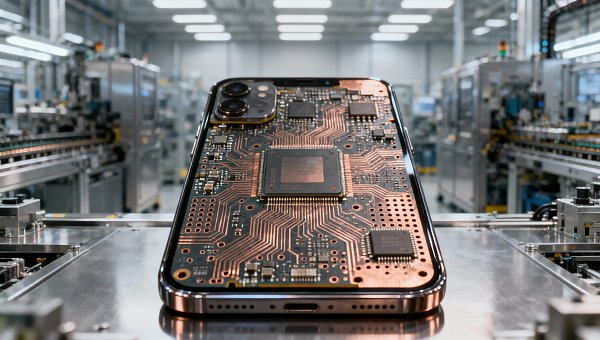
Omdia’s latest report, released on May 10, 2026, indicates a modest 1% year-on-year increase in global AI smartphone shipments for Q1 2026, reaching 312 million units — with 38% featuring on-device large language models. This shift is driving demand for high-density interconnect (HDI) printed circuit boards (PCBs), particularly those with six or more layers and microvias ≤50 μm, prompting a 5.2% rise in China’s export unit prices to the U.S., South Korea, and Southeast Asia, alongside extended lead times of 14–18 weeks. Stakeholders in PCB manufacturing, semiconductor packaging supply chains, and electronics export trade should monitor pricing, capacity allocation, and regional logistics dynamics closely.
Event Overview
According to Omdia’s report published on May 10, 2026, global AI smartphone shipments in Q1 2026 totaled 312 million units, representing a 1% increase year-on-year. Of these, 38% were equipped with on-device large language models. The trend has increased per-unit HDI PCB usage by 23%, especially for advanced configurations (≥6 layers, microvias ≤50 μm). As a result, average export prices for HDI PCBs from leading Chinese manufacturers to the U.S., South Korea, and Southeast Asia rose 5.2% year-on-year, while typical delivery lead times extended to 14–18 weeks.
Impact on Specific Industry Segments
Direct Exporters (PCB Manufacturers & Distributors)
These firms face tighter capacity utilization and longer order cycles due to rising demand for high-spec HDI PCBs. The 5.2% price increase reflects constrained supply rather than broad-based inflation — suggesting selective margin pressure depending on product mix and customer contract terms.
Raw Material Procurement Entities (Copper Foil, Prepreg, ABF Substrate Suppliers)
Increased HDI PCB production volumes — especially for ≥6-layer variants — raise demand for finer-line-capable base materials and low-Dk/Df laminates. However, no data indicates corresponding price shifts or shortages among upstream material suppliers at this stage.
EMS/JDM Contract Manufacturers (Smartphone ODMs & Assembly Firms)
Extended HDI PCB lead times (14–18 weeks) may compress new product ramp schedules, particularly for mid-cycle AI feature upgrades. Firms reliant on just-in-time procurement face heightened risk of component allocation delays unless forward-buying or dual-sourcing strategies are activated.
Supply Chain Logistics & Trade Services Providers
Longer lead times and higher unit values elevate working capital requirements and customs valuation scrutiny — especially for exports to the U.S. and ASEAN markets under evolving trade compliance frameworks. Documentation accuracy for HDI PCB classification (e.g., HS code 8534.00) becomes more critical amid potential tariff reassessments.
Key Considerations for Enterprises and Practitioners
Monitor HDI PCB specification trends by end-market
Not all AI smartphones drive equal HDI demand. Focus on models targeting premium segments in North America and Northeast Asia — where adoption of ≥6-layer, ≤50-μm microvia HDI is most concentrated. Track OEM design win announcements and platform roadmaps (e.g., Qualcomm Snapdragon 8 Gen 4, MediaTek Dimensity 9400 derivatives) for early signals.
Assess exposure to U.S./Korea/ASEAN export channels
The reported 5.2% price increase applies specifically to exports to the U.S., South Korea, and Southeast Asia — not global averages. Firms serving other regions (e.g., EMEA, LATAM) should verify whether their pricing and lead time profiles align with this trend or diverge due to local inventory buffers or alternate sourcing.
Evaluate lead time implications for NPI timelines
A 14–18 week HDI PCB lead time directly impacts new product introduction (NPI) planning. Cross-functional alignment between procurement, engineering, and program management is essential — especially where firmware co-development with on-device LLMs requires synchronized hardware availability.
Review contractual terms for price adjustment clauses
Given the observed price uplift, enterprises with open-ended or long-duration supply agreements should audit existing contracts for indexation mechanisms tied to raw material costs or lead time premiums. Proactive renegotiation may be warranted where fixed-price terms conflict with current market realities.
Editorial Perspective / Industry Observation
Observably, this data point reflects early-stage structural tightening in the high-end HDI PCB segment — driven not by overall smartphone volume growth (which remains flat at +1%), but by architectural shifts toward on-device AI processing. Analysis shows the 5.2% export price increase is likely demand-driven rather than cost-push, given the specificity of the affected PCB tier (≥6-layer, ≤50-μm microvia). It is better understood as a signal of localized capacity strain than a broad industry inflection. From an industry perspective, sustained monitoring is warranted — particularly for whether this trend accelerates into Q2 2026 or normalizes as new HDI production lines come online in China and Vietnam.
It remains unclear whether the current lead time extension reflects genuine capacity limits or strategic inventory positioning by intermediaries. That aspect requires continued observation beyond the scope of Omdia’s Q1 2026 report.
Conclusion
This report underscores a granular but consequential development: AI smartphone architecture is reshaping PCB demand at the specification level — not just the volume level. The impact is currently narrow (focused on advanced HDI), geographically selective (U.S., Korea, ASEAN), and operationally tangible (price and lead time). It is best interpreted not as a macroeconomic indicator, but as a technical supply-chain signal requiring targeted operational response — particularly for firms engaged in high-spec PCB procurement, export logistics, or AI device integration.
Source Attribution
Main source: Omdia report published on May 10, 2026.
Ongoing observation required for: Lead time drivers (capacity vs. inventory behavior), regional price divergence outside U.S./Korea/ASEAN, and follow-up HDI capacity expansion announcements from Chinese PCB makers.

The Archive Newsletter
Critical industrial intelligence delivered every Tuesday. Peer-reviewed summaries of the week's most impactful logistics and market shifts.