Monday, May 22, 2024

PCBA manufacturing delays often start before the line runs
by
Published
Views:
PCBA manufacturing delays often begin long before assembly starts—inside design reviews, sourcing decisions, tooling solutions, and fragmented supplier communication. In modern manufacturing, where tech hardware, engineering standards, and global manufacturing networks intersect, early misalignment can disrupt cost, quality, and launch timing. For teams evaluating plastic injection mold factory readiness, industrial infrastructure resilience, industrial sustainability, and even data links to crop monitoring, understanding these hidden delay triggers is essential.
Why PCBA manufacturing delays start before production planning is visible
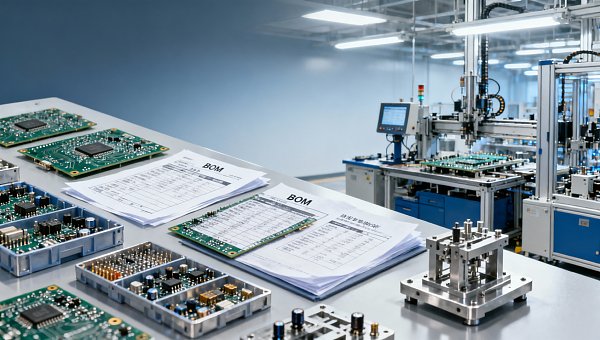
Many organizations still treat PCBA manufacturing delay as a line-side issue, but the first schedule slip usually appears 2–6 weeks earlier. It starts when design output, approved vendor lists, compliance expectations, and tooling readiness are not aligned at the same decision gate. For operators, project managers, sourcing teams, and financial approvers, this means the assembly line may be idle for reasons that never show up on a machine dashboard.
In cross-sector programs, the risk becomes larger. A board used in EV subsystems, smart agricultural controls, industrial pumps, or environmental monitoring can inherit requirements from IPC, ISO, supplier PPAP-style documentation, and regional sourcing constraints at the same time. When one team evaluates cost, another checks quality, and a third reviews component availability without a shared benchmark, delay moves from isolated incident to structural problem.
This is where a platform like Global Industrial Matrix becomes practical rather than theoretical. GIM connects Semiconductor & Electronics, Automotive & Mobility, Smart Agri-Tech, Industrial ESG & Infrastructure, and Precision Tooling into one decision framework. That matters because PCBA manufacturing rarely fails for one reason only; it fails when mechanical, digital, and supply chain assumptions are reviewed in separate silos.
A useful way to think about hidden delay is to split it into 4 pre-line stages: design release, sourcing validation, manufacturing engineering readiness, and supplier communication control. If one stage is weak, the downstream impact can include 7–15 days of component revalidation, 1–3 rounds of engineering clarification, or a missed launch window that affects procurement, channel partners, and field deployment plans.
- Design release risk: incomplete BOM hierarchy, unclear revision status, missing stack-up notes, or unclosed DFM and DFT comments.
- Sourcing risk: long-lead semiconductors, alternate parts without qualification logic, and poor visibility into MOQ, MSL, or packaging constraints.
- Tooling and fixture risk: test fixtures, selective solder pallets, injection-molded housings, or connector interface parts not synchronized with board readiness.
- Communication risk: engineering, quality, and purchasing teams using different supplier assumptions across different regions.
The earliest warning signs that procurement and engineering should watch
The first warning sign is not usually a formal delay notice. It is often a pattern: open questions remain unresolved for more than 3 working days, alternate components are discussed without lifecycle review, or mechanical interfaces change after PCB layout freeze. Technical evaluators often see this in ECO traffic, while business evaluators notice it as quote volatility or repeated date revisions.
Quality and safety managers should also watch for documentation imbalance. If IPC workmanship expectations are discussed, but incoming inspection criteria, traceability format, and test coverage are not defined, the program is vulnerable. A board can be assembled on time and still be delayed before shipment because test escapes, labeling gaps, or ESD handling controls were not closed during pre-production review.
For distributors and channel partners, an early delay signal is frequent change in sample configuration. When the first article, pilot run, and customer demo unit all carry different component mixes, forecasting becomes unreliable. That affects not only delivery promises but also after-sales spare strategy, field service stocking, and regional compliance paperwork.
Which hidden causes create the most expensive schedule impact?
Not every delay has the same financial effect. Some add 3–5 days with limited cost impact, while others trigger redesign, re-qualification, or multi-site rescheduling. In integrated manufacturing environments, the most expensive issues tend to be those that cross disciplines: a PCB design that ignores enclosure tolerance, a component substitution that changes thermal behavior, or a tooling decision that conflicts with final assembly flow.
The table below summarizes common pre-line delay triggers in PCBA manufacturing and how different functions experience the impact. This helps enterprise decision-makers, project leads, and finance approvers separate routine disruption from high-cost structural risk.
The pattern is clear: the costliest delay is not always the longest one, but the one that forces multiple functions to reopen decisions. A sourcing delay may look manageable until it requires engineering signoff, a new test fixture, and fresh commercial approval. That is why integrated benchmarking across electronics, tooling, and infrastructure matters.
GIM helps reduce this uncertainty by aligning hardware benchmarking with international standards and cross-sector manufacturing logic. For example, a smart agri-tech controller may share electronics complexity with industrial sensors, but its enclosure, ingress protection expectations, and field durability assumptions can resemble mobility or infrastructure programs. Treating those inputs together shortens decision loops.
Why tooling and industrial infrastructure are often underestimated
A frequent blind spot is the assumption that PCBA is independent from tooling readiness. In reality, many products require fixtures, molded supports, brackets, cable routing components, or protective enclosures before assembly can proceed through verification. If the plastic injection mold factory is not aligned on tolerance stack-up, resin selection, or gate review timing, board readiness does not translate into shipment readiness.
Industrial infrastructure also matters. Stable utilities, ESD-safe areas, material storage controls, and controlled handoff between SMT, test, box-build, and packing can shape schedule reliability. A facility may have nominal capacity, but if traceability systems, environmental controls, or test station redundancy are weak, one bottleneck can disrupt an entire 3-stage production schedule.
For sustainable manufacturing programs, another underestimated factor is regulatory and reporting alignment. Materials declarations, recycling expectations, and environmental handling requirements do not always stop assembly from starting, but they can stop product release, export, or customer acceptance later. That still becomes a PCBA manufacturing delay in commercial terms.
How should buyers evaluate PCBA readiness before issuing a purchase decision?
A practical procurement review should test readiness before price comparison becomes final. Buyers often compare unit cost first, then discover that one supplier assumed customer-furnished parts, another excluded fixtures, and a third quoted only after Gerber release without test strategy. A better method is to evaluate 5 checkpoints: design maturity, supply continuity, process capability, compliance coverage, and communication discipline.
This matters across user groups. Operators need stable work instructions. Technical evaluators need manufacturability evidence. Business reviewers need commercial clarity. Finance teams need exposure control. Quality managers need traceability and inspection logic. When these priorities are reviewed separately, low quoted cost can hide a later schedule premium.
The following comparison table can support supplier screening, internal approval, and distributor-side validation when PCBA manufacturing delays are a known business risk.
This type of evaluation reduces the chance that a low-cost quote becomes a delayed and expensive program. It also gives finance and executive reviewers a more defensible basis for approval because the decision is tied to visible risk categories rather than headline price alone.
A 4-step pre-award checklist for cross-functional teams
- Confirm release completeness: verify BOM, drawings, revision history, test plan, and enclosure interfaces before asking for final lead time.
- Map critical materials: identify semiconductors, connectors, custom magnetics, or molded parts with lead-time sensitivity or single-source exposure.
- Review manufacturing path: define whether the first build is prototype, pilot, or production, and whether AOI, ICT, FCT, or burn-in is required.
- Set communication rules: agree on who approves alternates, who closes DFM comments, and how changes are escalated within each 24-hour cycle.
These four steps are simple, but they address most hidden drivers of PCBA manufacturing delay. More importantly, they make it easier to compare suppliers on readiness, not just on presentation quality or commercial speed.
What standards, compliance points, and quality controls should not be deferred?
Compliance is often treated as a late-stage checkpoint, but in PCBA manufacturing it should influence early planning. IPC-related workmanship criteria, ESD controls, traceability expectations, material declarations, and product-specific safety requirements can affect supplier eligibility, process flow, storage methods, and release timing. If these points are deferred until pilot build, the result is usually rework or hold status.
For cross-industry programs, the challenge is broader than electronics alone. Automotive-adjacent assemblies may require stronger process documentation. Smart agri-tech products may add outdoor durability or sensor reliability checks. Environmental infrastructure controls may require stronger lifecycle traceability and serviceability logic. One board can serve multiple sectors, but each sector adds acceptance conditions that should be translated before build planning starts.
GIM’s advantage is the ability to compare these requirements across sectors instead of reviewing them one by one in isolation. Benchmarking HDI substrates, control boards, molded interfaces, and industrial hardware against recognized standards creates a shared language between engineering, procurement, and quality teams. That directly reduces avoidable clarification cycles.
Key controls that should be set before pilot build
At minimum, teams should define 6 control points before pilot build: workmanship standard, lot traceability method, incoming inspection scope, in-process test plan, outgoing acceptance criteria, and change-management authority. If any of these remain informal, pilot output may not convert into approved shipment.
It is also important to specify storage and handling rules for moisture-sensitive devices, ESD-sensitive parts, and field-critical connectors. Even where exact thresholds depend on part type and customer requirement, the control logic should be documented up front. Without that, operators and quality teams make local decisions that later create nonconformance discussions.
For project managers, the operational benefit is simple: each early compliance decision prevents one later approval loop. Across a 3-stage launch path—prototype, pilot, mass production—that can be the difference between controlled scaling and recurring delay.
Common misconception
A common misconception is that quality documentation can wait until volume production. In reality, documentation discipline is what allows prototype learning to become repeatable production knowledge. If records begin too late, every new build behaves like a first build, and schedule confidence remains weak.
How to reduce delay risk across electronics, tooling, and multi-site supply networks
Reducing PCBA manufacturing delay requires more than a faster contract manufacturer. It requires synchronized visibility across electronics design, component sourcing, tooling readiness, and plant-level execution. In practice, the most resilient programs are those that standardize how data moves between engineering, procurement, quality, and regional suppliers during the first 30–45 days of a program.
This matters for broad industrial portfolios. A control board tied to crop monitoring may rely on sensor-grade electronics, outdoor enclosures, and remote service access. A mobility subsystem may emphasize vibration, thermal stability, and tighter change control. An infrastructure controller may prioritize uptime, traceability, and service part continuity. The board is only one part of the operating system around the product.
Because GIM operates as a multi-disciplinary intelligence hub, it can support decisions that are difficult to make from a single-category lens. Instead of asking only whether a PCB can be built, teams can ask whether the total system—board, housing, test, compliance path, supplier resilience, and operational environment—is ready for launch. That is the better question when delay costs exceed unit-price savings.
FAQ: practical questions buyers and project teams often ask
How long is a realistic PCBA manufacturing lead time?
It depends on material risk, test complexity, and whether tooling or enclosure items are included. For stable designs with common parts, prototype preparation may move in 1–3 weeks. For programs involving long-lead semiconductors, custom fixtures, or molded components, total readiness can extend to 4–8 weeks or more. The key is to separate board assembly time from total launch readiness time.
What should procurement ask before comparing quotes?
Ask whether the quote assumes full BOM availability, approved alternates, test fixture inclusion, and final documentation status. Also confirm whether lead time is measured from PO release, complete data package receipt, or all materials in-house. These definitions can change the practical schedule by 7–15 days.
Can a strong EMS partner solve most delays alone?
Not alone. A capable supplier can reduce manufacturing risk, but delays rooted in design ambiguity, internal approval lag, or tooling misalignment still require action from the customer side. The strongest outcome comes from shared governance between engineering, sourcing, quality, and supplier teams.
Why do multi-industry products face more schedule volatility?
Because they inherit mixed expectations. A product may combine electronics-grade sourcing risk, automotive-style documentation, industrial infrastructure uptime expectations, and outdoor environmental constraints. Without a unified benchmark, each function optimizes its own requirement and the total schedule becomes unstable.
Why work with a cross-sector benchmarking partner before delays become visible?
When programs span electronics, tooling, mobility, agriculture, and infrastructure, hidden delay risk usually appears in the interfaces between teams rather than in a single technical issue. That is why many organizations need more than supplier lists or isolated quality checks. They need comparative visibility across standards, component pathways, manufacturing readiness, and operational constraints.
Global Industrial Matrix supports this need through verifiable, cross-sector benchmarking. By connecting Semiconductor & Electronics with Automotive & Mobility, Smart Agri-Tech, Industrial ESG & Infrastructure, and Precision Tooling, GIM helps teams evaluate whether a program is truly launch-ready or simply quote-ready. That difference matters for project owners, financial approvers, quality leaders, and distribution partners alike.
If you are reviewing PCBA manufacturing risk, we can help you examine the factors that typically get missed: BOM maturity, alternate sourcing logic, fixture and mold dependency, industrial infrastructure readiness, cross-site communication gaps, and standard alignment across ISO, IATF, or IPC-related expectations where applicable. This is especially useful when product categories overlap and internal teams need one consistent decision framework.
Contact us to discuss parameter confirmation, supplier benchmarking, lead-time evaluation, tooling dependencies, compliance planning, sample-build readiness, or quotation alignment. A focused early review can help your team shorten approval cycles, clarify hidden assumptions, and reduce the chance that PCBA manufacturing delays start long before the line runs.
- electronics
- semiconductors
- tech hardware
- PCBA manufacturing
- Mobility
- sensors
- Agri-Tech
- crop monitoring
- Industrial ESG
- industrial sustainability
- tooling solutions
- plastic injection mold factory
- HDI substrates
- Precision tooling
- Smart Agri-Tech
- Global manufacturing
- Modern manufacturing
- Engineering standards
- Industrial infrastructure
- Environmental infrastructure
- PCBA manufacturing lead time

The Archive Newsletter
Critical industrial intelligence delivered every Tuesday. Peer-reviewed summaries of the week's most impactful logistics and market shifts.