Monday, May 22, 2024

When a Custom PCBA Manufacturer Is Worth the Extra Cost
by
Published
Views:
For finance approvers, paying more for a custom PCBA manufacturer only makes sense when the return is measurable. Beyond unit price, the real value lies in lower failure rates, stronger compliance, supply chain resilience, and reduced lifecycle costs. Understanding when a custom PCBA manufacturer justifies the premium helps organizations protect margins while supporting long-term operational reliability.
A checklist-based evaluation is the fastest way to make that decision. In cross-sector manufacturing environments, cost overruns rarely come from the quoted board price alone. They usually emerge later through field failures, certification delays, redesign loops, poor component traceability, emergency rebuys, or fragmented supplier coordination. For procurement teams, Tier-1 engineering groups, and financial decision-makers working in electronics, mobility, industrial infrastructure, agri-tech, or precision equipment, the question is not whether a custom PCBA manufacturer costs more. The better question is whether that extra cost prevents larger and less visible losses.
Start With the Right Finance Question: What Cost Is Actually Being Reduced?
Before approving a premium supplier, finance leaders should define the decision in total-cost terms. A low-cost vendor can appear attractive in an RFQ comparison while quietly increasing downstream exposure across warranty claims, compliance management, inventory instability, and project delays. A custom PCBA manufacturer becomes worth the extra cost when it materially reduces one or more high-impact risks that directly affect cash flow, operating continuity, or contractual performance.
In practice, this means evaluating not only fabrication and assembly pricing, but also the manufacturer’s ability to support design-for-manufacturing, component sourcing discipline, process consistency, and documentation integrity. For financial approvers, these are not technical details in isolation; they are predictors of whether the business will face hidden costs later.
Core Checklist: When a Custom PCBA Manufacturer Is Usually Worth the Premium
Use the following checklist to determine whether a custom PCBA manufacturer is likely to create measurable value rather than simply add expense.
- The product has high reliability requirements. If the PCB assembly is used in automotive subsystems, industrial controls, filtration monitoring equipment, power electronics, mobility platforms, or field-deployed devices, failure costs are much higher than the cost delta between suppliers.
- Certification or compliance exposure is significant. If the project touches IPC, ISO, IATF, UL, CE, RoHS, REACH, or customer-specific validation requirements, an experienced custom PCBA manufacturer can prevent expensive rework and failed audits.
- Design complexity is above standard commercial builds. HDI layouts, fine-pitch components, mixed-technology assemblies, thermal management demands, conformal coating, controlled impedance, or multilayer signal integrity all increase the value of process expertise.
- Component sourcing risk is nontrivial. If long lead times, obsolescence, allocation pressure, or counterfeit risk affect your BOM, a stronger manufacturer can reduce costly shortages and schedule disruption.
- The volume profile is volatile. For pilot runs, engineering validation, bridge production, or uneven demand cycles, a custom PCBA manufacturer with flexible planning can reduce excess inventory and line-change inefficiency.
- Failure in the field creates contractual or reputational damage. In B2B supply chains, one unstable assembly can trigger penalties, delayed acceptance, or loss of preferred vendor status.
- The board is part of a larger system integration challenge. If the assembly must align with enclosures, sensors, vehicle subsystems, agricultural equipment, infrastructure controls, or precision tooling, collaborative engineering support matters.
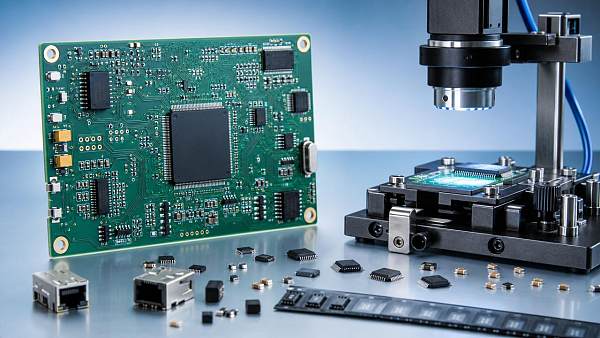
Decision Table: What Finance Should Check Before Approving a Higher-Cost Supplier
The table below translates technical selection criteria into finance-relevant decision signals. This helps determine whether a custom PCBA manufacturer is adding strategic value or simply charging a premium without evidence.
Key Judgment Standards That Often Justify Extra Cost
1. Lower Failure Rates Have a Bigger ROI Than Unit Savings
For finance approvers, this is often the most decisive factor. A few percentage points in field failure reduction can outweigh substantial per-board savings, especially when failures trigger service dispatches, warranty replacements, customer downtime, or lost production. A capable custom PCBA manufacturer invests in process control, solder profile optimization, inspection depth, and validation discipline. Those capabilities may raise the quote, but they also lower the probability of expensive downstream events.
2. Better Documentation Reduces Commercial Friction
Many finance teams underestimate the cost of poor records. In industrial supply chains, incomplete traceability or unclear change control can stall customer approvals, complicate root-cause analysis, and weaken claims recovery with upstream suppliers. A custom PCBA manufacturer that maintains disciplined documentation creates value by making audits, RMAs, engineering changes, and quality investigations faster and cheaper.
3. Advanced Sourcing Capability Protects Working Capital
A premium manufacturer is often justified when the BOM contains constrained semiconductors, niche passives, automotive-grade components, or region-specific alternatives. Strong sourcing governance can reduce the need for panic buys, excessive buffer stock, and costly redesigns caused by unavailable parts. In volatile markets, a custom PCBA manufacturer with validated supplier networks and substitute management may preserve both cash discipline and delivery reliability.
4. NPI and Change Management Save More Than They Cost
During new product introduction, the cheapest board assembler may not be the cheapest project choice. Design revisions, tooling adjustments, test fixture changes, and early process corrections can create repeated cost leakage. A custom PCBA manufacturer with mature NPI workflows identifies manufacturability issues earlier, helping teams avoid repeated prototype rounds and avoidable launch slippage.
Scenario Guide: Where the Premium Makes the Most Sense
The value of a custom PCBA manufacturer varies by application. Financial approvers should weigh the premium differently depending on the commercial and operational context.
- Automotive and mobility systems: When assemblies support power management, sensing, control, or harsh-environment electronics, compliance, reliability, and traceability usually justify higher spend.
- Industrial ESG and infrastructure equipment: Controls used in pumps, filtration modules, monitoring systems, and energy assets often operate continuously. Downtime costs can quickly exceed initial savings from a lower-tier supplier.
- Smart agri-tech equipment: Boards used in autonomous tractors, environmental sensors, irrigation controls, or ruggedized field electronics need resilience against vibration, moisture, and service constraints.
- Semiconductor and electronics benchmarking projects: If the board is part of a performance-sensitive platform, process consistency and accurate build replication are essential for valid comparisons.
- Precision tooling and machine control: Assemblies embedded in tools or production equipment can affect dimensional accuracy, throughput, and maintenance cycles, making reliability a direct productivity issue.
Commonly Missed Risk Items in a Custom PCBA Manufacturer Review
Some of the most expensive mistakes happen because buyers compare quotes without checking the hidden assumptions behind them. Finance teams should ask whether the same test coverage, material grade, inspection level, traceability scope, and change-control support are included across suppliers. If not, the comparison is distorted.
Another frequent oversight is underestimating the cost of poor communication during engineering changes. A custom PCBA manufacturer may charge more because it provides structured DFM feedback, quicker exception handling, and tighter coordination across sourcing, assembly, and quality teams. That is not administrative overhead alone; it can be a meaningful cost-control mechanism.
It is also risky to focus only on current order size. If the product roadmap includes scaling, redesigns, regional compliance shifts, or future service obligations, a manufacturer with better long-term support may create stronger value than a low-cost option optimized only for the first batch.
Practical Approval Checklist for Finance Teams
- Request a total-cost comparison, not just a unit-price comparison, including scrap risk, warranty exposure, delay cost, and likely engineering rework.
- Ask the custom PCBA manufacturer for yield benchmarks, inspection methods, and evidence of process consistency on comparable builds.
- Verify certifications, audit readiness, and documentation discipline relevant to your sector and customer requirements.
- Review BOM sourcing strategy, approved alternates, and mitigation plans for constrained or obsolete components.
- Assess NPI responsiveness, change-order control, and support for iterative design refinement.
- Clarify what is included in the quote: testing, coating, serialization, traceability, packaging, reporting, and failure analysis support.
- Estimate the financial impact of one major failure event, then compare it with the annual premium paid to the higher-tier supplier.
How to Tell If You Are Paying Too Much
A custom PCBA manufacturer is not automatically the right choice simply because it offers advanced capabilities. The premium becomes questionable when your product is low-risk, technically simple, lightly regulated, easy to source, and inexpensive to replace in the field. It is also a warning sign if the manufacturer cannot clearly explain how its processes improve yield, resilience, or lifecycle cost. Finance approvers should expect evidence, not just positioning language.
The best approvals are tied to measurable outcomes: fewer failures per thousand units, shorter qualification cycles, lower expedite spend, higher on-time delivery, stronger audit performance, or reduced redesign frequency. If those links cannot be demonstrated, the extra cost may be difficult to justify.
Final Action Guide: What to Prepare Before Supplier Discussions
If your organization is evaluating whether a custom PCBA manufacturer is worth the premium, prepare a short decision package before commercial negotiations. Include the target application, expected volumes, reliability requirements, compliance obligations, service environment, lifecycle horizon, and failure-cost estimate. Add any known BOM constraints, timeline pressures, and customer audit expectations. This allows the manufacturer to propose a fit-for-purpose build strategy rather than a generic quote.
For organizations operating across electronics, mobility, industrial infrastructure, sustainable agriculture, and precision equipment, disciplined supplier evaluation is part of broader manufacturing resilience. A strong custom PCBA manufacturer can support that resilience when the board assembly is critical enough that quality, traceability, sourcing control, and long-term stability matter more than the lowest upfront price. If you need to confirm fit, the next conversation should focus on technical risk, test coverage, compliance scope, sourcing strategy, production flexibility, lead time risk, and the full lifecycle economics behind the quote.

The Archive Newsletter
Critical industrial intelligence delivered every Tuesday. Peer-reviewed summaries of the week's most impactful logistics and market shifts.