Monday, May 22, 2024

Key Metrics for Evaluating SMT Precision in PCB Assembly
by
Published
Views:
Introduction to SMT Precision in PCB Assembly
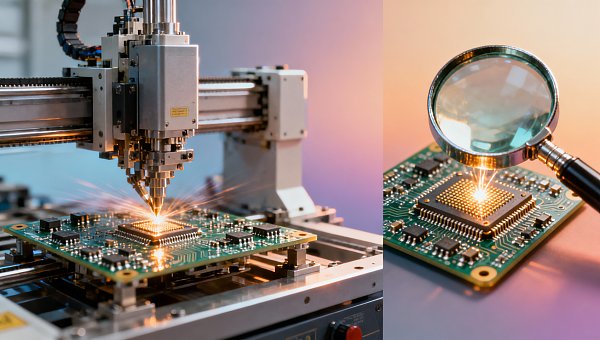
In the high-stakes world of PCB assembly, SMT (Surface Mount Technology) precision directly impacts the performance of critical electronics—from Electric Vehicles and ADAS systems to semiconductors and computer parts. This technical guide deciphers the key metrics procurement teams, quality controllers, and engineering managers must evaluate to ensure manufacturing excellence. Discover how precision tooling standards and IPC benchmarks can optimize your Mobility solutions, renewable energy applications, and automotive engineering projects while mitigating supply chain risks.
Critical Metrics for SMT Precision Evaluation
Evaluating SMT precision requires a systematic approach to ensure component placement accuracy, solder joint integrity, and overall PCB reliability. The following metrics are essential for quality assurance across automotive, industrial, and consumer electronics applications.
Placement Accuracy Parameters
Component placement accuracy determines the functional reliability of assembled PCBs. Key parameters include:
- X/Y placement accuracy: ±0.025mm for high-density interconnects (HDI)
- Rotational accuracy: ±0.5° for fine-pitch components
- Coplanarity tolerance: ≤0.1mm for BGA packages
The table above demonstrates how automotive applications typically require 2x tighter tolerances compared to industrial applications, particularly for ADAS components and EV power modules.
Solder Joint Quality Assessment
Solder joint integrity remains the leading cause of field failures in PCB assemblies. Modern inspection systems evaluate multiple parameters to predict long-term reliability.
Key Inspection Criteria
Automated optical inspection (AOI) and X-ray systems measure:
- Solder fillet formation (minimum 50% heel coverage)
- Void percentage (≤25% for power electronics)
- Intermetallic compound thickness (2-5µm optimal range)
Process Capability Index (Cpk) for SMT Lines
Manufacturing excellence requires quantifying process stability through statistical metrics. The Process Capability Index evaluates how consistently an SMT line meets specification limits.
For mission-critical automotive electronics, Tier 1 suppliers typically mandate Cpk ≥ 1.67 for all SMT processes, while industrial applications may accept Cpk ≥ 1.33.
Industry-Specific Compliance Requirements
Different sectors impose unique precision requirements based on operational environments and reliability expectations.
Automotive Electronics Standards
IATF 16949-certified facilities must demonstrate:
- 0 ppm defect rate for safety-critical systems
- Process FMEA documentation for all SMT operations
- 100% traceability of component placement
Implementation Roadmap for Precision Improvement
Achieving superior SMT precision requires coordinated upgrades across equipment, materials, and process controls.
Key Upgrade Considerations
- Evaluate current Cpk against product requirements
- Implement closed-loop feedback systems for placement correction
- Upgrade stencil technology to achieve ±5µm aperture accuracy
- Adopt 3D SPI (Solder Paste Inspection) for process control
Conclusion and Next Steps
Precision in SMT assembly directly correlates with product reliability across automotive, industrial, and consumer applications. By systematically monitoring placement accuracy, solder quality, and process capability indices, manufacturers can reduce field failures by up to 40% while improving first-pass yields.
For customized benchmarking of your SMT processes against industry leaders, contact our technical team to schedule a manufacturing assessment. Our cross-industry data platform provides actionable insights to optimize your PCB assembly quality while meeting stringent automotive, aerospace, and medical device requirements.

The Archive Newsletter
Critical industrial intelligence delivered every Tuesday. Peer-reviewed summaries of the week's most impactful logistics and market shifts.