Monday, May 22, 2024

China’s 'AI+Education' Plan to Reshape EdTech Hardware Export
by
Published
Views:
China’s Ministry of Education and four other state departments jointly issued the Artificial Intelligence + Education Action Plan, mandating AI literacy integration into teacher certification assessments and university general education curricula by 2030. This policy shift signals growing demand for education-grade electronic teaching tools—particularly in international markets—and warrants attention from exporters, component suppliers, and SMT equipment providers.
Event Overview
The Ministry of Education, the Ministry of Science and Technology, the Ministry of Industry and Information Technology, the National Development and Reform Commission, and the Ministry of Human Resources and Social Security jointly released the Artificial Intelligence + Education Action Plan. The document sets a target to establish a nationwide AI general education system by 2030, requiring AI tools to be incorporated into teacher qualification examinations and undergraduate public courses. No specific release date was disclosed in publicly available information.
Industries Affected
Direct Exporters of Educational Electronics
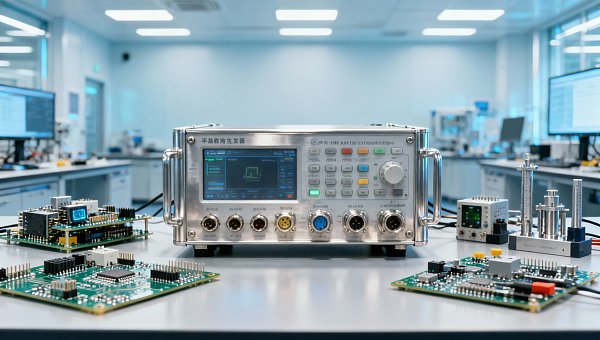
Exporters supplying Semi-Pulse signal generators, PCB/PCBA teaching实训 boards, and SMT Precision Metrics calibration modules to Chinese vocational schools and universities face expanded market access. The plan explicitly references these categories as part of the emerging ‘education-grade electronic teaching instruments’ segment—indicating formal recognition of their role in AI-enabled pedagogy.
PCB/PCBA Component Manufacturers
Manufacturers producing educational-tier printed circuit boards or assembled boards (PCBA) used in AI-related lab kits may see increased order volumes. Since the plan emphasizes hands-on AI tool training, demand for low-risk, repeatable, classroom-safe hardware platforms is expected to rise—notably those supporting signal generation, sensor interfacing, and embedded AI inference demos.
SMT Equipment & Calibration Service Providers
Vendors offering precision calibration modules—especially those validated for educational use cases—may benefit from institutional procurement cycles tied to curriculum upgrades. The inclusion of ‘SMT Precision Metrics calibration modules’ in the official summary suggests that metrological traceability and repeatability standards are gaining relevance in academic hardware specifications.
What Enterprises and Practitioners Should Monitor and Do Now
Track official implementation guidelines and provincial rollout plans
While the national action plan has been published, detailed technical requirements—including performance benchmarks, safety certifications, or interoperability standards for AI teaching hardware—have not yet been released. Observably, provincial education bureaus and MOE-affiliated research institutes are likely to issue localized procurement criteria in 2024–2025.
Monitor shifts in tendering language for education hardware contracts
Current more relevant than broad market forecasts is close reading of actual tender documents from Chinese higher vocational colleges and normal universities. Early indicators include mentions of ‘AI-supported practical training’, ‘signal generation for AI sensor labs’, or ‘calibration-ready SMT learning modules’. These phrases may signal alignment with the plan’s operational priorities.
Distinguish between policy intent and near-term procurement reality
Analysis shows the plan establishes a long-term framework (target: 2030), not an immediate procurement mandate. Most institutions will require budget reallocation, faculty upskilling, and syllabus revision before large-scale hardware deployment. Therefore, lead-time expectations should reflect phased adoption—not abrupt volume spikes.
Prepare supply chain documentation aligned with education-sector compliance norms
For exporters, having CE/GB/T certification documentation, bilingual user manuals (Chinese/English), and compatibility statements for common Chinese edtech platforms (e.g., domestic LMS integrations) may become differentiating factors in tender evaluations—especially where ‘teaching suitability’ and ‘curricular fit’ are scoring criteria.
Editorial Perspective / Industry Observation
This initiative is best understood as a structural policy signal—not an immediate commercial trigger. From an industry perspective, it confirms that AI literacy is being institutionalized at the foundational level of China’s education system, with tangible implications for hardware specification and procurement logic. Observably, the explicit naming of specific product categories (e.g., Semi-Pulse signal generators, SMT Precision Metrics modules) suggests these tools have already entered pilot use in select institutions—and are now being codified into national guidance. That makes this less about forecasting future demand and more about validating existing export pathways and refining positioning for education-specific compliance and integration requirements.
It remains to be seen how uniformly provincial authorities implement the plan, and whether funding mechanisms (e.g., central grants vs. local budgets) will shape procurement timelines. For now, the plan serves as a formal anchor point for aligning product development, documentation, and channel strategy with China’s evolving edtech infrastructure roadmap.
Conclusion
China’s ‘AI+Education’ Action Plan does not immediately transform global hardware export volumes—but it does formally elevate certain categories of electronic teaching instruments to strategic status within national education policy. For stakeholders, the value lies not in expecting sudden orders, but in recognizing a durable shift in institutional purchasing rationale: from generic electronics to purpose-built, curriculum-aligned, and certification-ready educational hardware. Current more appropriate interpretation is that this is a long-term alignment signal—not a short-term sales catalyst.
Information Sources
Main source: Joint notice issued by the Ministry of Education, Ministry of Science and Technology, Ministry of Industry and Information Technology, National Development and Reform Commission, and Ministry of Human Resources and Social Security (publicly announced title: Artificial Intelligence + Education Action Plan).
Note: Specific implementation timelines, technical standards, and provincial procurement details remain pending official clarification and are subject to ongoing observation.

The Archive Newsletter
Critical industrial intelligence delivered every Tuesday. Peer-reviewed summaries of the week's most impactful logistics and market shifts.