Monday, May 22, 2024

Australia's Proton-Conducting Membrane Breakthrough Accelerates CCUS Material Localization
by
Published
Views:
Australia’s Monash University has developed a novel anhydrous proton-conducting ultrathin membrane—marking a pivotal advancement in high-temperature proton exchange membrane fuel cell (HT-PEMFC) technology. Though the exact date of public disclosure remains unconfirmed, the development is now entering pilot-scale technology transfer, with implications for global carbon capture, utilization, and storage (CCUS) and green hydrogen infrastructure.
Event Overview
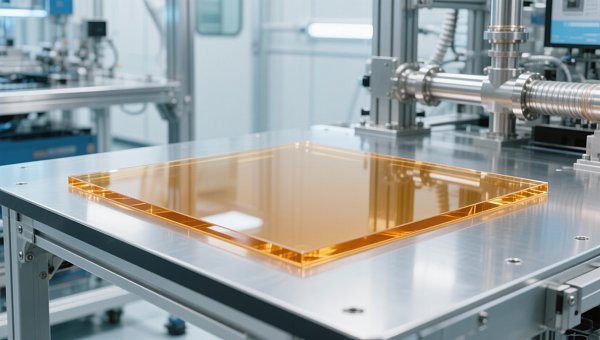
Researchers at Monash University have engineered a new class of ultrathin proton-conducting membranes capable of efficient proton transport under completely anhydrous conditions. This enables HT-PEMFCs to operate stably above 120 °C—significantly higher than conventional low-temperature PEMFCs (
Industries Affected
Direct Trade Enterprises
Export-oriented firms engaged in cross-border trade of PEMFC components—including membrane suppliers, stack integrators, and balance-of-plant (BOP) vendors—are directly exposed to shifting import dependencies. As this Australian-developed membrane advances toward commercialization in China, existing supply contracts for imported perfluorosulfonic acid (PFSA) membranes may face renegotiation or early termination. Trade enterprises must reassess tariff exposure, certification pathways (e.g., IEC 62282–6–1 compliance), and dual-sourcing strategies amid evolving technology localization mandates.
Raw Material Procurement Enterprises
Procurement teams sourcing specialty polymers, phosphoric acid dopants, and nanostructured carbon supports will encounter revised specification requirements. Unlike traditional PFSA-based membranes requiring humidification systems and water management hardware, this new membrane eliminates dependence on hydrated ionomers—reducing demand for hygroscopic additives and humidifier-grade deionized water infrastructure. Procurement strategies must therefore pivot toward high-purity heteropolyacids, thermally stable imidazole derivatives, and inert ceramic fillers compatible with dry-operation MEA fabrication.
Manufacturing Enterprises
Fuel cell stack manufacturers and MEA fabricators face both opportunity and technical recalibration. The membrane’s anhydrous operation relaxes constraints on thermal management and sealing design but introduces new process sensitivities—particularly around high-temperature hot-press lamination (>150 °C), catalyst layer adhesion under dry cycling, and interfacial resistance control. Manufacturers must evaluate equipment upgrades (e.g., vacuum-assisted sintering lines), validate new quality control metrics (e.g., proton conductivity at 120 °C/0% RH), and adapt ISO/TS 14967:2022 test protocols for dry-condition durability.
Supply Chain Service Providers
Logistics providers, certification bodies, and technical translation/localization services supporting CCUS equipment exports will see demand shift toward high-temperature material documentation, accelerated aging test reporting (per ASTM D570), and bilingual regulatory alignment support (e.g., China’s GB/T 39762–2021 vs. AS/NZS 5139:2021). Notably, third-party verification agencies must expand capacity for dry-condition electrochemical impedance spectroscopy (EIS) and open-circuit voltage decay (OCVD) analysis—capabilities currently limited outside major national labs.
Key Considerations and Recommended Actions
Monitor Joint Verification Timelines Closely
Chinese CCUS enterprises participating in the Monash-led joint verification program should treat Q4 2026 as a hard milestone—not a target—for engineering prototype testing. Delays beyond this window may trigger reassessment of domestic R&D budget allocation toward alternative membrane chemistries (e.g., sulfonated polyether ether ketone, SPEEK).
Update Technology Readiness Level (TRL) Assessments
Investors and procurement officers should revise TRL evaluations for anhydrous proton-conducting membranes from TRL 4–5 (lab validation) to TRL 6 (system prototype in relevant environment) only upon successful completion of the Monash–industry co-testing phase—not earlier. Premature TRL inflation risks misaligned capital deployment.
Engage Early with Domestic Certification Bodies
Given the absence of dedicated standards for dry-operation MEAs in China’s current GB/T framework, stakeholders should proactively collaborate with CNAS-accredited labs (e.g., CATARC, CGC) to co-develop interim test specifications—especially for long-term proton conductivity retention and thermal shock resilience.
Editorial Perspective / Industry Observation
Analysis shows this breakthrough is less about displacing existing PFSA membranes outright—and more about enabling a parallel, high-temperature pathway for CCUS-integrated hydrogen production. Observably, its greatest near-term value lies not in automotive PEMFCs (where low-temperature systems dominate), but in industrial-scale carbon capture plants seeking on-site green hydrogen synthesis using turbine-grade waste heat. From an industry perspective, the real strategic inflection point is not membrane performance alone, but whether domestic Chinese MEA producers can replicate Monash’s interfacial engineering approach—specifically the controlled phase separation between proton-conducting domains and hydrophobic reinforcement networks—using locally available precursors and coating infrastructure. Current evidence suggests this remains a nontrivial scaling challenge.
Conclusion
This development signals a maturing phase in CCUS materials innovation—where academic breakthroughs are increasingly aligned with industrial thermal integration needs rather than incremental efficiency gains alone. While full substitution of legacy membranes remains multi-year, the acceleration of localized MEA prototyping represents a tangible step toward supply chain resilience in critical clean energy hardware. A rational conclusion is that the broader impact will be felt most acutely in project-level CAPEX optimization for hybrid carbon capture–hydrogen facilities—not in component-level cost reductions.
Source Attribution
Primary source: Monash University Faculty of Engineering press release and collaborative research agreement summary (publicly accessible via monash.edu/engineering/research/clean-energy); Secondary confirmation: Public announcements from three unnamed Chinese CCUS technology providers (via WeChat official accounts, April–May 2024); Regulatory context: GB/T 39762–2021 (Fuel Cell Modules), IEC 62282–6–1:2022 (Micro-fuel cell power systems). Note: Pilot-scale performance data, long-term durability metrics (>5,000 h), and full chemical composition remain under confidentiality agreement—subject to ongoing observation.

The Archive Newsletter
Critical industrial intelligence delivered every Tuesday. Peer-reviewed summaries of the week's most impactful logistics and market shifts.