Monday, May 22, 2024

The hardest part of carbon capture is not the capture step
by
Published
Views:
Carbon capture is often presented as the headline solution to industrial decarbonization. In practice, however, capturing CO2 is only the first step. The harder part is what happens next: conditioning the gas, transporting it, storing or using it safely, proving chain-of-custody, and aligning the entire process with operational, financial, and compliance requirements. For manufacturers, utilities, water and wastewater operators, mobility suppliers, and sustainable agriculture stakeholders, the central question is not “Can we capture carbon?” but “Can we build a reliable carbon management system that works at scale?”
That is the real decision point for procurement teams, engineers, project managers, ESG leaders, and executives. A carbon capture unit may look promising on paper, but project success depends on infrastructure readiness, verification frameworks, lifecycle cost, permitting risk, and integration with existing industrial assets. This is why the hardest part of carbon capture is not the capture step.
What decision-makers actually need to evaluate in carbon capture projects
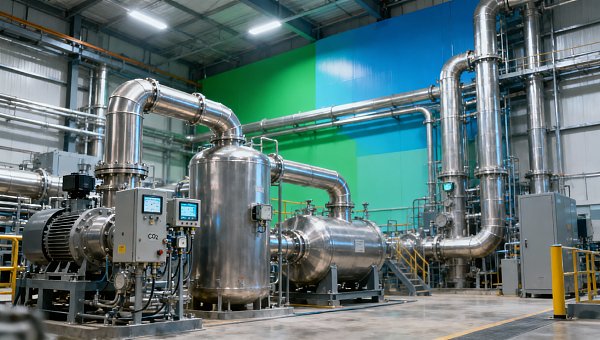
The core search intent behind this topic is practical: readers want to understand where carbon capture projects succeed or fail in the real world. They are usually not looking for a basic definition of carbon capture. They want to know what makes deployment difficult, what risks emerge after capture, and how to assess whether a project is technically and commercially viable.
Across the target audience, several concerns consistently matter most:
- Technical feasibility: Can the captured CO2 be purified, compressed, transported, stored, or reused without disrupting plant operations?
- Economic viability: Is the total system cost manageable once transport, storage, monitoring, and compliance are included?
- Infrastructure readiness: Are there pipelines, storage basins, offtake partners, or utilization pathways nearby?
- Compliance and verification: Can the organization prove emissions reductions under recognized frameworks and standards?
- Operational risk: Will the project add maintenance complexity, safety issues, or downtime?
- Procurement confidence: Are vendors offering equipment only, or a workable end-to-end solution?
This is why the most useful way to analyze carbon capture is as an industrial systems challenge rather than a standalone equipment purchase. Capture hardware is visible, but downstream integration determines whether the investment delivers measurable value.
Why CO2 handling after capture becomes the real bottleneck
Once CO2 is captured from flue gas, biogas upgrading, hydrogen production, cement kilns, or other industrial streams, it rarely emerges in a form that is immediately ready for transport or permanent storage. It must typically be dried, compressed, and brought to a defined purity level. Those requirements vary depending on the destination pathway.
That creates several bottlenecks:
- Gas conditioning requirements: Impurities such as water, sulfur compounds, oxygen, and particulates can create corrosion, safety, and transport issues.
- Compression energy demand: Compressing CO2 to pipeline or injection pressure can materially affect operating cost and overall carbon balance.
- Material compatibility: Piping, seals, valves, and storage components must withstand pressure and potential phase changes.
- Temporary storage constraints: Buffer storage may be needed when capture rates and transport schedules do not match.
- Logistics complexity: In regions without pipeline networks, moving CO2 by truck, rail, or ship may raise cost and scale limitations.
For plant operators, these are not secondary details. They define uptime, maintenance intervals, and safety procedures. For financial approvers, they define whether the project remains bankable beyond pilot scale.
Transport and storage, not capture efficiency, often determine project viability
A carbon capture system can show excellent capture rates and still fail commercially if there is no viable destination for the CO2. This is one of the biggest reasons why many projects stall after successful technical demonstrations.
Transport and storage raise questions that go far beyond process engineering:
- Distance to storage site: The farther the CO2 must travel, the higher the cost and the greater the permitting burden.
- Storage integrity: Geological formations must be characterized, monitored, and approved for long-term containment.
- Liability allocation: Project stakeholders need clarity on long-term responsibility for stored CO2.
- Regional regulation: Different jurisdictions have very different rules for cross-border transport, injection permits, and MRV obligations.
- Capacity certainty: A capture project is risky if storage or utilization partners cannot guarantee long-term offtake.
This is especially relevant for industries that are not clustered near established carbon transport corridors. Automotive manufacturing sites, electronics plants, water treatment systems, and distributed agri-industrial facilities may have emissions sources, but not the surrounding CO2 infrastructure needed to turn capture into durable emissions reduction.
Why measurement, reporting, and verification are central to carbon capture value
Many organizations underestimate how important monitoring and verification are. In carbon capture, value is not created simply by installing hardware. Value is created when captured CO2 volumes, purity, transport records, storage outcomes, and emissions accounting can all be verified with confidence.
For this reason, a credible project requires robust MRV—measurement, reporting, and verification. Without it:
- claimed emissions reductions may not qualify for incentives or carbon markets,
- internal ESG reporting may lack auditability,
- procurement teams cannot compare vendor performance on a common basis,
- executives cannot defend project ROI, and
- safety and quality teams face gaps in traceability.
In cross-sector industrial environments, this links closely to standards culture. While no single ISO standard solves the full carbon capture chain, organizations increasingly need alignment with broader ISO-based management systems, metrology discipline, environmental reporting frameworks, and documented quality processes. The question is not merely whether a unit captures CO2, but whether the entire system generates verifiable and repeatable performance data.
How carbon capture affects different industrial sectors differently
Although carbon capture is often discussed as one market, the post-capture challenge changes significantly by sector.
Automotive and mobility: Direct carbon capture at vehicle assembly plants is usually less important than addressing emissions from energy supply, paint shops, materials production, and upstream steel or cement. The value case depends heavily on site energy architecture and supplier decarbonization strategy.
Semiconductor and electronics: Facilities operate under strict purity, uptime, and contamination constraints. Any carbon management solution must avoid compromising cleanroom reliability, utility stability, or environmental control systems.
Water purification and wastewater treatment: CO2 may intersect with anaerobic digestion, biogas upgrading, chemical dosing, and plant-wide energy optimization. Here, integration with existing treatment infrastructure is often more important than the capture technology itself.
Smart agri-tech and sustainable agriculture: Smaller distributed sources, seasonal operations, and limited logistics infrastructure can make transport and aggregation difficult. Utilization pathways may matter more than geological storage in these contexts.
Industrial ESG and infrastructure: Large centralized assets may be best positioned to justify carbon capture, but only if regional policy, storage access, and verification frameworks are mature enough to support scale.
This sector-specific variation is why generic claims about “carbon capture potential” are often misleading. Buyers need benchmarked, context-specific evaluation criteria.
What procurement teams and technical evaluators should ask before approving a project
For organizations comparing vendors or screening project concepts, the most useful approach is to move beyond capture-rate marketing and ask system-level questions.
Key evaluation questions include:
- What is the full-chain cost per ton of CO2 managed?
Include capture, conditioning, compression, transport, storage or utilization, monitoring, maintenance, and downtime implications. - What is the CO2 specification at each handoff point?
Define purity, moisture, pressure, contaminants, and sampling methods. - What downstream destination is contractually secured?
A project without a durable offtake or storage pathway is not truly deployable. - How is performance verified?
Ask for auditable data architecture, calibration procedures, traceability protocols, and reporting compatibility. - What are the permitting and safety requirements?
Compressed CO2 systems introduce process safety considerations that must be assessed early. - How does the system integrate with current operations?
Consider utility loads, space constraints, shutdown windows, control systems, and workforce skill requirements. - What happens if the transport or storage chain is interrupted?
Review contingency plans, venting restrictions, backup storage, and contractual protections.
These questions help technical teams, finance leaders, and enterprise decision-makers distinguish between a credible infrastructure project and a narrow equipment proposal.
Why carbon capture should be treated as a connected infrastructure strategy
The most important strategic takeaway is simple: carbon capture is not a machine category; it is an infrastructure chain. Its success depends on synchronization across process engineering, logistics, environmental compliance, data systems, quality controls, and commercial contracts.
That systems view is particularly important in modern manufacturing, where boundaries between sectors are increasingly blurred. A company may source electronics from one region, fabricate tooling in another, assemble mobility components elsewhere, and report carbon performance under global customer and regulatory scrutiny. In that environment, isolated carbon capture decisions create blind spots. Connected benchmarking and cross-sector intelligence are more valuable than standalone vendor claims.
Organizations that make better decisions typically do three things well:
- They evaluate carbon capture as part of broader operational architecture, not as an ESG add-on.
- They benchmark full-chain risk, cost, and standards alignment before procurement.
- They prioritize verifiable data and implementation readiness over headline capture percentages.
Conclusion: the hardest part is building a trustworthy, scalable CO2 management chain
The hardest part of carbon capture is not separating CO2 from an emissions stream. The harder part is everything required to make that separation meaningful: conditioning the gas, moving it safely, storing or reusing it responsibly, documenting the results, and integrating all of it into industrial operations without unacceptable cost or risk.
For researchers, operators, evaluators, procurement teams, and executives, this changes how carbon capture should be judged. The right question is not whether a capture unit works in isolation. The right question is whether the entire carbon management chain is technically robust, economically sound, compliant, and verifiable.
That is where real project value is created—and where most deployment challenges still remain.

The Archive Newsletter
Critical industrial intelligence delivered every Tuesday. Peer-reviewed summaries of the week's most impactful logistics and market shifts.