Monday, May 22, 2024

What's New in Carbon Capture Technology for Industrial Use?
by
Published
Views:
What's New in Carbon Capture Technology for Industrial Use?
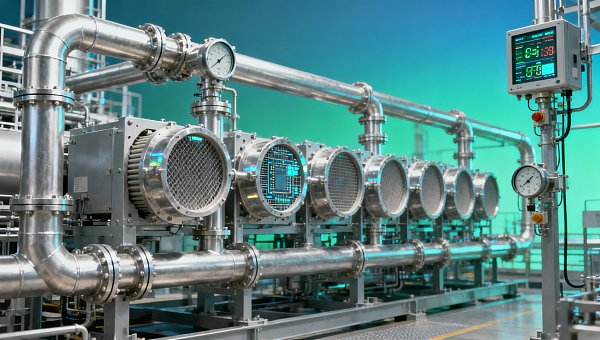
The industrial sector faces mounting pressure to adopt sustainable carbon capture solutions. Global Industrial Matrix examines breakthrough technologies transforming emissions management—from advanced sensors in EV manufacturing to semiconductor-enhanced filtration systems. Discover how next-gen carbon capture integrates with automotive engineering, renewable energy infrastructure, and precision tooling operations to meet stringent ESG benchmarks while maintaining operational efficiency for procurement specialists and plant managers.
1. Cutting-Edge Carbon Capture Technologies for Heavy Industries
Modern carbon capture systems now achieve 90-95% CO₂ capture rates in industrial flue gases, with energy consumption reduced by 30-40% compared to first-generation systems. Three key innovations are transforming the landscape:
- Modular Membrane Systems: Semiconductor-derived ceramic membranes now operate at 600-800°C with 2-3x higher permeability than polymer alternatives
- AI-Optimized Absorption: Machine learning adjusts solvent flow rates in real-time, reducing regeneration energy by 15-25%
- Cryogenic Compression: New phase-change materials enable liquefaction at -40°C instead of -80°C, cutting power needs by 35%
For procurement teams evaluating systems, the key metrics shift from pure capture rates to total lifecycle costs—where modern systems now achieve $40-60/ton CO₂ compared to $80-120/ton for legacy installations.
2. Integration Challenges and Solutions
Industrial carbon capture faces three critical integration hurdles that next-gen technologies are addressing:
2.1 Process Heat Recovery
New heat exchanger designs recover 60-75% of waste heat from capture processes, feeding it back into industrial operations. This reduces the net energy penalty to just 0.8-1.2 GJ/ton CO₂ in cement and steel plants.
2.2 Material Compatibility
Advanced alloys and ceramic coatings now withstand the corrosive environments of amine-based systems, extending equipment lifespans from 5-7 years to 12-15 years.
2.3 Smart Grid Integration
Dynamic load balancing systems automatically adjust capture rates based on:
- Real-time electricity prices (optimizing for off-peak operation)
- Process steam availability (50-100 ton/hr variance tolerance)
- Carbon credit market fluctuations
3. Cross-Industry Applications
Carbon capture technologies now adapt to diverse industrial environments with specialized configurations:
Plant managers should conduct a 3-phase assessment: (1) emissions mapping, (2) technology screening, and (3) integration feasibility analysis—typically requiring 8-12 weeks with proper technical support.
4. Implementation Roadmap for Industrial Facilities
Successful deployment follows five critical stages with typical timelines:
- Pre-FEED Study (4-6 weeks): Baseline assessment and technology shortlisting
- Process Integration (8-12 weeks): Piping, power, and control system modifications
- Pilot Testing (6-8 weeks): 500-1,000 operating hours at 30-50% capacity
- Full-Scale Commissioning (4-6 weeks): Performance verification against ISO 27916
- Continuous Optimization (Ongoing): AI-driven efficiency improvements
For procurement teams, the key decision factors now include:
- Modularity (30-50% faster deployment than custom systems)
- Automation level (targeting <0.5 FTE operating staff)
- Carbon credit monetization capabilities
5. Future Outlook and Strategic Considerations
The next 3-5 years will see three transformative developments:
5.1 Hybrid Capture Systems
Combining membrane and solvent technologies to achieve 97%+ capture rates at $35-50/ton CO₂—particularly valuable for refineries and chemical plants.
5.2 Digital Twin Integration
Real-time performance modeling reduces unplanned downtime by 40-60% through predictive maintenance algorithms.
5.3 Circular Carbon Utilization
Emerging technologies convert captured CO₂ into industrial feedstocks—with pilot plants already producing:
- Polycarbonates for automotive components
- Syngas for precision tooling operations
- Mineralized aggregates for construction
For industrial decision-makers, the imperative is clear: next-generation carbon capture now delivers both environmental compliance and operational efficiency. Global Industrial Matrix provides the cross-sector intelligence needed to navigate this rapidly evolving landscape—from technology benchmarking to total cost of ownership analysis.
Contact our industrial solutions team for a customized assessment of carbon capture options tailored to your specific manufacturing processes and ESG objectives.

The Archive Newsletter
Critical industrial intelligence delivered every Tuesday. Peer-reviewed summaries of the week's most impactful logistics and market shifts.