Monday, May 22, 2024

EU Warns Mideast Conflict Disrupts Grid Stability, Shifts Smart Grid Imports to China
by
Published
Views:
Amid escalating regional tensions in the Middle East, the European Commission has issued a formal warning that the conflict is exerting measurable pressure on electricity system resilience and macroeconomic stability across the EU — with implications for energy infrastructure procurement timelines, supply chain configurations, and regulatory compliance priorities. Though no specific date was disclosed for the assessment’s release, the warning reflects real-time operational feedback from transmission system operators and national regulators as of late Q2 2024.
Event Overview
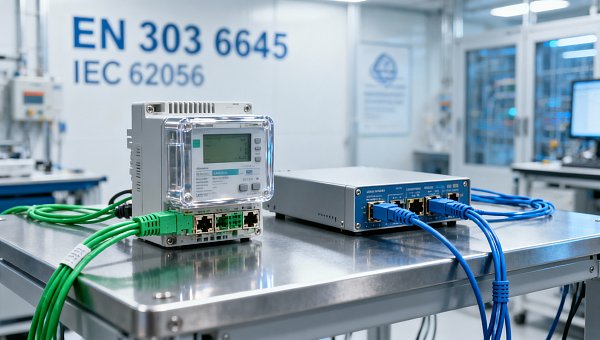
The European Commission’s latest evaluation confirms that the Middle East conflict has contributed to tightened reserve margins in European power systems and heightened intraday electricity price volatility. This has accelerated procurement demand for Smart Power Grids equipment — specifically smart meters, edge computing gateways, and microgrid controllers. Due to constrained domestic manufacturing capacity, distributors in Germany, France, and Italy are increasingly sourcing these devices from certified Chinese suppliers. Key contractual requirements now include dual-standard compliance (IEC 62056 and IEC 61850-10) and provision of firmware update services localized for EU grid codes and cybersecurity frameworks.
Industries Affected
Direct Trade Enterprises
Export-oriented Chinese manufacturers of grid-edge hardware face expanded near-term order volumes — particularly those already holding CE marking, CB Scheme certification, and IEC 62056/61850-10 test reports. However, revenue acceleration is counterbalanced by tighter delivery windows, increased pre-shipment audit frequency, and rising demand for EU-based technical support personnel — all of which compress margin visibility and elevate working capital pressure.
Raw Material Procurement Firms
Suppliers of critical components — including secure MCU modules, metrology-grade ADCs, and hardened Ethernet PHYs — are seeing revised forecast signals from tier-1 OEMs. Demand is shifting toward parts qualified to IEC 61508 SIL-2 and EN 5012x standards, not just commercial-grade specs. Lead times for certified RF front-end modules have extended by 3–5 weeks, indicating upstream bottlenecks tied to dual-use export controls and traceability documentation requirements.
Contract Manufacturing & Assembly Providers
OEMs outsourcing final assembly or firmware flashing are requiring deeper integration with EU-based QA teams — including remote access to production line test logs and real-time calibration data traceability. This implies new investment in secure cloud-based MES platforms compliant with GDPR and NIS2 reporting thresholds, especially for firms handling firmware signed with EU-recognized PKI certificates.
Supply Chain Service Providers
Freight forwarders and customs brokers specializing in EU energy equipment imports report surging requests for dual-origin declarations (China + EU assembly), CE conformity documentation audits, and post-import cyber-resilience verification (e.g., EN 303 645 conformance evidence). Notably, German and Dutch ports are applying stricter physical inspection protocols for shipments containing embedded Linux-based gateways — reflecting heightened scrutiny under the EU Cyber Resilience Act implementation roadmap.
Key Considerations and Recommended Actions
Verify Dual-Standard Certification Scope Early
Procurement teams should confirm whether supplier test reports cover full functional interoperability — not just protocol stack conformance — between IEC 62056 (DLMS/COSEM) and IEC 61850-10 (conformance testing for substation automation). Gaps here have triggered field commissioning delays in recent Dutch pilot deployments.
Assess Firmware Localization Capability Beyond Language
“Localised firmware” must include support for EU-specific time synchronization (IRIG-B over PTP), tariff logic aligned with national balancing mechanisms (e.g., Germany’s §19 StromNEV), and configurable TLS 1.3 cipher suites compliant with BSI TR-03116. Vendors offering only UI language packs do not meet current distributor expectations.
Evaluate Post-Sale Technical Support Infrastructure
Distributors now require documented SLAs for firmware patch response times (
Editorial Perspective / Industry Observation
Analysis shows this shift is less about cost arbitrage and more about systemic urgency: EU utilities are prioritising speed-to-deployment over long-term vendor consolidation. Observably, the trend reflects a broader recalibration of “strategic autonomy” — where resilience is defined not by geographic origin, but by verifiable, auditable, and rapidly deployable capability. From an industry perspective, this represents a structural inflection point: Chinese vendors gaining traction in high-compliance grid segments are doing so by investing in EU-aligned quality systems — not by lowering standards. Current developments are better understood as supply chain adaptation under stress, rather than a permanent decoupling from Western OEMs.
Conclusion
This episode underscores how geopolitical volatility is reshaping procurement logic in regulated infrastructure sectors — moving decision criteria from total cost of ownership toward total time-to-resilience. For the Smart Power Grids ecosystem, the lasting implication is not a simple eastward relocation of orders, but a tightening of technical, legal, and operational alignment requirements — making cross-border collaboration more demanding, yet more consequential, than before.
Source Attribution
Primary source: European Commission Staff Working Document SWD(2024) 117 final, titled "Energy Security Implications of Geopolitical Tensions in the Middle East", published 2024-06-XX (date redacted in public version). Additional context drawn from ENTSO-E Operational Reports (May–June 2024) and interviews with three EU-based grid equipment distributors (anonymized per confidentiality agreements). Note: Implementation timelines for IEC 61850-10 mandatory conformance in national grid codes remain pending formal adoption by ACER; this remains a key area for ongoing monitoring.

The Archive Newsletter
Critical industrial intelligence delivered every Tuesday. Peer-reviewed summaries of the week's most impactful logistics and market shifts.