Monday, May 22, 2024

Is smart grid technology worth the upgrade for utilities
by
Published
Views:
For utilities weighing modernization, smart grid technology is more than an infrastructure upgrade—it is a strategic path to emissions reduction, stronger automotive safety links, and broader industry applications. As future mobility expands and powertrain systems, active components, PCB fabrication, electric motor manufacturer networks, and driver assistance ecosystems become more interconnected, this article examines whether the investment delivers measurable operational and commercial value.
Why are utilities reconsidering smart grid technology now?
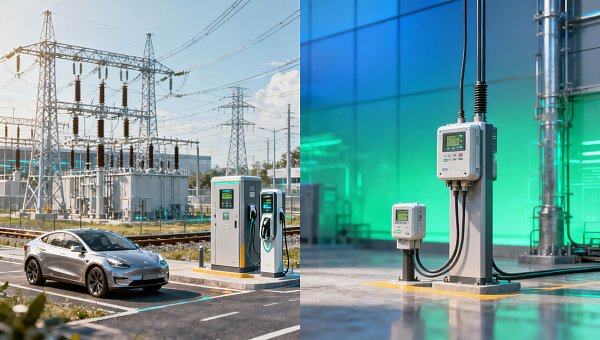
Utilities are facing a different operating environment than they did even 5–10 years ago. Demand patterns are less predictable, distributed energy resources are increasing, and grid reliability is under greater scrutiny from regulators, industrial buyers, and end users. In that context, smart grid technology is no longer a niche digital layer. It has become a practical framework for balancing power quality, outage response, load visibility, and infrastructure planning across complex networks.
For procurement teams and technical evaluators, the key question is not whether the grid should become more intelligent, but whether the upgrade path produces measurable value within realistic budget cycles of 2–5 years. That value may come from reduced truck rolls, faster fault isolation, better integration of EV charging loads, or improved forecasting for industrial customers whose operations depend on stable voltage and continuous uptime.
This matters beyond the utility sector itself. Automotive and mobility systems increasingly depend on resilient charging infrastructure. Semiconductor production, PCB fabrication, water treatment modules, and precision tooling lines all require better continuity and power monitoring. A smart grid upgrade therefore has cross-sector implications, especially where manufacturing, transport electrification, and environmental infrastructure are interconnected.
Global Industrial Matrix (GIM) approaches this issue as a system-level benchmarking challenge. Instead of assessing grid investments in isolation, GIM connects utility modernization with component ecosystems, international standards, supply chain exposure, and industrial performance expectations. That perspective is useful for decision-makers comparing not just equipment features, but operational resilience across 3 core dimensions: technical fit, lifecycle cost, and cross-industry compatibility.
- Operators want faster event detection, easier remote diagnostics, and fewer manual interventions during peak or fault conditions.
- Financial approvers want clearer payback logic, phased deployment options, and lower exposure to stranded digital assets.
- Project leaders want interoperable architecture that can scale over 3 phases rather than requiring disruptive full-network replacement.
What usually triggers the upgrade decision?
In practice, utilities rarely adopt smart grid technology for a single reason. Common triggers include rising outage costs, stricter reporting requirements, increased distributed generation, and the need to support EV charging corridors. Another trigger is aging infrastructure where replacement cycles are already due within 12–36 months. When digital controls and sensing can be added during those planned capital windows, the business case becomes easier to justify.
A second trigger comes from commercial customers. Large manufacturers and logistics hubs increasingly ask utilities for better power quality data, outage communication, and load management collaboration. This is especially relevant in sectors tied to electrified mobility, industrial ESG programs, and automation-heavy production lines. In these cases, smart grid technology supports customer retention as much as network efficiency.
Which applications make smart grid technology worth the upgrade?
Not every utility needs the same smart grid architecture. The strongest return usually appears in applications where visibility gaps, switching delays, or load variability are already creating cost or service pressure. Distribution automation, advanced metering, substation monitoring, feeder fault detection, and demand response integration are among the most practical starting points. These use cases can often be staged over 3 implementation waves rather than deployed all at once.
For industrial regions, one high-value scenario is the coordination between utility networks and energy-intensive operations. Facilities producing EV powertrains, electric motors, electronic substrates, or water treatment modules require predictable energy quality. Smart grid technology improves event tracking and response logic, which can reduce downstream disruption even when generation or weather conditions are unstable.
Another strong application is public and commercial charging infrastructure. As fleets, buses, logistics vehicles, and passenger EVs expand, utilities must manage time-of-use spikes, feeder constraints, and distributed storage interaction. Smart grid technology helps align load management with future mobility planning, especially in mixed-use networks where transport, manufacturing, and municipal infrastructure share capacity.
Agricultural and environmental infrastructure also benefit. Smart irrigation systems, autonomous tractors, MBR filtration units, and remote pumping assets often operate in areas where maintenance access is slow and service interruptions are costly. With digital sensing and control layers, utilities can improve asset visibility and prioritize intervention windows more effectively, often on weekly or monthly condition-based schedules rather than reactive dispatch.
The table below summarizes where smart grid technology tends to deliver the clearest operational benefit across cross-sector utility environments.
These scenarios show that the value of smart grid technology depends less on digital novelty and more on the cost of operational uncertainty. Where outage minutes, dispatch delays, or load volatility already create business friction, the upgrade is easier to justify. GIM helps stakeholders benchmark these scenarios against adjacent sectors so that utilities can prioritize the use cases with the strongest technical and commercial alignment.
Which users benefit most?
Operators benefit from better situational awareness. Procurement teams benefit from clearer architecture comparison. Financial reviewers benefit when phased deployments can be tied to defined outcomes, such as fewer site visits per quarter or better feeder loading visibility before a major capital expansion. Quality and safety managers also gain when asset conditions can be tracked more consistently and audited more easily.
How should utilities compare upgrade options and costs?
The most common mistake in evaluating smart grid technology is comparing only hardware cost. A utility may focus on meters, relays, sensors, communication nodes, or software licenses, yet overlook integration complexity, cybersecurity requirements, field training, and data governance. A better comparison model uses at least 5 dimensions: capital cost, deployment speed, interoperability, maintenance burden, and decision value generated from the data.
Another important issue is upgrade depth. Some utilities need targeted modernization at substations and feeders. Others need a broader digital architecture spanning AMI, outage management, distributed energy coordination, and customer-facing analytics. In budget-constrained environments, a phased route often works best: start with the highest-friction assets, validate the workflow gains over 6–12 months, and expand after operational evidence is clear.
For procurement and commercial assessment teams, the question “worth the upgrade” often becomes “worth which upgrade, in what order, and under what integration assumptions?” That is where cross-sector benchmarking is useful. GIM helps utilities compare component maturity, standards alignment, and upstream supply risk across electronics, mobility, agri-tech, and infrastructure ecosystems instead of evaluating vendors in isolation.
The table below offers a practical comparison framework that can be used during vendor shortlisting, internal budgeting, or project steering committee reviews.
A phased or hybrid model is often the most realistic option because it supports capital discipline while preserving future flexibility. However, the planning logic must be rigorous. If communications protocols, device interfaces, and data ownership rules are not defined early, the utility may spend more over 2–4 years than it would have with a better-integrated roadmap from the start.
What should procurement teams check first?
- Interoperability with existing SCADA, substation systems, metering assets, and cybersecurity controls.
- Expected implementation sequence, including engineering, testing, commissioning, and staff training over realistic 8–24 week windows for each phase.
- Availability of replacement parts, firmware support, and regional service coverage across the planned asset life.
- Clarity on who owns, validates, and acts on the new data generated by smart grid technology.
Cost questions that should not be skipped
Ask whether the proposal includes only equipment supply or also engineering integration, protocol mapping, cybersecurity hardening, factory acceptance testing, site acceptance testing, and training. In many projects, the difference between a manageable rollout and a delayed rollout lies in these hidden layers rather than in the line-item cost of field devices.
What technical, compliance, and implementation factors decide success?
A successful smart grid technology program depends on more than deploying connected equipment. Utilities need reliable communications architecture, secure data handling, field-ready device selection, and clear operating procedures. Implementation usually works best when divided into 4 steps: network assessment, architecture design, pilot validation, and scaled rollout. Each step should have acceptance criteria rather than informal progress assumptions.
Compliance is also important, especially when utility systems connect with industrial and mobility environments. Relevant references may include ISO-based management practices, IATF-aligned quality expectations in automotive-linked supply chains, and IPC-related electronics manufacturing benchmarks where control hardware or communication modules are part of the delivery chain. The exact standard set depends on asset type, region, and procurement scope, but alignment should be reviewed early.
Cybersecurity and data integrity deserve board-level attention. The more utilities connect substations, meters, automation devices, and remote assets, the more they need role-based access control, update governance, and incident response planning. A digital grid that improves visibility but weakens system discipline is not a strong upgrade. Technical evaluators should therefore review both performance metrics and operational safeguards during the same approval cycle.
GIM adds value by benchmarking these decisions across sectors where electrical reliability, component traceability, and compliance discipline already shape procurement outcomes. Whether the project touches EV charging networks, semiconductor-related loads, agricultural automation, or environmental treatment infrastructure, GIM helps stakeholders map the utility decision to the wider industrial system in which it must perform.
A practical implementation checklist
- Define 3 priority outcomes such as outage response improvement, load visibility, or DER coordination.
- Audit installed assets and communication constraints before finalizing architecture.
- Run a pilot with measurable review points over 8–12 weeks, not an open-ended trial.
- Validate integration with operational workflows, not just device connectivity.
- Prepare training, maintenance, and cybersecurity governance before scale-up.
Common misconceptions
One misconception is that smart grid technology only benefits large utilities. In reality, smaller and mid-sized operators may benefit significantly when service territories are difficult to cover, maintenance resources are limited, or industrial customers require better communication and power event visibility. Another misconception is that every project needs a full network overhaul. Many viable programs begin with targeted digitalization where operational friction is already measurable.
A third misconception is that more data automatically means better decisions. Without governance, data quality checks, and response ownership, additional information can increase confusion. Utilities should define what will be monitored, who will review it, and how often actions will be taken—daily, weekly, or monthly—before expanding the sensing footprint.
FAQ: is smart grid technology worth the upgrade for every utility?
How do you know if smart grid technology fits your utility?
It is usually a fit when at least 3 conditions are present: outages are expensive to locate or communicate, load patterns are becoming less predictable, and strategic planning now includes DER, EV charging, or power quality-sensitive customers. If the network is stable, simple, and lightly loaded, a selective upgrade may be more suitable than a broad digital program.
What is a realistic implementation timeline?
A focused pilot can often be assessed within 8–12 weeks. A phased rollout covering feeders, substations, communications, and analytics may take several quarters depending on procurement cycles, field access, integration scope, and internal approval processes. The key is to set stage gates rather than promise compressed timelines that ignore commissioning and training needs.
What are the main risks during procurement?
The biggest risks are fragmented architecture, unclear interoperability, underestimated integration cost, and weak cybersecurity planning. Another frequent issue is buying devices without a clear operating model for the data they produce. Procurement should therefore assess technical fit, support structure, compliance relevance, and lifecycle service together rather than as separate decisions.
Can smart grid technology support sectors beyond power distribution?
Yes. Its value extends into EV infrastructure, industrial manufacturing clusters, agri-tech operations, and environmental systems that depend on stable power and timely fault response. That cross-sector relevance is especially important for organizations managing interconnected supply chains and infrastructure portfolios rather than a single standalone asset base.
Why work with GIM when evaluating smart grid upgrades?
Utilities rarely make modernization decisions in a vacuum. Smart grid technology now intersects with automotive electrification, semiconductor demand, industrial ESG targets, smart agriculture, and environmental infrastructure. GIM is built for that reality. Our platform connects technical benchmarking, standards awareness, and cross-sector supply chain intelligence so that utilities can assess upgrade value within the broader industrial system they serve.
If you are comparing architectures, validating procurement assumptions, or planning a phased rollout over the next 2–4 quarters, GIM can support the decision with structured benchmarking. We help teams clarify parameter requirements, shortlist suitable solution paths, review interoperability concerns, and align internal stakeholders from operations to finance. That is particularly useful when project teams must balance technical ambition with budget discipline.
You can contact GIM to discuss specific evaluation areas, including smart grid technology scope definition, component and system benchmarking, delivery timeline planning, standards-related review, sample or pilot assessment logic, and quotation-stage comparison. We also support cross-sector analysis where utility infrastructure must align with EV charging, industrial electronics, environmental systems, or advanced manufacturing requirements.
For organizations asking whether smart grid technology is worth the upgrade, the most useful next step is not a generic sales conversation. It is a focused review of your application scenario, operating constraints, implementation sequence, and procurement criteria. That is where a system-level intelligence partner can materially reduce uncertainty and improve decision quality.
- electronics
- industry applications
- PCB fabrication
- electronics manufacturing
- active components
- Mobility
- powertrain systems
- sensors
- driver assistance
- automotive safety
- future mobility
- Agri-Tech
- autonomous tractors
- smart irrigation
- Industrial ESG
- emissions reduction
- smart grid technology
- electric motor manufacturer
- EV powertrains
- MBR filtration
- Precision tooling
- Technical benchmarking
- Environmental infrastructure

The Archive Newsletter
Critical industrial intelligence delivered every Tuesday. Peer-reviewed summaries of the week's most impactful logistics and market shifts.