Monday, May 22, 2024

Longi Provides $120M Performance Guarantee for Southeast Asia PV EPC Projects
by
Published
Views:
On May 11, 2026, Longi Green Energy Technology disclosed that it had issued bank performance guarantees totaling USD 120 million for two utility-scale photovoltaic (PV) EPC projects in Vietnam and Thailand. This development signals heightened activity among Chinese PV system integrators in international project execution—and is particularly relevant for firms engaged in cross-border EPC contracting, trade finance, supply chain assurance, and downstream project development in emerging solar markets.
Event Overview
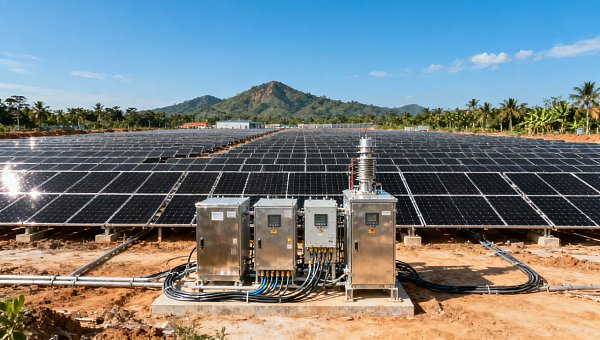
On May 11, 2026, Longi announced it had issued aggregate bank-issued performance guarantees amounting to USD 120 million for two ground-mounted PV power station EPC projects located in Vietnam and Thailand. The guarantees cover equipment delivery, grid commissioning, and a 24-month performance warranty period. The beneficiaries are local partner entities in those countries.
Industries Affected by This Development
International EPC Contractors & System Integrators
These firms face increased expectations to provide integrated financial and contractual assurances—not just engineering and equipment supply. The move reflects growing client demand for end-to-end risk mitigation in frontier markets, where regulatory uncertainty and payment reliability remain concerns. Impact includes tighter working capital requirements and greater reliance on banking relationships capable of issuing cross-border instruments.
Export-Oriented PV Equipment Suppliers
Suppliers aligned with EPC contractors like Longi may see more requests for coordinated delivery timelines, factory acceptance test (FAT) documentation, and performance bond-backed commitments. This raises the bar for export compliance readiness—including customs classification accuracy, origin certification, and adherence to host-country technical standards—especially under time-bound guarantee periods.
Trade Finance Providers & Export Credit Agencies
Banks and ECAs involved in supporting renewable energy exports must now assess not only creditworthiness but also the operational credibility of EPC structures across jurisdictions. The 24-month performance warranty component adds complexity: it extends exposure beyond delivery into operational handover and early-stage plant performance—requiring new evaluation frameworks for technical and contractual enforceability.
Supply Chain Assurance & Logistics Service Providers
Third-party verification agencies, freight forwarders, and insurance providers specializing in construction logistics may experience higher demand for services tied to guarantee-triggering conditions—e.g., certified delivery proof, commissioning reports, or third-party performance testing. Clarity on which milestones activate or release guarantee obligations becomes operationally critical.
What Relevant Enterprises or Practitioners Should Monitor and Do Now
Track Official Updates on Guarantee Activation Conditions
Monitor subsequent disclosures from Longi—or similar integrators—on how guarantee claims would be triggered, verified, and settled. Specifics on required documentation (e.g., independent commissioning certificates, grid operator sign-offs) directly inform service design and contract drafting for other market participants.
Assess Exposure to 24-Month Performance Warranty Requirements
Review current or planned EPC contracts in ASEAN markets for alignment with extended warranty periods. Where such clauses appear, confirm internal capacity to meet technical KPIs (e.g., availability, PR, degradation rates) over multi-year horizons—and whether subcontractor warranties cascade accordingly.
Differentiate Between Policy Signals and Operational Readiness
This guarantee issuance reflects Longi’s capability to mobilize banking support—not necessarily an immediate shift in national-level export policy or multilateral financing terms. Stakeholders should avoid assuming broader programmatic changes unless corroborated by official announcements from China’s Ministry of Commerce, Exim Bank of China, or ASEAN energy authorities.
Prepare Documentation Protocols for Cross-Border Performance Claims
Standardize record-keeping for equipment dispatch, site handover, commissioning tests, and post-grid-connect monitoring. In jurisdictions where local courts or arbitration bodies lack precedent on PV performance disputes, banks may require stricter evidentiary thresholds before honoring guarantees.
Editorial Perspective / Industry Observation
Observably, this development is less about isolated financial exposure and more about evolving market expectations for project bankability in Southeast Asia. It signals that leading Chinese integrators are moving beyond equipment export toward structured, bank-supported project delivery models—blending hardware, contractual discipline, and financial engineering. Analysis shows this does not yet indicate widespread adoption across the sector; rather, it represents an advanced-tier response to client demands in relatively mature ASEAN solar markets. From an industry perspective, it functions primarily as a benchmark—not a mandate—for peers evaluating their own overseas execution frameworks.
Conclusion: This announcement reflects a maturing phase in Chinese PV exporters’ overseas engagement—one where financial instruments serve as both risk management tools and competitive differentiators. It is best understood not as a regulatory shift or market expansion signal, but as evidence of selective capability scaling within a subset of technically and financially equipped system integrators. Stakeholders should treat it as a reference point for operational benchmarking—not a trigger for strategic pivots.
Source: Longi Green Energy Technology Co., Ltd. official announcement dated May 11, 2026.
Notable pending observation: Whether similar guarantee structures emerge for projects in other ASEAN countries (e.g., Indonesia, Philippines) or non-ASEAN emerging markets remains unconfirmed and requires ongoing monitoring.

The Archive Newsletter
Critical industrial intelligence delivered every Tuesday. Peer-reviewed summaries of the week's most impactful logistics and market shifts.