Monday, May 22, 2024

Smart Grid Technology: Key Benefits, Risks, and Upgrade Priorities
by
Published
Views:
Smart grid technology is no longer a niche utility topic. It now affects plant uptime, energy cost visibility, and infrastructure resilience across connected industrial systems.
For organizations managing production, logistics, water treatment, charging assets, or digital facilities, the real question is not whether change is coming. It is how to evaluate it without overbuilding.
In cross-sector environments, power quality, grid responsiveness, and data transparency increasingly shape operational performance. That is why smart grid technology has become a strategic topic rather than a narrow engineering upgrade.
What does smart grid technology actually mean in practical terms?
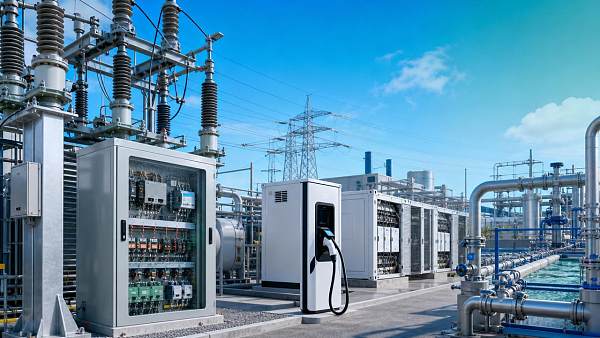
At its core, smart grid technology connects electricity infrastructure with sensors, automation, analytics, and two-way communication. The grid does not just deliver power. It also reports conditions and reacts faster.
Traditional grids mainly push electricity in one direction. A smart grid can monitor demand spikes, detect faults, support distributed energy, and help balance loads across assets.
This matters because modern industrial operations are more electrified and more digitized than before. EV charging lines, semiconductor tools, cold storage, pumping systems, and automated equipment all depend on stable power behavior.
In practical terms, smart grid technology often includes:
- Advanced metering for real-time or near-real-time energy visibility
- Distribution automation that isolates faults faster
- Demand response tools that shift noncritical loads
- Integration layers for solar, storage, microgrids, or backup assets
- Analytics platforms that support maintenance and forecasting
The wider value appears when electricity, operations, and supply risk are assessed together. That system-level view is increasingly important in industries where mechanical, digital, and environmental infrastructure overlap.
Why are so many industries paying closer attention now?
The attention is driven by pressure from several directions at once. Electricity demand is rising, outage costs are harder to absorb, and reporting expectations are becoming more detailed.
A useful way to think about smart grid technology is through operational exposure. If one power event can interrupt production quality, spoil inventory, or delay connected transport assets, grid intelligence becomes material.
The interest is especially strong where energy use interacts with automation, sustainability targets, and asset benchmarking. In that environment, data from power systems is no longer separate from broader industrial performance.
This is also why cross-sector platforms such as GIM treat energy infrastructure as part of a larger technical ecosystem. Smart grid technology affects electronics reliability, mobility charging readiness, water infrastructure efficiency, and equipment utilization at the same time.
More common triggers include volatile tariffs, higher electrification, stricter resilience planning, and the need to compare infrastructure readiness against recognized standards and operating benchmarks.
Which benefits are real, and which claims deserve caution?
The strongest benefits are usually measurable. Better outage detection, improved load management, and clearer energy data often deliver value sooner than highly ambitious transformation claims.
That said, benefits vary by site profile. A process-heavy facility may value voltage stability most. A distributed network may care more about remote visibility and fault isolation.
The table below helps separate high-confidence gains from areas that need more careful validation.
A common mistake is expecting all benefits to appear at once. In reality, smart grid technology creates value in layers. Visibility and control usually come first. Financial optimization follows when the data becomes actionable.
Where do the biggest risks and misconceptions show up?
The biggest risk is treating smart grid technology as a single product. It is an architecture decision involving field devices, communications, software, cybersecurity, and operating procedures.
Another misconception is that digital visibility alone equals resilience. Dashboards are useful, but they do not prevent downtime unless controls, maintenance response, and electrical design are aligned.
Cybersecurity is also central. A more connected grid increases the attack surface. That does not make modernization a bad choice, but it changes the threshold for vendor qualification and network segmentation.
In actual projects, risk tends to cluster around four areas:
- Data without decision rules, which creates noise rather than control
- Interoperability gaps between legacy equipment and newer platforms
- Weak governance over firmware, access rights, and update cycles
- Overestimating payback before load behavior is properly mapped
Needless complexity is another warning sign. If a proposed upgrade adds layers of software but does not clarify the operating response to a fault or peak event, the design may be too abstract.
How should upgrade priorities be set when budgets and downtime windows are limited?
A strong starting point is not equipment selection. It is criticality mapping. Which loads create the highest financial, safety, compliance, or continuity risk when power quality drops?
Once that is clear, smart grid technology investments can be sequenced more rationally. The best roadmap usually begins with bottlenecks, not with the newest hardware category.
In many industrial settings, the most practical order looks like this:
- Establish metering depth for critical feeders and high-variance loads
- Improve fault visibility and restoration logic
- Add controllable demand response where operations allow flexibility
- Integrate storage, onsite generation, or microgrid controls if justified
- Standardize cybersecurity and interoperability requirements across vendors
This staged approach helps avoid common implementation friction. It also supports benchmarking across mixed asset environments, which is increasingly relevant when infrastructure spans mobility, utilities, electronics, and environmental systems.
Where external benchmarking is available, it is useful to compare upgrade readiness against recognized standards and peer operating baselines rather than relying only on internal assumptions.
What should be checked before approving a smart grid technology program?
Before approval, the focus should move from headline benefits to decision evidence. The goal is to confirm whether the proposed architecture matches the site’s operational reality.
A practical review should answer several questions clearly.
- Which reliability events are most expensive today, and how often do they occur?
- Which loads can be shifted, curtailed, or backed up without production loss?
- What legacy systems must remain in service, and can they communicate reliably?
- How will data be used for operations, maintenance, compliance, and planning?
- What cybersecurity controls apply across field devices, gateways, and cloud layers?
In many cases, the quality of these answers matters more than the volume of features. Smart grid technology works best when it is tied to measurable reliability, controllability, and reporting outcomes.
That is also where a system-of-systems perspective becomes valuable. Cross-sector intelligence can reveal whether an upgrade supports broader infrastructure resilience or simply adds another isolated tool.
A final way to frame the decision
Smart grid technology should be viewed as a resilience and control strategy, not just an energy upgrade. Its value depends on how well power intelligence connects with operational priorities.
The most useful next step is usually a structured assessment. Map critical loads, identify failure costs, review interoperability constraints, and compare upgrade options against realistic operating scenarios.
If the evaluation also includes benchmark data across adjacent sectors, the decision becomes sharper. That is especially true when electrification, automation, and infrastructure compliance are converging.
In short, smart grid technology earns attention when reliability, cost control, and flexibility need to improve together. The better question is not whether to modernize, but where modernization creates the clearest operational return.

The Archive Newsletter
Critical industrial intelligence delivered every Tuesday. Peer-reviewed summaries of the week's most impactful logistics and market shifts.