Monday, May 22, 2024

EU REACH Adds Substances: Wastewater & Filtration Exporters Must Update SVHC Declarations
by
Published
Views:
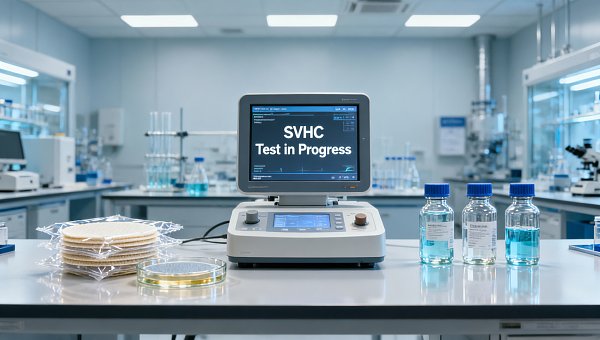
The European Union has updated its REACH Annex XVII restriction list with new chemical substances, triggering mandatory compliance actions for exporters of wastewater and filtration equipment to the EU market. Though the exact effective date of the amendment has not been publicly specified, the regulatory timeline imposes a hard deadline of August 2026 for affected enterprises to complete SVHC (Substances of Very High Concern) content testing and declaration updates. Non-compliance may result in customs detention at EU ports — a material operational and financial risk for supply chain actors across multiple tiers.
Event Overview
The EU has added new chemical substances to the REACH restriction list, specifically targeting components used in wastewater and filtration systems — including adhesives for filter cartridges and coating materials for membrane modules. Chinese exporters must verify SVHC content in their products and update corresponding declarations by August 2026. This requirement also exerts upstream pressure on hardware component suppliers in China to upgrade their environmental material databases.
Industries Affected
Direct trading enterprises: These exporters face immediate regulatory exposure as they are legally responsible for REACH compliance documentation upon EU entry. Failure to submit updated SVHC declarations may lead to shipment rejection, delays, or port detention — directly impacting revenue recognition, contractual penalties, and brand reputation in regulated markets.
Raw material procurement enterprises: Procurement teams now bear heightened due diligence obligations. They must obtain updated safety data sheets (SDS), full substance declarations (e.g., via SCIP database submissions), and batch-specific test reports from upstream vendors — particularly for adhesives, coatings, and polymer additives. Absence of verifiable SVHC data increases compliance liability and may disrupt sourcing continuity.
Contract manufacturing enterprises: Firms producing filtration membranes, cartridge assemblies, or integrated treatment units must revise internal material specifications, re-qualify alternative formulations (e.g., non-phthalate plasticizers or halogen-free flame retardants), and adjust QC protocols to include SVHC screening. Process validation timelines may extend significantly if material substitutions trigger performance retesting.
Supply chain service providers: Third-party testing labs, REACH compliance consultants, and customs brokers are seeing increased demand for SVHC verification packages, SCIP registration support, and technical translation of declarations. However, capacity constraints and inconsistent interpretation of ‘intended use’ in complex filtration devices pose service delivery challenges.
Key Focus Areas and Recommended Actions
Verify product-level SVHC presence against updated Annex XVII entries
Enterprises should conduct targeted substance screening — especially for legacy adhesives (e.g., certain benzotriazole UV stabilizers) and surface coatings (e.g., specific organotin compounds) — rather than relying solely on supplier self-declarations. Testing should follow EN 14382 or ISO/IEC 17025-accredited methods.
Update SCIP database submissions before August 2026
All articles placed on the EU market containing SVHCs above 0.1% w/w must be registered in the ECHA’s SCIP database. Exporters must ensure their submissions reflect actual bill-of-materials data — not generic templates — and maintain version-controlled records for audit readiness.
Engage hardware component suppliers on material transparency roadmaps
Procurement and engineering teams should jointly develop phased material transition plans with key hardware suppliers (e.g., housing casings, valve bodies, sensor housings), prioritizing those where SVHCs are embedded in plating, gasketing, or thermal interface materials — areas historically under-scrutinized in filtration device compliance.
Editorial Perspective / Industry Observation
Observably, this REACH update reflects a broader regulatory shift from end-of-pipe restrictions toward systemic chemical management across functional layers of industrial equipment. Analysis shows that water treatment devices — previously treated as ‘articles’ with lower scrutiny — are now being assessed holistically for chemical integrity across all subcomponents, including non-active parts like seals and frames. From an industry perspective, the 2026 deadline is not merely procedural; it signals growing convergence between chemical regulation and circular economy policy, as SVHC disclosures increasingly inform EU ecodesign assessments and extended producer responsibility schemes. Current more critical than ever is the alignment of REACH compliance functions with R&D and procurement — siloed approaches no longer suffice.
Conclusion
This REACH amendment underscores how environmental regulations increasingly shape global trade competitiveness in capital goods sectors. For the wastewater and filtration industry, compliance is no longer about documentation alone — it demands traceable material intelligence, cross-tier collaboration, and proactive substitution strategies. A rational conclusion is that firms treating SVHC management as a static, one-time project will likely face escalating operational friction, while those embedding chemical intelligence into product lifecycle governance gain sustainable differentiation.
Source Attribution
Official source: European Chemicals Agency (ECHA), REACH Annex XVII Entry Updates, published via EUR-Lex (Regulation (EC) No 1907/2006, as amended). Note: The precise publication date and entry numbers remain pending official consolidation in the Official Journal of the EU. Ongoing monitoring is advised for finalized enforcement guidance, transitional provisions, and potential exemptions for legacy equipment — all subject to ECHA’s upcoming Q&A updates and national competent authority interpretations.

The Archive Newsletter
Critical industrial intelligence delivered every Tuesday. Peer-reviewed summaries of the week's most impactful logistics and market shifts.