Monday, May 22, 2024

Hormuz Strait Disruption Threatens $200 Brent, Hits Wastewater Equipment Shipping
by
Published
Views:
Amid escalating geopolitical tensions in the Middle East, a prolonged closure of the Strait of Hormuz — though not yet formally declared — is now being modeled by leading energy analysts as a near-term risk with cascading implications for global industrial supply chains. While no official shutdown has occurred to date, the potential disruption is already reshaping freight planning, cost forecasts, and procurement timelines across water infrastructure and process equipment sectors.
Event Overview
Wood Mackenzie has warned that a sustained interruption of traffic through the Strait of Hormuz could push Brent crude oil prices above USD 200 per barrel. Currently, over 11 million barrels per day of crude oil and condensate from the Persian Gulf are effectively off the market due to operational suspensions and precautionary vessel rerouting. This situation is driving upward pressure on global marine fuel surcharges (BAF) and both LCL and FCL ocean freight rates — particularly for oversized, high-density industrial cargo.
Industries Affected
Direct Exporters & Trading Firms: Companies exporting MBR membrane modules, centrifugal pumps, and control valves face immediate cost inflation and delivery uncertainty. Since these goods often ship under FCL terms with tight lead-time windows, rising BAF and port congestion in key hubs (e.g., Jebel Ali, Rotterdam) directly erode margin visibility and contract enforceability.
Raw Material Procurement Teams: Buyers sourcing specialty polymers, stainless steel forgings, or ceramic filter media — many imported from Asia or Europe — are confronting longer transit times and unpredictable duty/tax accruals. With customs clearance cycles extending in Q3 due to heightened maritime scrutiny, landed cost forecasting has become significantly less reliable.
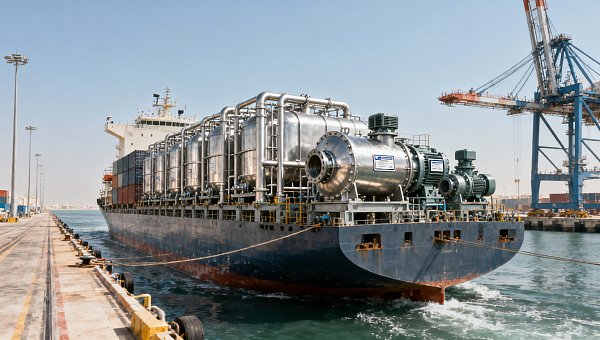
Manufacturers of Filtration & Wastewater Systems: OEMs integrating imported components into skid-mounted treatment units report delayed assembly schedules. Notably, air freight substitution remains economically unviable for heavy assemblies (>500 kg), making ocean-dependent logistics a structural bottleneck rather than a tactical challenge.
Logistics & Customs Service Providers: Third-party freight forwarders and customs brokers are experiencing higher client demand for real-time BAF tracking, pre-clearance documentation validation, and alternative routing advisories — especially for shipments transiting via Cape of Good Hope or Suez Canal (where capacity constraints persist).
Key Focus Areas & Recommended Actions
Reassess Q3 Logistics Budgets Now
Procurement and finance teams should revise ocean freight line-item assumptions — particularly for shipments originating from GCC or South Asian ports — using conservative BAF uplifts of 18–25% versus Q2 baselines. Delay buffers of +7–10 days should be embedded in delivery commitments.
Validate Incoterms Alignment with Current Risk Profile
Firms operating under FOB or EXW terms may bear disproportionate exposure to port delays and fuel volatility. Analysis shows that shifting to CFR or CIF clauses — where carriers absorb more rate fluctuation risk — improves cost predictability for time-sensitive equipment deliveries.
Pre-qualify Secondary Port Options & Inland Haulage Partners
For shipments destined to EU or US markets, consider dual-port strategies (e.g., Hamburg + Valencia) paired with vetted last-mile drayage partners. Observably, inland transport capacity in Southern Europe remains underutilized compared to Northern corridors, offering flexibility amid port congestion.
Editorial Insight / Industry Observation
This scenario is not merely a short-term freight shock — it reveals structural dependencies in the water technology supply chain that have been masked by years of stable, low-cost maritime access. From an industry perspective, the current stress test highlights how energy price volatility translates, within weeks, into tangible constraints on decarbonization-enabling infrastructure deployment. It also underscores why localized component sourcing — especially for pump casings, membrane housings, and instrumentation — is gaining renewed strategic weight beyond tariff or ESG considerations.
Conclusion
The Hormuz Strait risk does not signal an inevitable crisis — but rather a critical inflection point for resilience planning in industrial water equipment trade. Rational assessment suggests that proactive scenario modeling, rather than reactive cost absorption, will separate market leaders from laggards in the next 6–12 months.
Source Attribution
Primary reference: Wood Mackenzie Special Report, "Geopolitical Risk and Oil Market Flexibility", published 2024 (data as of late June). Additional context drawn from International Maritime Organization (IMO) BAF advisory bulletins and UNCTAD Review of Maritime Transport 2024 (Q2 update). Note: Actual Strait transit status remains dynamic; continuous monitoring of IMO NAVAREA I advisories and UAE Federal Transport Authority notifications is recommended.

The Archive Newsletter
Critical industrial intelligence delivered every Tuesday. Peer-reviewed summaries of the week's most impactful logistics and market shifts.