Monday, May 22, 2024

Saudi East-West Pipeline Pump Station Damaged, Raising Wastewater & Filtration Equipment Shipping Costs
by
Published
Views:
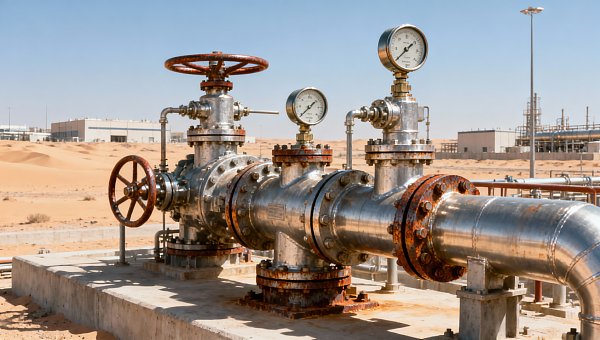
On May 14, 2026, a disruption at a pump station along Saudi Arabia’s East-West Crude Oil Pipeline reduced throughput by 700,000 barrels per day. This incident has tightened global medium-sized bulk carrier capacity and driven a 23% premium on LNG/LPG-dedicated cargo space on Middle East–East Asia shipping routes—directly elevating ocean freight surcharges and marine insurance costs for heavy wastewater and filtration equipment such as membrane bioreactors (MBRs) and ozone generators. Importers and suppliers in water treatment infrastructure, industrial gas logistics, and maritime supply chain services should monitor developments closely.
Event Overview
On May 14, 2026, energy infrastructure in Saudi Arabia—including a key pump station on the East-West Crude Oil Pipeline—was damaged. As confirmed by official statements from Saudi Aramco and international maritime reporting agencies, the incident reduced pipeline throughput by 700,000 barrels per day. Concurrently, liquefied petroleum gas (LPG) export capacity was constrained, contributing to vessel availability pressure in the medium-sized bulk carrier segment. On the Middle East–East Asia shipping corridor, spot rates for LNG/LPG-dedicated container and tanker slots rose by 23% versus baseline levels. These conditions have increased maritime surcharges and insurance premiums for heavy, high-value water treatment equipment requiring specialized handling and transport.
Industries Affected
Importers of Wastewater & Filtration Equipment
Companies importing membrane bioreactors (MBRs), ozone generators, and other large-scale water treatment systems face higher landed costs due to elevated ocean freight surcharges and marine insurance premiums. These devices are typically shipped via breakbulk or heavy-lift vessels on routes passing through the Suez Canal or Red Sea–Asia corridors—segments now experiencing heightened risk assessments and capacity constraints.
Liquefied Gas Logistics Providers
Firms coordinating LPG or LNG transport—including chartering agents, terminal operators, and tank container lessors—are encountering tighter vessel availability and steeper slot premiums. The 23% increase in dedicated LNG/LPG cargo space pricing reflects real-time adjustments in charter markets, not just spot index fluctuations.
Water Infrastructure Project Contractors
Contractors managing municipal or industrial wastewater treatment plant upgrades must now reassess lead times and budget contingencies. Delays or cost overruns linked to equipment import logistics may trigger contractual review clauses—especially where delivery timelines or CIF pricing terms were established prior to May 14, 2026.
Maritime Insurance Underwriters
Underwriters covering cargo insurance for high-value, mission-critical water treatment assets report revised risk assessments for shipments transiting Middle East–East Asia lanes. Premium adjustments reflect both physical risk exposure and increased claims volatility tied to route congestion and port delays.
What Stakeholders Should Monitor and Do Now
Track official updates from Saudi Aramco and IMO-regulated maritime advisories
Confirm whether restoration timelines, rerouting protocols, or revised safety classifications for affected routes have been published. Official guidance—not market rumors—should inform procurement and shipment scheduling decisions.
Review current contracts for CIF, FOB, and insurance liability clauses
Identify whether existing purchase orders or service agreements allocate risk for unforeseen freight surcharges or marine insurance cost increases. Where applicable, initiate commercial discussions with suppliers or carriers before finalizing Q3 2026 equipment shipments.
Assess alternative routing options and multimodal fallbacks
Evaluate feasibility of transshipment via ports less exposed to current capacity bottlenecks (e.g., Jebel Ali → Singapore → Shanghai vs. direct Red Sea–Shanghai). Also consider inland intermodal options for last-mile delivery if port congestion persists beyond June 2026.
Validate insurance policy coverage scope for delay-related liabilities
Confirm whether standard marine cargo policies cover extended transit time, storage surcharges, or demurrage fees arising from route-specific delays—not just physical loss or damage.
Editorial Perspective / Industry Observation
Observably, this event functions less as an isolated infrastructure incident and more as a stress test for global mid-tier energy logistics resilience. The 23% LNG/LPG slot premium is not merely a short-term rate spike; it signals recalibration in vessel deployment priorities across the Middle East–Asia corridor. Analysis shows that the impact on wastewater and filtration equipment logistics stems not from raw material shortages but from cascading capacity reallocation—where gas-carrying vessels are prioritized over general breakbulk tonnage. From an industry perspective, this underscores how energy infrastructure stability directly modulates capital equipment supply chains—even in non-energy sectors like water infrastructure. Current developments warrant sustained monitoring, particularly through June and July 2026, when seasonal demand peaks could compound existing pressures.
In summary, the May 14, 2026 pump station incident is not primarily about crude oil supply—it is a logistics inflection point affecting equipment import economics across water treatment, industrial gas, and maritime services. Its significance lies in demonstrating how localized energy infrastructure disruptions can propagate into measurable cost and timing impacts for globally traded capital goods. It is better understood not as a temporary anomaly but as a structural reminder of interdependence across energy, shipping, and environmental infrastructure value chains.
Source: Saudi Aramco operational update (May 14, 2026); Baltic Exchange LPG Tanker Index (Week of May 13–19, 2026); International Maritime Organization (IMO) Safety Advisory No. 2026-05-15; Lloyd’s List incident report (May 15, 2026).
Areas under ongoing observation: Restoration timeline for the East-West Pipeline pump station; potential revision of IMO risk classification for Red Sea–Gulf of Aden transit zones; secondary effects on charter rates for heavy-lift vessels outside LNG/LPG specialization.

The Archive Newsletter
Critical industrial intelligence delivered every Tuesday. Peer-reviewed summaries of the week's most impactful logistics and market shifts.