Monday, May 22, 2024

US Naval Blockade of Iranian Ports Disrupts Wastewater & Filtration Equipment Shipments
by
Published
Views:
Recent U.S. Navy actions restricting access to Iran’s Chabahar Port have forced 94 international merchant vessels to reroute, intensifying uncertainty along the Red Sea–Persian Gulf corridor. Though no specific date is publicly confirmed in official updates, the incident has immediate implications for exporters and logistics stakeholders handling wastewater treatment systems, membrane bioreactor (MBR) modules, and other high-value filtration equipment moving between Asia and markets across the Middle East, North Africa, and Southern Europe.
Event Overview
According to a U.S. Navy public notice, its operational restrictions on key Iranian ports—including Chabahar—have led to the voluntary rerouting of 94 commercial ships. The notice does not specify an effective date or duration, nor does it define the legal or tactical scope of the restrictions. No casualty reports, vessel detentions, or port closures are cited in the available statement.
Industries Affected by Segment
Direct Exporters of Wastewater & Filtration Equipment
These firms face direct pressure on CIF pricing stability and delivery timelines. Since modular treatment units and MBR membrane components are typically shipped as high-value, low-volume containerized cargo, increased insurance premiums and extended transit durations—driven by longer alternative routes—directly affect landed cost calculations and contractual delivery windows.
Manufacturers Relying on Just-in-Time Component Imports
Suppliers of specialized filtration membranes, control panels, or stainless-steel housings sourced from European or Turkish OEMs may experience inbound shipment delays. Longer transits increase inventory carrying costs and raise risk exposure for time-sensitive production schedules—particularly where final assembly depends on imported subassemblies.
Freight Forwarders & NVOCCs Serving Environmental Equipment Shippers
Service providers managing documentation, customs clearance, and multimodal coordination for wastewater equipment shipments are encountering higher volatility in ocean freight rate quotes and insurance surcharges. This affects margin predictability and requires more frequent renegotiation of service-level agreements with clients.
What Stakeholders Should Monitor and Do Now
Track official maritime advisories and insurer bulletins—not just headlines
Current developments stem from naval operational notices, not formal sanctions or UN resolutions. Stakeholders should monitor updates from the U.S. Maritime Administration (MARAD), UK Maritime Trade Operations (UKMTO), and major marine insurers (e.g., IUMI members) for concrete changes to risk classifications or routing mandates.
Review CIF terms and insurance coverage for upcoming shipments to MENA and Southern Europe
Particularly for contracts referencing Incoterms® 2020 CIP or CIF, verify whether war risk clauses, deviation allowances, or force majeure triggers apply. Insurers have begun applying additional war risk premiums for Persian Gulf transits; confirm if existing policies cover rerouted voyages via Cape of Good Hope.
Assess buffer stock needs for critical filtration components with long lead times
MBR membranes, PLC-based SCADA modules, and custom-welded pressure vessels often involve 8–12 week manufacturing cycles. If current routing shifts persist beyond four weeks, consider adjusting safety stock levels for such items destined for affected markets.
Document all route deviations and cost increases for potential contract renegotiation or claims
Commercial shippers should retain logs of vessel rerouting notifications, updated freight invoices showing war risk surcharges, and carrier-provided deviation confirmations. These records support future adjustments to pricing or delivery terms under commercial force majeure provisions.
Editorial Observation / Industry Perspective
Observably, this episode reflects a tightening of maritime operational posture—not a new sanction regime. It signals heightened friction in chokepoint governance rather than an immediate trade embargo. Analysis shows that while 94 vessels rerouted, no major container line has suspended services to the region; instead, carriers are adjusting sailings incrementally. From an industry perspective, this is best understood as a near-term supply chain stress test—not yet a structural shift—but one requiring active monitoring due to cumulative impacts on cost, timing, and contractual flexibility.
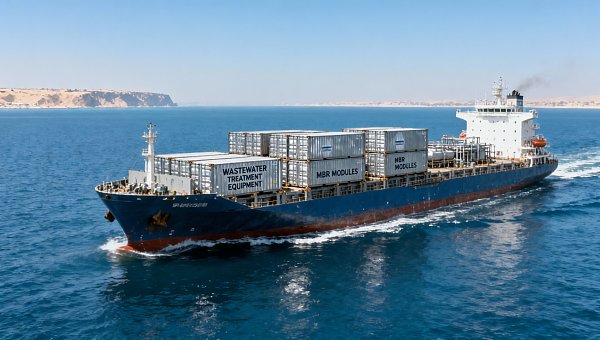
Conclusion: This development underscores how geopolitical navigation constraints can propagate quickly through specialized industrial supply chains—even without formal trade bans. For wastewater and filtration equipment exporters, it highlights the growing importance of route diversification, insurance clause review, and real-time maritime risk intelligence. It is currently more indicative of operational volatility than systemic disruption; stakeholders are advised to treat it as a signal requiring measured, evidence-based response—not alarm or overcorrection.
Source: U.S. Navy public notice (no date specified); no third-party verification or supplementary data included. Ongoing observation is recommended for updates on MARAD advisories, UKMTO bulletins, and Lloyd’s List maritime risk assessments.

The Archive Newsletter
Critical industrial intelligence delivered every Tuesday. Peer-reviewed summaries of the week's most impactful logistics and market shifts.