Monday, May 22, 2024

Water purification methods compared for high-TDS source water
by
Published
Views:
For operations facing high-TDS source water, choosing the right water purification strategy is not just a treatment decision but a risk, cost, and compliance issue. This comparison examines leading water purification and wastewater treatment methods through the lens of ISO standards, helping engineers, procurement teams, and decision-makers identify reliable solutions for industrial performance, sustainability, and long-term infrastructure resilience.
Why high-TDS source water changes the purification decision
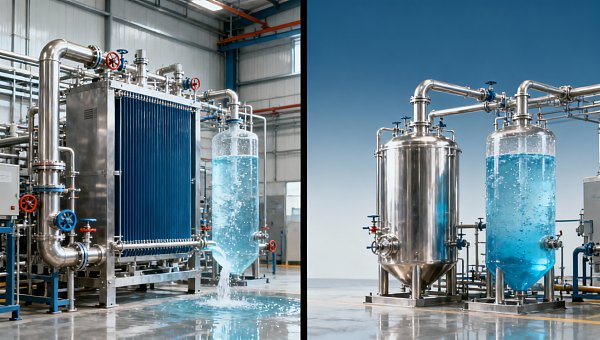
High-TDS source water carries elevated levels of dissolved salts, minerals, and ionic contaminants that can affect boilers, cooling systems, membrane skids, process rinse lines, and reuse loops. In industrial settings, the issue is rarely just water appearance. It directly influences scaling rate, corrosion risk, recovery efficiency, discharge compliance, and the stability of downstream equipment over operating windows such as 8–24 hours per day.
For procurement teams and technical evaluators, the central question is not which water purification method sounds advanced, but which method can control TDS at the required feed range, recovery target, and maintenance burden. A solution suitable for 1,500–3,000 mg/L feedwater may become uneconomical or unreliable at 8,000–15,000 mg/L without pre-treatment, staged recovery, or brine management planning.
This is where cross-sector benchmarking matters. GIM supports decision-makers by comparing treatment pathways across environmental infrastructure, precision manufacturing, mobility, and smart agri-tech applications. That perspective is useful because high-TDS challenges are rarely isolated. Water quality affects uptime, consumables cost, ESG reporting, and supplier qualification at the same time.
A robust water purification decision for high-TDS source water typically starts with 4 core checks: feedwater profile, required product water quality, concentrate handling route, and total lifecycle cost. Without those checks, projects often over-specify membrane systems, under-specify anti-scaling controls, or ignore the cost of reject water management.
- Feedwater review should include TDS, hardness, silica, turbidity, pH, organics, and seasonal variability over at least 2–4 sampling periods.
- Output targets should separate process water, utility water, and discharge or reuse standards instead of using one generic quality figure.
- Operational planning should define cleaning frequency, membrane replacement horizon, and operator skill level before technology selection.
- Risk review should consider scaling, biofouling, concentrate disposal, and permit-related constraints at site level.
How do major water purification methods compare for high-TDS water?
No single technology solves every high-TDS case. Reverse osmosis, nanofiltration, ion exchange, electrodialysis reversal, thermal evaporation, and membrane bioreactor-linked reuse trains each address a different balance of removal efficiency, energy demand, recovery rate, and chemical dependence. In practice, mixed trains are often more reliable than single-step designs, especially when the source water varies between seasons or production shifts.
The comparison below focuses on practical industrial decision points rather than generic definitions. It is intended for engineers, purchasing managers, project leads, and financial approvers who need to judge not only treatment capability but also operability, standard alignment, and total ownership impact.
For many facilities, RO remains the center of the water purification strategy, but it should not be treated as a standalone answer. High-TDS source water often needs cartridge filtration, multimedia filtration, softening, antiscalant dosing, pH control, or NF ahead of RO. At the back end, reuse, evaporation, or controlled discharge may be necessary depending on local permit conditions and site water balance.
Which method fits which industrial objective?
If the objective is process protection for rinsing, component cleaning, or utility make-up water, RO plus polishing is usually preferred. If the objective is only hardness reduction and scale control, NF or softening may deliver a lower-cost path. If the plant is under water reuse pressure or faces limited discharge capacity, membrane treatment may need to be paired with concentration or ZLD-oriented steps.
In semiconductor-linked cleaning, automotive surface treatment, agricultural recirculation, and infrastructure reuse projects, the decision often depends on whether the site values lower initial capex, lower chemical dependence, or higher recovery. These are different priorities, and they rarely point to the same system architecture.
A practical rule is to divide projects into 3 treatment intents: partial conditioning, bulk desalination, and high-recovery reuse. Once that is defined, the shortlist becomes much clearer for both technical and financial stakeholders.
What performance and compliance factors should buyers verify?
In high-TDS projects, headline claims such as “high efficiency” are not useful. Buyers need measurable performance criteria linked to process risk. At minimum, review 5 dimensions: feedwater tolerance, product water target, recovery rate, cleaning interval, and materials compatibility. For industrial users, these values matter more than generic capacity claims because they predict uptime and maintenance burden.
ISO-linked thinking improves procurement discipline even when the system is custom engineered. Standards and management frameworks commonly shape expectations around water quality control, documentation, traceability, environmental management, occupational safety, and supplier consistency. GIM’s technical benchmarking approach is useful here because it connects water treatment selection to wider manufacturing governance rather than treating it as an isolated utility purchase.
For example, teams working under ISO 9001 quality systems, ISO 14001 environmental management, or ISO 45001 safety structures usually need clear acceptance criteria, operating procedures, maintenance logs, and chemical handling controls. In sectors linked to electronics, automotive, and advanced fabrication, documentation quality is often as important as the treatment skid itself.
Another key factor is variability. A system that performs well at one feed condition may struggle when conductivity, silica, or temperature shifts across a 10°C–25°C range or when seasonal solids loading changes. This is why pilot validation, staged commissioning, or at least a structured treatability review is recommended for medium and large projects.
A practical technical checklist for evaluation
- Confirm the design feedwater envelope, not only a single nominal TDS figure. The envelope should include hardness, silica, suspended solids, pH, and temperature range.
- Check whether the quoted recovery rate applies to day-one clean conditions or realistic stabilized operation after fouling and routine cleaning cycles.
- Review the maintenance concept, including CIP frequency, membrane or resin replacement intervals, and required operator intervention per week or per month.
- Verify materials of construction for saline duty, especially pumps, housings, seals, and pipework exposed to concentrate streams.
- Request documentation alignment for commissioning, validation, and ongoing records if the plant operates in quality-controlled or regulated environments.
Compliance-oriented review table
The table below summarizes how water purification projects for high-TDS source water are commonly reviewed from a standards and audit-readiness perspective. It is not a certification list. It is a procurement and project governance tool for evaluating system suitability.
When buyers use this kind of checklist early, they reduce change orders later. It also helps finance and management teams compare offers more fairly, because each bidder is being measured against the same operational and compliance expectations.
How should procurement teams compare cost, risk, and alternatives?
The lowest quoted system price is rarely the lowest long-term cost for high-TDS source water. Total cost depends on energy, recovery, pretreatment chemicals, cleaning downtime, membrane replacement, labor, and concentrate disposal. In many plants, reject handling can materially change project economics within the first 12–36 months.
This is especially relevant when teams compare membrane-based water purification to thermal or hybrid approaches. Membranes often look attractive on capex and footprint, while thermal systems may be justified only when recovery targets are strict, discharge is expensive, or near-ZLD operation is required. The right answer depends on local water cost, permit pressure, and production criticality.
For distributors, plant operators, and project managers, a useful method is to compare 3 scenarios: base compliance solution, optimized lifecycle solution, and high-recovery solution. That makes trade-offs visible for both technical and financial approvers without forcing a false single-number decision.
Cost-oriented comparison framework
The table below helps compare common water purification pathways for high-TDS source water from a procurement viewpoint. Values are qualitative because exact cost depends on feed chemistry, local utilities, and discharge options, but the structure is useful for shortlist evaluation.
This comparison shows why selection should not be treated as a one-line purchase order. A base system may be cheaper to buy, but if recovery is low and reject cost is high, the payback case may shift toward a staged or hybrid design. GIM helps procurement and strategy teams model these choices across sectors where water availability, infrastructure resilience, and operational continuity are strategic constraints.
Common alternatives buyers should not ignore
- Improve pretreatment first. In some cases, better solids control or hardness reduction extends RO performance enough to defer a larger capex upgrade.
- Separate water users by quality class. Not every line requires the same product water, and a split approach can lower treatment cost.
- Reassess reject reuse options. Concentrate is not always waste; some sites can redirect portions for low-grade utility duty, depending on chemistry and local rules.
- Consider phased deployment over 2 stages instead of one oversized installation if the production ramp is still uncertain.
Which application scenarios need different purification strategies?
High-TDS source water affects industries differently. In electronics-related cleaning and precision component manufacturing, even moderate residual ions may create process instability or surface quality issues. In automotive and mobility plants, utility reliability, cooling loops, and surface treatment water can be the main concern. In agriculture and environmental infrastructure, water reuse, fouling tolerance, and operating simplicity may outweigh ultra-low conductivity targets.
That is why a cross-disciplinary platform such as GIM adds value. It allows teams to compare technical options across five industrial pillars instead of relying on a narrow single-sector view. A membrane configuration proven in infrastructure reuse may need major adjustment before it suits high-value manufacturing. Conversely, a polishing-heavy design from electronics may be too expensive for large-volume agricultural recirculation.
Implementation planning should also reflect project scale. A compact skid for a distributor-led commercial installation may have a 2–6 week preparation horizon, while a more integrated industrial reuse project can require 8–16 weeks for engineering review, utility interface checks, and commissioning readiness. These ranges vary by site complexity, but they matter during approval.
Scenario-based guidance
Precision and electronics-linked processes
Prioritize stable product water, instrument monitoring, and documented control limits. A common path is staged desalination with polishing and tighter conductivity verification. Buyers should request clear alarm logic, sampling points, and maintenance instructions that fit quality-managed environments.
Automotive, metal finishing, and general manufacturing utilities
Focus on uptime, scale control, and practical operator workload. Pretreatment quality is often the difference between acceptable RO performance and repeated service disruption. Review spare parts access, cleaning routines, and whether the design tolerates shift-based rather than specialist-only operation.
Agri-tech, reuse, and environmental infrastructure
Place more weight on fouling resilience, reuse economics, and discharge pressure. In these cases, hybrid trains that combine biological treatment, filtration, and desalination may be more relevant than standalone desalination equipment. Water purification should be evaluated together with storage, seasonal variability, and local water stress conditions.
FAQ and final selection guidance for high-TDS water purification
Decision-makers often ask the same questions before approving a water purification project for high-TDS source water. The answers below are designed to support technical review, internal alignment, and supplier discussions without oversimplifying the engineering realities.
How do I know whether RO alone is enough?
RO alone may be enough when feedwater variability is controlled, scaling risks are manageable, product water targets are moderate, and reject disposal is straightforward. It is usually not enough when hardness, silica, or recovery expectations are high, or when the site requires tight reuse performance. In those cases, pre-treatment or post-treatment usually determines success more than the RO skid itself.
What should procurement ask for in 5 key documents?
Ask for a process description, design basis, operating consumption estimate, maintenance schedule, and commissioning scope. These 5 documents help compare vendors on substance rather than brochure language. They also give finance and operations teams a shared basis for approval.
Are high-recovery systems always better?
Not always. Higher recovery can reduce freshwater intake and discharge volume, but it may increase scaling pressure, cleaning frequency, energy use, and control complexity. The better choice depends on local water cost, permit limits, labor capability, and process criticality. In some plants, a slightly lower recovery target creates better overall reliability.
How long does evaluation usually take?
For a straightforward upgrade with known water chemistry, internal evaluation may take 1–3 weeks. For a new industrial reuse or high-TDS wastewater treatment project involving multiple stakeholders, it may take 4–8 weeks to complete sampling review, technical comparison, budget alignment, and risk assessment. Complex projects may justify pilot work or phased approval.
Why work with GIM when comparing water purification methods?
High-TDS water purification is not just a utility purchase. It intersects with manufacturing continuity, environmental infrastructure, supplier qualification, and capital discipline. GIM helps teams evaluate these systems through a cross-sector lens, connecting water treatment choices to procurement risk, technical benchmarking, and long-term operational resilience.
Because GIM benchmarks across Semiconductor & Electronics, Automotive & Mobility, Smart Agri-Tech, Industrial ESG & Infrastructure, and Precision Tooling, clients can compare solutions with broader industrial relevance. That means clearer trade-off analysis between membrane systems, wastewater treatment pathways, compliance expectations, and lifecycle implications.
If you are reviewing water purification methods for high-TDS source water, contact GIM for support with parameter confirmation, solution comparison, supplier benchmarking, expected delivery windows, standards-related documentation needs, and customization pathways. We can help you structure a more defensible decision before RFQ release, technical approval, pilot planning, or final budget sign-off.
Useful discussion points include feedwater range, required output quality, recovery targets, concentrate management, operator capability, spare parts expectations, and sample or pilot support. This allows your team to move from a broad search into a practical shortlist aligned with cost, compliance, and performance goals.

The Archive Newsletter
Critical industrial intelligence delivered every Tuesday. Peer-reviewed summaries of the week's most impactful logistics and market shifts.