Monday, May 22, 2024

UN Resident Coordinator: China's Digital Innovation Boosts Africa's Global Trade Integration
by
Published
Views:
On May 19, 2026, the UN Resident Coordinator in China highlighted how Chinese digital tools—including AI-powered logistics route planning, cross-border payment risk control models, and multilingual real-time customs clearance assistants—are being integrated into African banking and port systems via South-South cooperation initiatives. This development is particularly relevant for trade facilitation, cross-border financial services, logistics technology providers, and agricultural export enterprises operating between China and Africa.
Event Overview
On May 19, 2026, UN Resident Coordinator in China Jisheng He stated that Chinese digital tools—specifically AI-based logistics path optimization, cross-border payment risk modeling, and multilingual real-time customs clearance assistance—are being deployed in African financial and port infrastructure through South-South cooperation projects. The Attijariwafa Bank in Morocco has piloted these tools, resulting in a 52% improvement in settlement efficiency for agricultural imports from China and an 18% reduction in logistics costs.
Industries Affected by This Development
Direct Trading Enterprises
Enterprises engaged in direct import-export trade between China and African countries may experience faster customs clearance and more predictable payment cycles. The integration of multilingual customs assistants and standardized risk models reduces documentation delays and currency conversion friction at key border points.
Raw Material & Agricultural Procurement Firms
Firms sourcing agricultural commodities (e.g., citrus, nuts, spices) from African producers face tighter working capital cycles due to traditional settlement lags. The reported 52% gain in procurement settlement efficiency signals potential improvements in order-to-cash timelines—especially where Chinese buyers rely on African suppliers with limited access to international banking infrastructure.
Supply Chain Service Providers
Logistics operators, freight forwarders, and customs brokers serving China–Africa corridors may need to adapt service offerings to align with newly digitized port and bank interfaces. The 18% logistics cost reduction cited reflects system-level optimization—not just carrier rate changes—suggesting growing reliance on interoperable digital routing and documentation platforms.
What Relevant Enterprises or Practitioners Should Monitor and Do Now
Track official rollout timelines and technical integration scope
Monitor announcements from the UN Office in China, participating African central banks, and pilot institutions (e.g., Attijariwafa Bank) for expansion plans beyond Morocco—particularly regarding which ports, customs authorities, and payment gateways will be next enabled.
Assess dependency on current manual or semi-digital customs and payment workflows
Identify operational bottlenecks in existing China–Africa trade lanes—especially where multilingual documentation, real-time tariff classification, or cross-border FX settlement cause recurring delays—and evaluate compatibility with the described toolset.
Distinguish between policy signaling and near-term operational readiness
Recognize that the Morocco pilot reflects early-stage implementation; broader adoption across diverse African regulatory environments remains contingent on local infrastructure upgrades and institutional alignment—not just technical deployment.
Prepare for data and interface requirements in procurement and logistics planning
Begin reviewing internal systems (ERP, TMS, customs management software) for API-readiness and multilingual metadata support, especially if planning to engage with banks or ports adopting these Chinese-developed tools under South-South frameworks.
Editorial Perspective / Industry Observation
Observably, this initiative functions primarily as a coordination signal—not yet a scalable operational standard. It reflects growing institutional acceptance of interoperable, non-Western digital trade infrastructure in select African markets. Analysis shows that its immediate impact lies less in replacing existing platforms and more in demonstrating viable alternatives for customs automation and cross-border finance in low-connectivity environments. From an industry perspective, sustained relevance depends on whether integration extends beyond pilot banks and ports to include national customs administrations and regional trade agreements (e.g., AfCFTA-aligned digital protocols). Current momentum suggests it is best understood as an early-stage enabler—not a near-term replacement—for legacy trade processes.
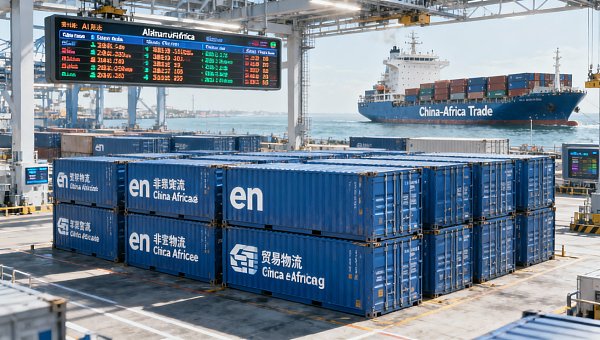
This development underscores a structural shift: digital trade tools are increasingly entering global supply chains not solely through commercial vendor channels, but via multilateral development pathways. For stakeholders in China–Africa trade, the significance lies not in immediate scalability—but in the precedent set for technical interoperability, localized language support, and risk-model portability across heterogeneous financial and customs systems.
Information Source: Public statement by the UN Resident Coordinator in China, delivered on May 19, 2026. The reported outcomes (52% settlement efficiency gain, 18% logistics cost reduction) derive exclusively from the Attijariwafa Bank pilot in Morocco. Ongoing expansion to other African institutions and jurisdictions remains unconfirmed and requires further official updates.

The Archive Newsletter
Critical industrial intelligence delivered every Tuesday. Peer-reviewed summaries of the week's most impactful logistics and market shifts.