Monday, May 22, 2024

Desay SV Automotive Files for H-Share Listing, A+H Structure Strengthens Export Compliance Credibility
by
Published
Views:
On April 13, 2026, Desay SV Automotive submitted its application for H-share listing to the Hong Kong Exchanges and Clearing (HKEX). This move positions the company as a potential pioneer among Chinese Tier-1 suppliers of intelligent cockpit and ADAS systems to achieve dual A+H listing. The development is particularly relevant for automotive electronics exporters, Tier-1 supply chain integrators, and cross-border compliance service providers — as it signals a structural shift in how China-based auto tech firms seek international regulatory recognition and financial transparency.
Event Overview
Desay SV Automotive formally filed its H-share listing application with the Hong Kong Stock Exchange on April 13, 2026. If approved, it would become the first Chinese intelligent cockpit and ADAS Tier-1 supplier to complete an A+H capital market structure. Publicly confirmed details are limited to the filing date, the venue (HKEX), and the stated strategic intent: strengthening international credibility of its IATF 16949 quality management system, enhancing ESG disclosure transparency, and improving cross-border fund settlement capability.
Industries Affected by This Development
Direct Trade Enterprises (e.g., OEMs and Tier-1s sourcing from or supplying to Desay SV)
Why affected: Overseas OEMs and regional Tier-1 partners — especially in Europe, North America, and the Middle East — increasingly assess supplier viability through dual-listing status as a proxy for financial stability and long-term compliance sustainability. The A+H structure may influence procurement evaluations and contract renewal timelines.
Impact areas: Supplier qualification reviews, audit frequency under IATF 16949, ESG-related tender requirements, and local currency settlement terms in commercial agreements.
Supply Chain Service Providers (e.g., customs brokers, compliance consultants, ESG reporting platforms)
Why affected: Dual-listed entities face heightened expectations for harmonized global reporting standards. Demand may rise for services that bridge mainland China’s disclosure frameworks (e.g., CSRC guidelines) and HKEX/IFRS-aligned ESG and financial reporting.
Impact areas: Increased need for bilingual audit support, cross-jurisdictional IATF 16949 documentation alignment, and real-time tracking of HKEX listing rule updates affecting automotive suppliers.
Component Manufacturing & Localization Partners (e.g., EMS providers, joint-venture assembly units in EU/MENA)
Why affected: Desay SV’s strengthened compliance posture may accelerate its push for localized production or technical service hubs abroad. Partners engaged in regional manufacturing or after-sales infrastructure could see revised collaboration scopes.
Impact areas: Requests for local certification readiness (e.g., ISO/IEC 17025 lab accreditation), expanded scope of technical support SLAs, and earlier involvement in pre-audit readiness cycles.
What Relevant Enterprises or Practitioners Should Monitor and Do Now
Track official HKEX feedback and listing timeline milestones
Monitor HKEX’s public announcements regarding Desay SV’s application status — including any requests for supplementary information or conditional approvals. These updates often signal jurisdiction-specific compliance expectations that may cascade to supply chain partners.
Review current contractual clauses tied to financial covenants or ESG commitments
Assess existing agreements with Desay SV (or similar Tier-1s pursuing dual listing) for clauses referencing financial reporting standards, audit rights, or sustainability targets. Flag provisions requiring alignment with HKEX disclosure rules or IFRS-based metrics.
Distinguish between regulatory signaling and operational implementation
The filing itself does not change Desay SV’s current certifications or financial practices. Treat it as a forward-looking indicator — not an immediate compliance trigger. Prioritize verification of actual changes in audit scope, reporting templates, or settlement protocols once listing is effective.
Prepare documentation for potential third-party validation requests
Organize IATF 16949 audit reports, ESG data collection workflows, and cross-border payment records. Suppliers and service partners may be asked to provide evidence supporting Desay SV’s claims of enhanced transparency and settlement efficiency.
Editorial Perspective / Industry Observation
From an industry perspective, this filing is best understood not as an outcome but as a formalized signal — one that reflects growing pressure on Chinese auto electronics suppliers to meet global institutional investor and OEM expectations beyond product performance. Analysis来看, the A+H structure serves less as a standalone certification and more as a governance amplifier: it elevates scrutiny on existing systems rather than replacing them. Current more relevant interpretation is that it introduces a new benchmark for evaluating supplier maturity — especially where export markets require demonstrable financial resilience alongside technical capability. Ongoing attention is warranted not just for Desay SV’s listing progress, but for whether peers follow suit, which could reshape minimum compliance thresholds across the Tier-1 landscape.
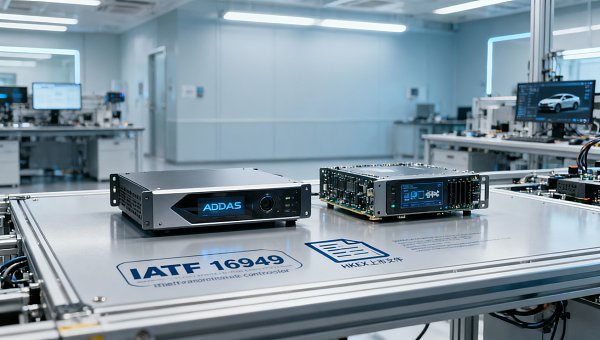
In summary, Desay SV’s H-share application marks a procedural milestone with tangible downstream implications for trade, compliance, and localization strategies in the automotive electronics value chain. It does not alter current regulations or standards — but it does recalibrate how certain stakeholders assess risk, credibility, and scalability. At this stage, the development is better interpreted as a strategic alignment effort than an operational inflection point.
Source: Official filing notice issued by Desay SV Automotive on April 13, 2026; publicly disclosed intent statement regarding IATF 16949 credibility, ESG transparency, and cross-border settlement enhancement. Note: HKEX approval status, final listing date, and detailed prospectus content remain pending and require continued observation.

The Archive Newsletter
Critical industrial intelligence delivered every Tuesday. Peer-reviewed summaries of the week's most impactful logistics and market shifts.