Monday, May 22, 2024

JIS C 0920:2026 Enforced: ADAS Camera EMC Immunity Up 40%
by
Published
Views:
On April 16, 2026, Japan’s revised industrial standard JIS C 0920:2026 entered mandatory enforcement, raising electromagnetic immunity requirements for ADAS camera modules—particularly impacting manufacturers and suppliers exporting vision systems to Japanese OEMs such as Toyota and Honda.
Event Overview
JIS C 0920:2026 was officially enforced on April 16, 2026. The standard increases radiated immunity (RS) test limits by 40% and conducted immunity (CS) limits by 35% for automotive ADAS camera modules. It also introduces a new immunity test requirement covering the 1.8 GHz–6 GHz millimeter-wave frequency band.
Industries Affected
Direct Exporters to Japanese OEMs and Tier-1 Suppliers
These companies face immediate impact because compliance with JIS C 0920:2026 is now required for type approval of ADAS camera modules supplied to Japanese automakers. Non-compliant modules may fail certification or trigger extended retesting and redesign cycles.
ADAS Camera Module Manufacturers (OEM/ODM)
Manufacturers must revise electromagnetic design, shielding, PCB layout, and filter selection to meet the tightened RS/CS thresholds and new high-frequency test scope. Hardware-level validation and pre-compliance testing are now more critical before formal certification.
EMC Testing Laboratories and Certification Bodies
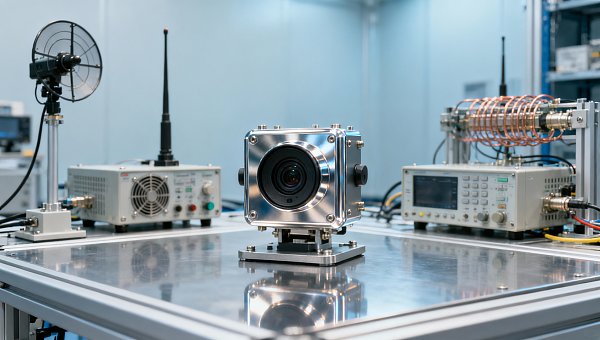
Labs supporting Japanese market access must update test setups—including calibrated antennas, amplifiers, and coupling networks—to cover the expanded 1.8–6 GHz range and higher field strengths. Accreditation under the new standard may require equipment recalibration or facility upgrades.
Supply Chain Integrators and System-Level Assemblers
Integrators embedding third-party camera modules into broader ADAS ECUs or domain controllers must verify not only module-level compliance but also system-level coupling effects, especially in the newly regulated mmWave band where board-to-board or harness-induced coupling may dominate.
What Enterprises and Practitioners Should Monitor and Do Now
Confirm applicability timelines for existing certifications
Observe whether JIS C 0920:2026 applies retroactively to already-certified modules or only to new submissions post-April 16, 2026. This affects inventory planning and product lifecycle decisions for models currently in production.
Prioritize pre-compliance testing for the 1.8–6 GHz band
Current EMC test plans often stop at 3 GHz. From industry perspective, early screening in the 1.8–6 GHz range—especially around common radar and 5G coexistence frequencies—is now essential to avoid late-stage failures during formal certification.
Review supplier declarations and component-level immunity data
Analysis shows that meeting higher RS/CS limits often depends on passive components (e.g., ferrite beads, ESD suppressors, shielded connectors) and their frequency-specific attenuation curves. Verify updated immunity specs from sensor IC, lens actuator, and image signal processor vendors.
Align internal design review checkpoints with JIS C 0920:2026 test profiles
Current more suitable approach is to integrate the new RS/CS field strength levels and mmWave test plan into early-stage design reviews—not just final validation. This includes updating EMC checklists, simulation boundary conditions, and lab test request forms.
Editorial Observation / Industry Perspective
This revision is better understood as a regulatory signal than an isolated technical update. From industry angle, it reflects Japan’s tightening alignment with global trends in high-frequency vehicle electronics integration—particularly as 5G-V2X and in-cabin radar sensors proliferate near ADAS camera bands. While not yet harmonized with ISO 11452-2/-4, its 40% RS uplift suggests growing emphasis on real-world interference resilience over legacy pass/fail margins. Ongoing observation is warranted on whether similar thresholds appear in upcoming revisions of JIS C 0950 (for radar) or in Japan’s national type-approval guidelines.
In summary, JIS C 0920:2026 marks a measurable step-up in electromagnetic robustness expectations for ADAS vision systems targeting the Japanese market. Its significance lies less in novelty and more in enforceability: it transforms previously advisory or optional test considerations into binding certification prerequisites. Current interpretation should treat it as an operational threshold—not a distant benchmark.
Source: Official publication of JIS C 0920:2026 by the Japanese Industrial Standards Committee (JISC); enforcement notice issued by the Ministry of Economy, Trade and Industry (METI), Japan. Ongoing monitoring is recommended for official interpretations regarding transitional provisions and grandfathering of prior certifications.

The Archive Newsletter
Critical industrial intelligence delivered every Tuesday. Peer-reviewed summaries of the week's most impactful logistics and market shifts.