Monday, May 22, 2024

Kenya Gold Mine Collapse Triggers Shift to Chinese Smart Monitoring Devices
by
Published
Views:
On May 7, 2026, a gold mine collapse in West Pokot County, Kenya, killed at least 10 people. The incident has prompted urgent regulatory revisions across East African mining jurisdictions—particularly concerning mandatory deployment of certified intelligent monitoring systems—and is now driving procurement shifts among EPC contractors toward Chinese-made, IEC 62443-3-3–compliant sensor solutions. Mining equipment suppliers, industrial IoT vendors, and infrastructure procurement firms operating in East Africa should closely monitor resulting technical mandates and supply chain adjustments.
Event Overview
On the evening of May 7, 2026, a gold mine in West Pokot County, Kenya, experienced a structural collapse resulting in at least 10 confirmed fatalities. In response, multiple East African mining regulatory authorities have initiated emergency revisions to their Technical Guidelines for Underground Operations Safety. As publicly confirmed, the updated guidelines stipulate that all new or expanded mining projects must deploy intelligent sensor networks compliant with IEC 62443-3-3 starting in Q3 2026.
Industries Affected
Industrial IoT Equipment Exporters
Chinese manufacturers specializing in explosion-proof edge computing modules and low-power vibration monitoring terminals—particularly those with proven capabilities in ADAS & Sensors and Mobility Vision domains—are seeing heightened demand. The requirement for IEC 62443-3-3 compliance directly affects product certification pathways and technical documentation requirements for export.
EPC Contractors Operating in East Africa
Engineering, procurement, and construction (EPC) firms engaged in mine development are revising tender specifications and vendor evaluation criteria. Their procurement timelines for safety-critical monitoring systems are accelerating, with increased emphasis on pre-certified hardware and local technical support readiness.
Supply Chain & Logistics Service Providers
Third-party logistics and customs clearance providers handling industrial sensors and edge devices face tighter documentation expectations—including conformity declarations, cybersecurity certification summaries, and regional import licensing verification—due to the newly mandated compliance window.
What Enterprises and Practitioners Should Monitor and Act On
Track official regulatory updates from East African mining authorities
Monitor for formal publication of the revised Technical Guidelines for Underground Operations Safety, including annexes specifying implementation scope, transitional provisions, and accepted certification bodies. Regulatory texts issued by Kenya’s Ministry of Mining and similar agencies in Tanzania and Uganda are primary signals.
Assess eligibility and lead time for IEC 62443-3-3–compliant hardware
Verify whether existing or planned sensor products meet IEC 62443-3-3 requirements—not just functional performance but also secure boot, secure firmware update, and network segmentation capabilities. Evaluate current lead times for certified units, as weekly inquiry volume for such devices rose 170% week-on-week following the incident.
Distinguish between policy announcement and operational enforcement
The mandate applies to new or expanded mines effective Q3 2026—but does not retroactively require upgrades for currently operating sites. Enterprises should avoid conflating this targeted technical requirement with broader digital transformation initiatives; the immediate focus remains on underground structural integrity monitoring.
Prepare technical documentation and local partner coordination
Ensure product datasheets, test reports, and cybersecurity architecture summaries are available in English and formatted for regulatory submission. Confirm alignment with local EPC partners on installation protocols, calibration schedules, and integration with legacy SCADA systems—especially where vibration and subsidence data feeds must interoperate with existing safety control logic.
Editorial Perspective / Industry Observation
Analysis shows this incident functions primarily as a regulatory catalyst—not an isolated safety failure. It reflects a broader trend where localized infrastructure incidents accelerate adoption of internationally benchmarked industrial cybersecurity standards in emerging markets. Observably, the emphasis on IEC 62443-3-3 signals a shift from basic environmental sensing to system-level resilience assurance. From an industry perspective, this is less about sudden market entry and more about accelerated validation of existing technical capabilities under newly enforced compliance thresholds. Current attention should focus on how fast national regulators translate guidance into auditable field requirements—and whether certification pathways remain accessible to non-EU/non-US vendors.
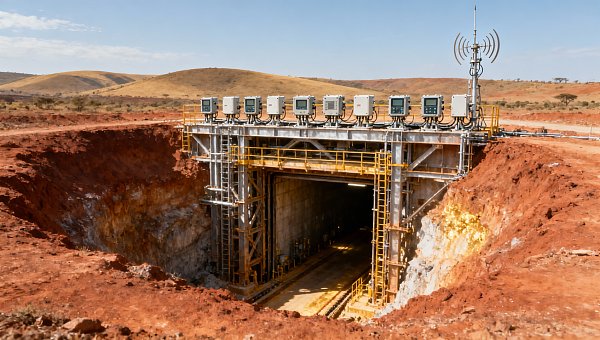
In summary, the West Pokot mine collapse is not merely a tragic safety event but a concrete inflection point for industrial IoT deployment standards in East African mining infrastructure. It confirms that technical compliance—particularly around cybersecurity and edge device hardening—is becoming a non-negotiable procurement gate, not a differentiating feature. For stakeholders, it is more accurate to interpret this development as an early-stage regulatory signal with cascading operational implications, rather than an immediate market opportunity or disruption.
Source: Publicly announced regulatory response by East African mining authorities (May 2026); verified order inquiry metrics from industry distribution channels. Ongoing observation required for final version of revised Technical Guidelines for Underground Operations Safety and country-specific implementation directives.

The Archive Newsletter
Critical industrial intelligence delivered every Tuesday. Peer-reviewed summaries of the week's most impactful logistics and market shifts.