Monday, May 22, 2024

Wholesale Car Sensors ADAS: How to Judge Supply Stability and Product Fit
by
Published
Views:
For procurement teams sourcing wholesale car sensors ADAS, supply stability and product fit are no longer separate concerns. From lead-time volatility to functional safety, every decision affects project timelines, compliance, and long-term cost control. This guide outlines practical criteria to evaluate suppliers, compare sensor performance, and reduce sourcing risk in a fast-evolving automotive market.
What should buyers verify first in wholesale car sensors ADAS sourcing?
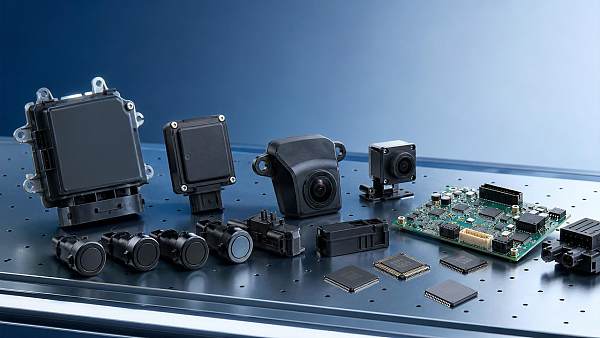
In wholesale car sensors ADAS procurement, many teams focus too early on unit price. That approach often creates hidden exposure. The first screening step should instead test whether a supplier can support stable delivery, traceable quality, and application-specific fit across changing automotive programs.
ADAS sensor sourcing sits at the intersection of semiconductor availability, automotive validation, software compatibility, and production planning. A radar module, camera sensor, ultrasonic unit, or inertial sensing component may look equivalent on a quotation sheet, yet perform very differently once integrated into braking assistance, lane support, parking, or driver monitoring systems.
For procurement personnel in complex industrial environments, this is where a cross-sector intelligence approach matters. Global Industrial Matrix (GIM) helps buyers compare components against broader manufacturing risk signals, benchmark technical claims against recognized standards, and connect sourcing decisions with upstream electronics constraints and downstream vehicle platform requirements.
- Check whether the supplier can explain the intended ADAS function, not just the part number. Functional context reveals whether the product is truly matched to use.
- Review manufacturing continuity, including wafer dependency, packaging source, test capacity, and regional logistics exposure.
- Confirm documentation depth, such as PPAP-related support, traceability records, change notification practice, and quality response workflow.
- Ask for validation boundaries. A supplier that cannot define operating range, environmental limits, or integration constraints may not be ready for automotive-scale programs.
Why supply stability and product fit must be judged together
A stable supplier with poor-fit sensors still causes launch delays. A technically capable supplier with unstable lead times creates the same commercial problem. In wholesale car sensors ADAS purchasing, these two dimensions are inseparable because validation cycles are long, substitutions are costly, and software calibration can depend heavily on sensor consistency.
This is especially relevant for procurement teams supporting multiple sectors or platforms. Shared electronics supply chains mean that automotive components can be affected by demand shifts from industrial automation, smart agriculture, or infrastructure systems. GIM’s benchmarking model is useful because it tracks these cross-industry interdependencies rather than viewing sensors in isolation.
How to judge supply stability for wholesale car sensors ADAS
Supply stability should be measured with evidence, not promises. Buyers need a structured method to compare sourcing resilience across vendors. The table below highlights practical evaluation points for wholesale car sensors ADAS programs where delivery interruption can affect SOP timing, safety validation, and inventory cost.
This framework helps buyers move from reactive purchasing to risk-weighted sourcing. A supplier does not need perfect scores in every line, but weak visibility across several areas usually signals future disruption. In wholesale car sensors ADAS projects, even a short interruption can trigger recalibration, rescheduling, or emergency dual-sourcing.
Questions procurement teams should ask suppliers
- Which critical subcomponents are single-sourced, and what is the fallback plan if one node fails?
- What percentage of production capacity is already allocated to existing automotive customers?
- How often have standard lead times changed during the last four quarters?
- What is the supplier’s process for quality containment, lot traceability, and field-return analysis?
- Can the supplier support phased demand growth from sample stage to mass production without changing the core manufacturing route?
How to assess product fit across ADAS applications
Product fit in wholesale car sensors ADAS purchasing means more than interface compatibility. Buyers must judge whether the sensor’s technical envelope, durability profile, and validation status match the target function. The same sensor category may suit one program and fail in another because field conditions, latency tolerance, and environmental stress differ.
Procurement should work closely with engineering on a requirement matrix. This matrix should define detection range, accuracy, field of view, temperature performance, electromagnetic robustness, ingress protection, and software integration needs. If the procurement team only compares catalog specifications, it may approve a part that passes quotation review but fails system integration.
Typical sensor-fit checkpoints by use case
The following table gives a practical starting point for matching wholesale car sensors ADAS options to common application scenarios. It is not a substitute for engineering validation, but it helps procurement teams ask better questions during supplier evaluation.
The main lesson is simple: product fit depends on the function, the vehicle architecture, and the validation path. A lower-cost option may be reasonable for parking applications yet unsuitable for safety-critical forward sensing. Procurement teams that separate sensor categories by functional importance usually make better sourcing decisions.
Red flags that suggest poor product fit
- The supplier can provide generic data sheets but no application-specific performance discussion.
- Environmental claims do not clearly cover thermal cycling, vibration, humidity, or contamination conditions relevant to the vehicle platform.
- Interface details are available, but calibration method, tolerance stack, or diagnostic behavior remains unclear.
- There is no clear explanation of how design changes are communicated once validation has started.
Which standards and compliance signals matter most?
For wholesale car sensors ADAS, compliance review should support risk reduction rather than become a box-checking exercise. Buyers do not need every standard on day one, but they do need clarity on which frameworks are relevant to the product type, program stage, and customer expectation.
Standards buyers commonly reference
- IATF 16949 for automotive quality management discipline across production and supplier control.
- ISO 9001 as a baseline quality management reference when assessing supporting operations or non-automotive linked processes.
- ISO 26262 when the sensor contributes to safety-related vehicle functions and functional safety evidence is required.
- AEC-related qualification expectations for automotive electronic components where durability and environmental robustness matter.
- EMC and environmental validation protocols relevant to the target OEM or Tier-1 integration program.
GIM’s value in this area is not limited to naming standards. It supports benchmark-based comparison across electronics, automotive, and manufacturing systems, helping procurement teams understand how compliance gaps affect sourcing strategy, supplier qualification effort, and program timing.
What documentation should be requested
- Quality system certificates and their scope, especially whether the manufacturing site matches the quoted product.
- Traceability format covering lot identification, test history, and process records.
- Environmental and reliability summaries, including test methods and known application boundaries.
- Change notification process and expected notice period for material, tooling, or process updates.
How should procurement compare cost, risk, and alternatives?
The lowest quotation in wholesale car sensors ADAS sourcing rarely delivers the lowest total cost. Buyers should compare quoted price against validation burden, lead-time risk, logistics volatility, and field-performance exposure. A part that requires additional calibration work, emergency stock, or repeat testing can quickly become more expensive than a higher-priced but better-controlled option.
Alternative sourcing is also not a simple backup plan. In ADAS systems, second-source components may require software adaptation, mechanical redesign, revalidation, or customer approval. Procurement teams should therefore distinguish between commercial alternates and engineering-ready alternates.
A practical decision model
This comparison table can help structure wholesale car sensors ADAS decisions when buyers need to balance launch pressure with long-term control.
This does not mean premium suppliers are always the right answer. It means procurement should define where cost sensitivity is acceptable and where risk tolerance must be lower. GIM supports this by linking technical benchmarking with supply-chain visibility, allowing buyers to compare not only price bands but decision consequences.
A procurement workflow that reduces sourcing mistakes
Recommended evaluation sequence
- Define the ADAS function and criticality level before requesting quotes. Sourcing without a functional profile leads to poor supplier comparison.
- Create a joint checklist with engineering, quality, and supply-chain teams covering technical fit, standards, and delivery assumptions.
- Shortlist suppliers based on both product capability and upstream resilience rather than commercial terms alone.
- Request sample support with clear test objectives, including environmental, interface, and consistency checks.
- Score findings using weighted criteria. For wholesale car sensors ADAS, supply continuity and application fit usually deserve more weight than headline price.
- Set a change-control and communication framework before volume commitment, especially for lead-time shifts or design updates.
This workflow is particularly helpful for procurement teams working across global manufacturing networks. It creates a repeatable path for comparing suppliers from different regions, product families, and maturity levels without losing sight of the end application.
FAQ: common buyer questions about wholesale car sensors ADAS
How can we tell whether a supplier’s lead time is truly stable?
Ask for historical lead-time performance by quarter, not just the current quote. Stable suppliers can usually explain variance drivers, capacity constraints, and demand allocation practice. If lead time depends heavily on one wafer source, one packaging facility, or one export route, stability is weaker than it appears.
Are wholesale car sensors ADAS products interchangeable across platforms?
Not usually. Even when two sensors share the same general function, they may differ in interface behavior, mounting tolerance, calibration method, EMC profile, or environmental durability. Procurement should always confirm with engineering whether an alternate is plug-compatible, software-compatible, and validation-compatible.
What matters more: certification or field performance data?
Both matter, but they answer different questions. Certification indicates process discipline or qualification alignment. Field-oriented data indicates whether the product can perform in the actual ADAS environment. Buyers should avoid treating one as a substitute for the other.
When should we start dual-source planning?
Dual-source planning should begin early for high-volume or safety-sensitive programs, especially where upstream semiconductor dependence is concentrated. However, second-source strategy must include engineering consequences, not just commercial backup. A nominal alternate with no validation path offers limited protection.
Why choose GIM for sourcing intelligence and benchmarking?
Wholesale car sensors ADAS purchasing now requires more than supplier outreach. It requires a reliable view across electronics supply, automotive validation, standards alignment, and industrial risk transfer. GIM is built for that complexity. Our multi-disciplinary benchmarking model connects Semiconductor & Electronics, Automotive & Mobility, Smart Agri-Tech, Industrial ESG & Infrastructure, and Precision Tooling into one decision framework.
For procurement teams, this means clearer parameter confirmation, more grounded supplier comparisons, and better control over sourcing uncertainty. We help evaluate sensor fit against application needs, review supply stability signals, compare qualification readiness, and frame decisions in terms that engineering, quality, and purchasing can use together.
If you are reviewing wholesale car sensors ADAS options, contact GIM for support with product selection, parameter checks, lead-time assessment, alternative-source review, compliance expectations, sample evaluation planning, or quotation comparison. This allows your team to move from fragmented supplier data to a structured sourcing decision with fewer blind spots.

The Archive Newsletter
Critical industrial intelligence delivered every Tuesday. Peer-reviewed summaries of the week's most impactful logistics and market shifts.