Monday, May 22, 2024

How to Choose the Right Sensors for ADAS in 2026
by
Published
Views:
Introduction
As ADAS technology evolves rapidly, selecting the right sensors for 2026 demands strategic foresight. This guide equips automotive engineers, procurement specialists, and decision-makers with critical insights to evaluate cutting-edge sensor technologies—from LiDAR to radar and camera systems—against evolving ISO standards and real-world performance metrics. Discover how semiconductor advancements, renewable energy integration, and precision electronics are reshaping ADAS components for next-gen electric vehicles and smart mobility solutions.
Key Decision Factors for ADAS Sensor Selection in 2026
When choosing ADAS sensors for 2026 applications, professionals must balance technical specifications with commercial viability. The primary considerations include:
- Performance vs. Cost: High-resolution LiDAR offers superior object detection but at premium pricing, while radar provides reliable all-weather performance at lower costs
- Regulatory Compliance: Upcoming ISO 21448 (SOTIF) and UN R157 (ALKS) standards will mandate specific sensor capabilities
- Integration Complexity: Sensor fusion requirements for L3+ autonomy demand compatible communication protocols
- Supply Chain Resilience: Dual-sourcing strategies for semiconductor-dependent components
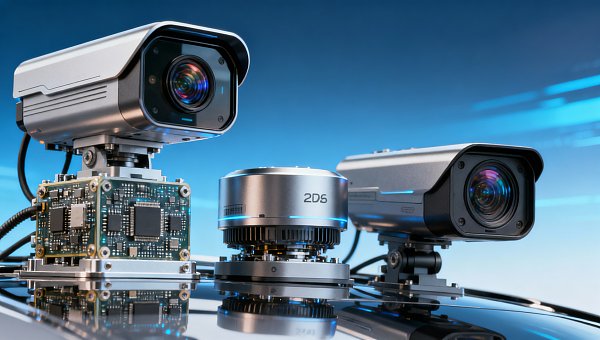
Sensor Technology Breakdown: 2026 Projections
LiDAR Systems
Next-generation solid-state LiDAR will achieve <150m range with <0.1° angular resolution at sub-$500 price points, making them viable for mass-market vehicles. Key evaluation metrics:
- Wavelength (905nm vs. 1550nm for eye safety)
- Frame rate (>20Hz for highway speeds)
- ASIL-D certification for fault tolerance
Radar Solutions
4D imaging radar will become standard, offering elevation detection with 1° azimuth resolution. Critical factors:
- 77GHz vs. 79GHz bandwidth tradeoffs
- MIMO antenna configurations
- Interference mitigation capabilities
Camera Systems
8MP+ resolution cameras with neural processing units will enable 300m+ object detection. Evaluation criteria:
- Dynamic range (>140dB for HDR)
- Thermal stability (-40°C to +105°C operation)
- ISO 26262 compliance
Procurement Strategies for Enterprise Buyers
For procurement teams and decision-makers, sensor selection requires cross-functional evaluation:
- Total Cost of Ownership: Include calibration, maintenance, and software licensing costs
- Vendor Vetting: Assess financial stability and R&D pipeline for future-proofing
- Scalability: Verify production capacity meets projected EV volumes
- Aftermarket Support: Required lifecycle of 10+ years for commercial vehicles
Implementation Roadmap
Successful ADAS sensor integration follows this phased approach:
- Benchmarking: Test against SAE J3016 automation levels
- Prototyping: Validate in target operating design domains
- Homologation: Prepare for 2026 Euro NCAP and NHTSA requirements
- Production: Implement automated calibration processes
Conclusion
Selecting ADAS sensors for 2026 requires balancing technological capabilities with commercial realities. The optimal solution combines: 1) Performance-matched sensor fusion architectures, 2) Compliance with evolving safety standards, and 3) Supply chain-resilient procurement strategies. Automotive teams should prioritize vendors demonstrating clear roadmaps for cost reduction and performance scaling, particularly in solid-state LiDAR and 4D radar technologies. By aligning sensor selection with both technical requirements and business objectives, organizations can build competitive ADAS platforms ready for next-generation mobility demands.
The Archive Newsletter
Critical industrial intelligence delivered every Tuesday. Peer-reviewed summaries of the week's most impactful logistics and market shifts.