Monday, May 22, 2024

How to Compare Lithium Battery Thermal Runaway Models for Real Pack Design
by
Published
Views:
Choosing the right lithium battery thermal runaway model is critical for engineers and technical evaluators translating lab data into safe, scalable pack designs. From cell-to-cell propagation assumptions to boundary conditions, model differences can significantly affect design decisions, compliance strategies, and risk forecasts. This guide explains how to compare leading approaches with a practical, system-level lens for real pack engineering.
What is a lithium battery thermal runaway model, and why does it matter in real pack design?
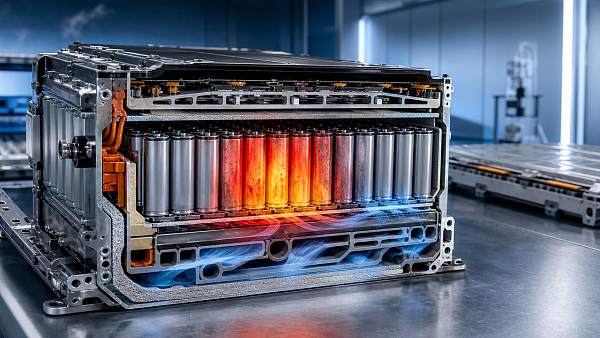
A lithium battery thermal runaway model is a simulation or analytical framework used to predict how a cell, module, or full battery pack behaves once abnormal heat generation begins and protective limits are exceeded. For technical evaluators, the model is not just a scientific tool. It becomes a decision engine for pack spacing, vent routing, insulation strategy, enclosure design, cooling architecture, and abuse-test planning.
In practical engineering, different model families answer different questions. A reduced-order model may estimate propagation timing quickly for early concept screening. A CFD-based model may evaluate gas flow, local heat flux, and enclosure hot spots. A coupled electrochemical-thermal model may help explain onset mechanisms at the cell level. The challenge is that these models can produce very different outputs even when fed similar test data, because each one simplifies reality in a different way.
That is why comparing a lithium battery thermal runaway model should never start with software branding alone. It should start with the engineering decision you need to support: pass/fail safety margin, propagation delay, structural survivability, venting consequences, regulatory evidence, or sourcing risk reduction across multiple suppliers.
Which model types should technical evaluators compare first?
Most teams will encounter three broad categories when comparing a lithium battery thermal runaway model for industrial use. Each category has strengths, blind spots, and different data requirements.
- Empirical or reduced-order models: Fast to run, useful for design screening, and often suitable when test data is limited. They usually rely on calibrated heat release rates, trigger thresholds, and simplified propagation logic.
- Physics-based thermal or multi-physics models: Better for understanding heat transfer pathways, onset sensitivity, and interaction between materials, geometry, and cooling systems. They demand more input data and validation effort.
- CFD or enclosure-level safety models: Best for vent gas movement, flame path analysis, pressure rise, and thermal concentration zones. These models matter when pack architecture and environmental infrastructure are closely linked.
For cross-sector organizations such as GIM’s audience, the smartest comparison often uses more than one model tier. A reduced model can screen hundreds of layouts, while a higher-fidelity lithium battery thermal runaway model can then verify the most critical scenarios before hardware validation. This layered benchmarking approach reflects how advanced manufacturing programs balance speed, cost, and technical integrity.
How do you compare model assumptions instead of just comparing outputs?
Many evaluation mistakes happen because teams compare colorful output plots without auditing the assumptions underneath. A useful lithium battery thermal runaway model comparison should focus on five assumption layers.
1. How is thermal runaway triggered?
Some models trigger runaway at a fixed temperature. Others use reaction kinetics, internal short assumptions, or abuse-induced heating rates. If the triggering logic is too simple, the model may miss the difference between nail penetration, overcharge, external heating, and crush events.
2. How is heat generation represented?
One model may use a single heat source term per cell. Another may separate reversible heating, irreversible heating, decomposition stages, and combustion effects. This matters because heat release shape, not just total heat, often controls propagation timing.
3. What boundary conditions are assumed?
Boundary conditions can completely change model results. Airflow, contact resistance, busbar conduction, module casing emissivity, cooling loop performance, and vent opening behavior all influence heat transfer. If two models use different boundaries, their outputs are not directly comparable.
4. How is cell-to-cell propagation handled?
Some tools use threshold-based propagation, where a neighboring cell fails once a surface temperature is reached. Others model local heat flux or directional exposure. In real pack design, propagation is rarely isotropic, so geometry-sensitive logic is usually more credible.
5. What failure outputs are actually predicted?
A lithium battery thermal runaway model may predict only temperature rise, or it may also estimate gas generation, pressure, vent mass flow, structural heating, and time-to-adjacent-failure. Evaluate whether the outputs match your compliance and design decisions.
What should you look for in a comparison table before selecting a model?
A structured comparison helps technical evaluators avoid choosing a model that is accurate in theory but unusable in a program schedule. The table below summarizes the most important selection dimensions for a lithium battery thermal runaway model.
How can you tell whether a lithium battery thermal runaway model is credible enough for procurement or design approval?
Credibility does not mean perfect prediction. It means the model is transparent, bounded, and decision-relevant. For technical assessment teams, three tests are especially useful.
First, check traceability. You should be able to link key model parameters to actual measurements such as ARC, DSC, calorimetry, vent testing, or pack abuse experiments. If major inputs come from generic literature without chemistry-specific justification, confidence should drop.
Second, check transferability. A model calibrated on cylindrical NMC cells may not perform well on LFP prismatic modules with different vent paths and thermal mass. Ask whether the lithium battery thermal runaway model has been tested across the cell format, chemistry, and packaging conditions relevant to your program.
Third, check uncertainty communication. Strong teams do not present a single deterministic result as fact. They show ranges, sensitivity drivers, and known limits. If the model predicts propagation at 210 seconds, but uncertainty spans from 120 to 340 seconds, the design response may need to be much more conservative.
For industrial strategists and procurement officers, this matters because model credibility affects supplier comparison. If two vendors both claim propagation resistance, but one relies on a transparent and validated lithium battery thermal runaway model while the other relies on opaque assumptions, the technical risk profile is not equivalent.
What are the most common mistakes when comparing thermal runaway modeling approaches?
Several recurring mistakes can distort evaluation results and lead to overconfidence in pack safety.
- Using one abuse scenario as universal truth: External heating results do not automatically represent overcharge or internal short behavior.
- Ignoring venting direction: A neighboring cell may survive average temperature exposure but fail under a focused jet or flame path.
- Overlooking mechanical interfaces: Compression pads, gap fillers, busbars, and fasteners can become major heat transfer routes.
- Comparing absolute temperatures only: Time-to-trigger, local heat flux, and gas accumulation may be more relevant than peak temperature.
- Assuming validation equals prediction in every layout: A calibrated model is still conditional on geometry, manufacturing variation, and boundary control.
Another frequent issue is separating battery safety from broader industrial infrastructure. Real pack design interacts with enclosure venting, vehicle architecture, charging systems, manufacturing tolerances, and ESG-driven reliability expectations. In a system-of-systems environment, the best lithium battery thermal runaway model is the one that supports cross-functional decisions, not just battery-team analysis.
How should teams balance model fidelity, development time, and program cost?
There is no single best answer, but there is a practical workflow. Early in development, use a faster lithium battery thermal runaway model to compare architecture options, spacing, shielding concepts, and cooling layouts. In the middle phase, add targeted physical testing to calibrate critical assumptions. Near design freeze, apply a higher-fidelity model to the few scenarios that drive compliance exposure or financial risk.
This staged method prevents two extremes: overbuilding the simulation before requirements are stable, or under-modeling until late hardware failures force redesign. For global manufacturing organizations, the cost question is not just software license or analyst hours. It includes prototype cycles, certification delay, supplier dispute resolution, and the downstream impact of an undercharacterized safety event.
In benchmark-driven environments, a useful rule is to ask: what decision becomes safer, faster, or more defensible because this model exists? If the answer is vague, the modeling scope is probably misaligned. If the answer is specific—such as reducing module barrier mass by a validated margin while maintaining propagation delay targets—the investment is easier to justify.
What questions should you ask before adopting a specific model, supplier workflow, or validation plan?
Before locking in a modeling approach, technical evaluators should confirm a concise set of practical questions:
- Which chemistry, form factor, SOC range, and failure modes are covered by the model evidence?
- What measured inputs are mandatory, and which ones are estimated or tuned?
- How are propagation thresholds defined for adjacent cells or modules?
- Can the model represent vent gas, pressure rise, and enclosure interaction, or only thermal fields?
- What is the expected runtime, update burden, and analyst skill requirement?
- How will results be documented for design review, supplier comparison, and standards-facing evidence?
A robust lithium battery thermal runaway model should help teams compare options with transparency rather than hide uncertainty behind complexity. For organizations operating across electronics, mobility, environmental systems, and industrial benchmarking, that transparency is essential. It creates a shared technical language between engineering, procurement, quality, and strategy teams.
If you need to confirm a specific modeling route, parameter set, validation scope, timeline, quotation basis, or collaboration method, start by clarifying the target pack architecture, cell format, abuse scenarios, required standards evidence, and the exact decision the model must support. Those questions will quickly reveal whether a given workflow is suitable for real-world pack design or only for limited laboratory comparison.

The Archive Newsletter
Critical industrial intelligence delivered every Tuesday. Peer-reviewed summaries of the week's most impactful logistics and market shifts.