Monday, May 22, 2024

China Telecom Launches Token Trial for Cross-Border B2B Payments
by
Published
Views:
China Telecom Launches Token Trial for Cross-Border B2B Payments
On May 17, 2026, China Telecom officially launched its three-tier Token Plan trial commercial package—targeting developers, SMEs, and individual users. By integrating connectivity, security, and tokenized payment capabilities—including compliant stablecoin settlement pathways—the initiative directly addresses longstanding friction in cross-border hardware component exports, particularly for high-value industrial goods. The move signals a tangible step toward operationalizing regulated digital asset infrastructure within China’s telecom-led digital economy framework.
Event Overview
On May 17, 2026, China Telecom formally introduced its Token Plan trial commercial package, comprising three service tiers. The offering is available to developers, small and medium-sized enterprises (SMEs), and individual users. It bundles secure network connectivity, cryptographic identity management, and built-in tokenized payment functionality. Settlement supports compliant stablecoins aligned with domestic regulatory guidance. The solution is explicitly designed to accelerate payment clearance for cross-border B2B transactions involving hardware components such as CNC machining tools and plastic injection molds.
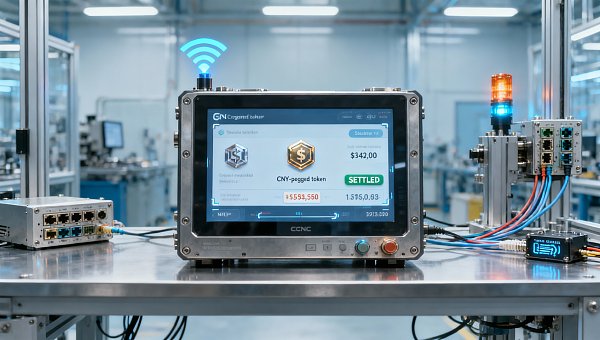
Industries Affected
Direct Exporters (Hardware Component Manufacturers)
Exporters of precision hardware components—including CNC machining tools and plastic injection molds—are directly impacted because the Token Plan shortens average settlement cycles from 5–10 business days to near real-time under eligible conditions. This reduces exposure to foreign exchange volatility and eliminates correspondent bank fees typically incurred in SWIFT-based USD or EUR settlements. However, adoption requires integration with China Telecom’s API gateway and adherence to onboarding KYC/AML protocols—making scalability contingent on technical readiness, not just regulatory eligibility.
Raw Material Procurement Firms
Firms sourcing critical inputs (e.g., specialty steels, engineering resins) from overseas suppliers may benefit indirectly: faster inbound cash flow from downstream export clients improves their working capital flexibility, enabling more agile bulk procurement and hedging strategies. Yet they remain outside the immediate scope of Token Plan functionality—no direct import settlement capability is offered in this trial phase.
Contract Manufacturing & OEM Service Providers
Manufacturers operating under OEM or contract manufacturing models—especially those embedded in global hardware supply chains—face revised expectations from international buyers. Overseas importers now have a lower-friction, programmable payment channel, potentially accelerating purchase order execution and enabling conditional payments (e.g., tied to IoT-verified shipment milestones). This shifts negotiation leverage but also introduces new compliance obligations around token receipt, custody, and tax reporting under local jurisdictions.
Supply Chain Finance & Logistics Service Providers
Third-party logistics operators, freight forwarders, and trade finance platforms must assess interoperability with China Telecom’s token infrastructure. While no native integration is announced, the trial creates early demand signals for APIs that link shipping documentation (e.g., e-AWB, blockchain bills of lading) to token settlement triggers. Providers lacking digital reconciliation layers risk marginalization in high-velocity B2B corridors where payment and delivery verification converge.
Key Considerations and Recommended Actions
Evaluate Technical Integration Readiness
Eligible exporters should audit current ERP and payment gateway configurations—particularly support for ISO 20022 message standards and wallet-compatible cryptographic key management—to determine feasibility of onboarding within the trial’s six-month window.
Assess Stablecoin Counterparty Risk
While settlement uses compliant stablecoins, issuers are not yet disclosed. Firms should monitor official updates from the People’s Bank of China and China Telecom regarding reserve transparency, redemption mechanisms, and jurisdictional enforceability before committing to large-volume token-denominated contracts.
Update Cross-Border Contract Terms
Legal teams should revise standard terms of sale to specify governing law for token receipt, treatment of fractional units, and fallback mechanisms if token settlement fails—given the trial’s non-mandatory status and absence of statutory dispute resolution frameworks.
Track Regulatory Scope Expansion
The trial currently excludes import settlement and consumer-facing use cases. Stakeholders should track whether subsequent phases extend coverage to multi-currency stablecoin pairs (e.g., CNY/USD/EUR) or integrate with China’s mBridge cross-border CBDC platform—both of which would significantly broaden applicability.
Editorial Perspective / Industry Observation
Observably, this is not merely a fintech upgrade but a strategic infrastructure play: China Telecom leverages its nationwide fiber and 5G backbone—and its status as a central SOE—to anchor digital settlement within trusted national networks. Analysis shows the initiative prioritizes control, traceability, and regulatory alignment over decentralization or open interoperability. From an industry perspective, it reflects a broader pivot toward “sovereign digital rails” for trade finance—where speed gains are secondary to auditability and policy enforcement. Current more relevant interpretation is that this trial tests institutional appetite for programmable money in high-value industrial trade—not general-purpose crypto adoption.
Conclusion
This trial marks a calibrated, institutionally grounded entry point for tokenized settlement in China’s hardware export sector. Its significance lies less in immediate scale and more in signaling regulatory tolerance for hybrid models—blending telecom-grade security, stablecoin efficiency, and centralized oversight. For global supply chain actors, the rational takeaway is cautious engagement: treat it as a live testbed for future compliance architecture—not a wholesale replacement for existing banking channels.
Source Attribution
Official announcement: China Telecom Group Co., Ltd., May 17, 2026 (via www.chinatelecom.com/en/news). Regulatory context referenced from the People’s Bank of China’s Guidelines on Pilot Stablecoin Settlement for Cross-Border Trade (Draft for Consultation), issued Q1 2026. Note: Token Plan’s stablecoin issuer list, KYC thresholds, and international banking partner integrations remain pending official disclosure—these elements require ongoing monitoring.

The Archive Newsletter
Critical industrial intelligence delivered every Tuesday. Peer-reviewed summaries of the week's most impactful logistics and market shifts.