Monday, May 22, 2024

Electronic components shortages are easing, but lead times still vary
by
Published
Views:
Electronic component shortages are no longer as severe as they were during the peak disruption years, but that does not mean procurement has become simple again. For manufacturers, engineers, sourcing teams, and project leaders, the current reality is more nuanced: availability has improved for many categories, yet lead times still vary significantly depending on component type, qualification requirements, region, and end-market demand. In practice, this means a CNC equipment build, an automotive electronics program, a smart agriculture rollout, or a water treatment control upgrade can still face delays if buyers assume the market has fully normalized.
For organizations managing cost, compliance, and delivery risk, the key question is no longer “Are shortages everywhere?” but “Which components remain volatile, and how should we plan around them?” That distinction matters across industrial sectors where ISO-aligned quality systems, validated suppliers, plastic injection mold tooling, power electronics, and infrastructure projects all depend on stable and predictable component supply.
What does “shortages are easing” actually mean for buyers and project teams?
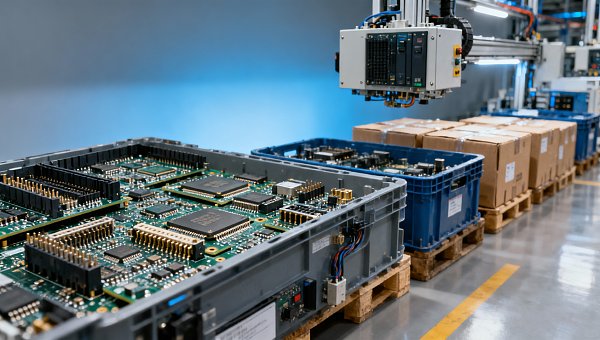
In practical terms, easing shortages usually means more parts are available through authorized channels, spot pricing has become less extreme in many categories, and some lead times have shortened from crisis-era highs. However, the market has not returned to uniform predictability. Lead times still vary because demand recovery is uneven, supplier capacity remains selectively constrained, and many industrial and regulated applications cannot simply switch to an alternative part without technical review or requalification.
This is especially relevant for readers involved in:
- industrial automation and CNC milling machines
- automotive technology and mobility systems
- sustainable agriculture equipment and smart sensing platforms
- smart power grid controls and energy infrastructure
- water purification and wastewater treatment systems
- environmental projects such as carbon capture and monitoring systems
In these environments, the issue is rarely just part availability. It is whether the available part meets performance, certification, lifecycle, reliability, and documentation requirements. A component may be “in stock” somewhere, but still be unsuitable if it lacks traceability, fails to match IPC or ISO-driven quality expectations, or creates design and validation risk.
Why do lead times still vary so much across electronic components?
Lead-time variation persists because the electronics supply chain is not one market; it is a network of very different submarkets. Mature analog devices, automotive-grade semiconductors, power management ICs, microcontrollers, connectors, passive components, sensors, and specialty memory products all move according to different demand cycles and manufacturing constraints.
The most common reasons include:
- Automotive and industrial qualification requirements: Parts used in safety-critical or high-reliability systems often require longer production and release cycles.
- Fab and packaging bottlenecks: Even when wafer supply improves, backend assembly, testing, and packaging can still limit delivery.
- Legacy node pressure: Many industrial and automotive products rely on older process nodes that remain heavily utilized.
- Regional supply concentration: A component family may depend on a small number of geographically concentrated sources.
- Demand distortion: Some buyers still place buffer orders, while others destock, creating mixed demand signals.
- Compliance and approved vendor limits: Companies operating under strict quality systems cannot always buy from secondary channels.
For procurement officers and technical evaluators, this means broad market headlines are useful, but not enough. Actual sourcing conditions must be reviewed at the commodity, supplier, and application level.
Which problems matter most to decision-makers right now?
Different stakeholders look at component availability through different lenses, but their concerns are closely connected.
Procurement teams want to know which categories are stable, where pricing is likely to remain volatile, and how to avoid last-minute shortages without overbuying.
Engineers and technical assessment teams need to understand whether substitute parts are technically acceptable, what redesign risks exist, and how changes affect reliability, thermal performance, EMC behavior, and certification.
Project managers focus on whether long-lead components will disrupt build schedules, commissioning plans, or customer delivery commitments.
Quality and safety personnel need traceability, approved sourcing, and assurance that substitutions will not compromise compliance or field performance.
Financial approvers and business leaders are primarily concerned with cost control, cash flow, margin protection, and the risk of tying working capital into inventory that may later become obsolete.
For distributors, resellers, and agents, there is an additional layer: customer trust. If supply appears easier but certain parts still slip unexpectedly, channel partners need better visibility and cleaner communication to avoid overpromising.
How should companies judge whether supply conditions are truly improving?
The best way to assess the market is not through one general indicator, but through a practical decision framework. A useful review should include the following questions:
- Is lead-time improvement consistent across our actual bill of materials? A general market recovery does not help if a few critical components still define the schedule.
- Are quoted lead times supported by historical delivery performance? Supplier promises should be compared with recent on-time delivery results.
- Do available alternatives meet technical and regulatory requirements? This is essential in sectors governed by ISO, IATF, IPC, or internal validation standards.
- Are we seeing real price stabilization or only temporary channel availability? Spot market stock can mask underlying supply weakness.
- Which components are single-sourced or approved from very few vendors? These remain structural risk points even when broader shortages ease.
- How exposed are we to lifecycle issues? Some parts may be available now but nearing end-of-life, creating future redesign pressure.
Organizations with complex manufacturing portfolios should also segment components by business criticality. A low-cost IC that stops a wastewater treatment controller, an EV subsystem, or a smart agriculture gateway is not low risk just because its unit price is small.
What sourcing strategies work best in a market that is improving but still uneven?
The current environment rewards disciplined sourcing rather than emergency buying. The most effective strategies usually combine commercial flexibility with technical governance.
1. Prioritize BOM-level risk mapping.
Classify parts by lead time, qualification difficulty, single-source exposure, and impact on final product delivery. This helps teams focus on the few components that can stop an entire project.
2. Build approved alternatives before they are needed.
If engineering waits until a shortage becomes critical, qualification timelines often erase the benefit of finding a substitute. Pre-validation is especially valuable in automotive technology, industrial controls, and environmental infrastructure.
3. Use multi-tier supplier visibility.
Do not rely only on direct supplier quotes. Review distributor inventory behavior, manufacturer capacity signals, and regional logistics conditions to detect risk earlier.
4. Align procurement with quality and engineering.
Fast sourcing decisions that bypass compliance review can create larger downstream costs, including field failures, non-conformance, and rework.
5. Revisit inventory policy.
The right answer is usually neither aggressive stockpiling nor ultra-lean purchasing. Safety stock should reflect actual lead-time variability, part criticality, and project revenue exposure.
6. Benchmark against standards and application demands.
For organizations operating under ISO, IATF, and IPC-related expectations, sourcing strategy must include documentation integrity, supplier approval discipline, and process traceability.
How do these lead-time shifts affect cross-industry manufacturing programs?
Because GIM’s audience spans multiple industrial pillars, it is important to recognize that easing shortages do not create the same benefit everywhere.
In semiconductor and electronics manufacturing, shorter lead times can improve planning flexibility, but specialty devices and high-reliability parts may still constrain production schedules.
In automotive and mobility, even moderate delays in qualified electronic components can affect ECU programs, EV systems, sensors, and power management assemblies. Qualification rules often make substitution slower than in general industrial products.
In smart agri-tech, the issue is often system integration. Delays in communications modules, control boards, or sensing electronics can postpone deployment windows tied to agricultural seasons, making timing especially critical.
In industrial ESG and infrastructure, projects involving smart grids, water purification, wastewater treatment, or carbon capture depend on reliable electronics embedded in larger capital systems. A missing component can delay installation, compliance deadlines, or operational launch.
In precision tooling and plastics-related manufacturing, including plastic injection molds and automated machinery, supply stability affects machine controls, drive electronics, sensor integration, and aftermarket service planning.
The cross-sector lesson is clear: better availability reduces pressure, but planning assumptions still need to be application-specific.
What should readers do now if they want better cost control and lower disruption risk?
If your organization buys, validates, or manages products containing electronic components, now is the time to move from crisis response to structured resilience. That means:
- reviewing the highest-risk components in active and upcoming programs
- checking whether quoted lead times match actual supplier performance
- pre-approving substitutes for parts with ongoing volatility
- aligning sourcing decisions with engineering, quality, and finance
- avoiding the assumption that broad market improvement equals low risk everywhere
- using cross-industry benchmarking to compare exposure across product lines and regions
For companies operating in interconnected manufacturing sectors, the real advantage comes from seeing the supply chain as a system of systems. Electronic component lead times influence machine builds, product launches, maintenance cycles, compliance readiness, and capital planning far beyond the electronics department alone.
Electronic components shortages are easing, but lead times still vary enough to affect sourcing decisions, engineering choices, project timelines, and financial outcomes. The smartest response is not complacency and not panic. It is disciplined visibility: knowing which components have stabilized, which remain structurally risky, and how those risks translate into operational impact. Companies that combine procurement intelligence, technical validation, and cross-sector benchmarking will be in the strongest position to protect delivery, quality, and margin as the market continues to normalize.
- electronics
- semiconductors
- electronic components
- electronics manufacturing
- Mobility
- automotive technology
- sensors
- Agri-Tech
- Industrial ESG
- wastewater treatment
- water purification
- carbon capture
- CNC milling machines
- plastic injection molds
- Precision tooling
- Smart Agri-Tech
- Sustainable agriculture
- Environmental infrastructure

The Archive Newsletter
Critical industrial intelligence delivered every Tuesday. Peer-reviewed summaries of the week's most impactful logistics and market shifts.