Monday, May 22, 2024

Lighting Price Breakdown: Material, Labor, and Installation Costs
by
Published
Views:
Lighting Price Breakdown: Material, Labor, and Installation Costs
Understanding lighting price starts with one simple idea: the fixture cost is only one part of the budget.
For industrial, commercial, and infrastructure projects, total spend often shifts because of materials, regional labor, wiring conditions, and compliance needs.
That is why a smart lighting price review looks beyond catalog numbers and asks what the installed system will really cost over time.
In practice, buyers need to compare unit price, installation effort, maintenance cycles, and sourcing risk in one framework.
This breakdown shows how to read lighting costs more clearly and make better purchasing decisions under real project conditions.
What Shapes Lighting Price First
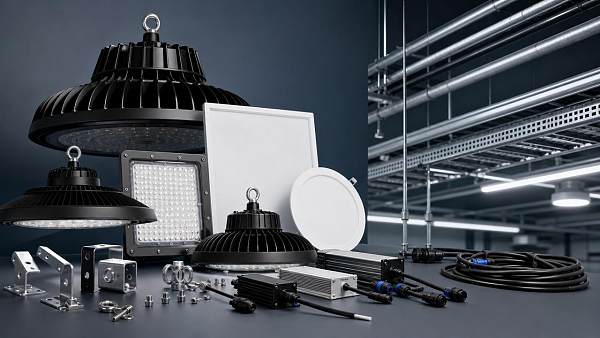
At the first review stage, lighting price is usually driven by fixture type, output level, material quality, and supplier positioning.
A basic office downlight and a sealed industrial high bay may both provide illumination, but their cost structure is very different.
More obvious cost signals include lumen package, efficacy, housing grade, driver quality, optical design, and control compatibility.
Brand reputation also affects lighting price, especially where warranty claims, failure rates, and certification history matter.
From a procurement angle, the lowest quoted number rarely reflects the lowest total acquisition cost.
Typical cost layers inside one fixture
- LED chips and boards influence output stability, efficiency, and lifetime.
- Drivers affect dimming performance, surge protection, and field failure risk.
- Heat sinks and housings shape thermal control and durability.
- Lenses, reflectors, and diffusers change beam quality and material spend.
- Certifications add cost, but often reduce compliance and liability exposure.
Material Costs Behind Lighting Price
Material cost is the most visible part of lighting price, yet it is also one of the most volatile.
Aluminum, copper, steel, plastics, electronic components, and packaging all move with commodity cycles and supply availability.
Recently, the stronger signal has been on electronic inputs rather than only metal costs.
Drivers, sensors, control modules, and semiconductors can quickly shift lead times and change the final lighting price.
This also means that spec upgrades can create hidden budget pressure even when the fixture body looks unchanged.
High-impact material factors
- Aluminum content rises in high-performance thermal designs.
- Copper use increases with stronger wiring and higher driver demands.
- Polycarbonate and glass choices affect impact resistance and optics.
- Sensor-ready designs add electronics and connector complexity.
- Corrosion-resistant coatings matter in outdoor or wastewater environments.
For large tenders, it helps to separate base fixture cost from premium options such as smart controls, emergency backup, or custom mounting kits.
That makes lighting price comparisons cleaner and prevents suppliers from hiding margin inside bundled specifications.
Labor Cost and Regional Pricing Pressure
Labor shapes lighting price in two ways: factory labor inside the product and field labor during installation.
Factory labor depends on assembly complexity, testing standards, and the manufacturing region.
A sealed fixture with integrated controls needs more assembly steps than a simple indoor panel.
Higher inspection requirements also raise lighting price, especially for projects tied to strict reliability expectations.
In actual sourcing work, the cheaper origin is not always cheaper after freight, duties, and quality controls are added.
Why labor rates vary so much
- Manual assembly is still common in many lighting categories.
- Burn-in testing and inspection add handling time.
- Waterproof and hazardous-area fixtures require tighter process control.
- Customization raises labor content through shorter production runs.
- Packaging for export can increase handling and protection steps.
A careful lighting price review should therefore include manufacturing geography, factory capability, and expected quality escape rate.
Installation Costs Often Change the Real Budget
Installation cost is where many budget assumptions fail.
A competitive lighting price on paper can lose its advantage if the fixture takes longer to mount, wire, aim, or commission.
Ceiling height, access equipment, shutdown windows, and local code requirements all influence labor hours in the field.
Retrofit projects usually cost more to install than new-build work because existing wiring and mounting conditions are less predictable.
This is especially true in factories, warehouses, transport hubs, and municipal infrastructure sites.
Common installation cost drivers
- Mounting height and lift equipment needs.
- New conduit, junction boxes, or rewiring work.
- Control system setup, addressing, and testing.
- Weatherproofing, sealing, or vibration protection.
- Off-hours work to avoid production downtime.
When comparing bids, request installed cost per point, not just fixture cost per unit.
That single change often reveals the true lighting price difference between similar-looking offers.
A Practical Lighting Price Comparison Table
This kind of side-by-side view keeps lighting price analysis grounded in operational reality rather than headline quotes.
Compliance, Controls, and Hidden Adders
Many projects underestimate how much compliance and controls can move lighting price.
Emergency drivers, motion sensors, daylight harvesting, DALI, and wireless control layers all raise hardware and commissioning costs.
The same applies to IP-rated fixtures, anti-corrosion finishes, or products built for high vibration environments.
These upgrades may be essential, but they should be priced separately for better negotiation and scope control.
In other words, the real lighting price should always reflect the operating environment, not only the fixture family.
Questions worth asking suppliers
- What certifications are included in the quoted lighting price?
- Are controls factory-installed or field-added?
- Which accessories are mandatory for warranty compliance?
- What is the failure-rate data for drivers and sensors?
- How does lead time change with custom options?
How to Reduce Lighting Price Risk Without Buying Blind
The best cost strategy is not simply to push unit pricing down.
A stronger approach is to control specification clarity, supplier comparability, and field execution risk.
That is where a disciplined lighting price process creates measurable savings.
- Define required performance before collecting quotes.
- Separate fixture, controls, accessories, and installation lines.
- Request lifecycle metrics, not only initial lighting price.
- Check regional code and mounting conditions early.
- Validate warranty terms against actual operating hours.
- Benchmark vendors on lead time, defect rates, and service response.
For multi-site programs, standardizing approved fixture families can also stabilize lighting price and simplify spare inventory planning.
This is often more valuable than chasing the lowest short-term quote on each site separately.
Final Takeaway on Lighting Price
A reliable lighting price decision comes from seeing the full stack: materials, factory labor, installation effort, compliance, and long-term operating cost.
Once those layers are visible, quote comparisons become clearer and negotiation becomes more effective.
In real projects, the winning option is rarely the cheapest fixture.
It is the one that balances lighting price, installability, compliance, and predictable lifecycle value.
Use that lens in your next sourcing round, and the budget discussion becomes far more precise, practical, and defensible.

The Archive Newsletter
Critical industrial intelligence delivered every Tuesday. Peer-reviewed summaries of the week's most impactful logistics and market shifts.