Monday, May 22, 2024

Wholesale Prefab Space Capsule: Key Cost Drivers Before Bulk Orders
by
Published
Views:
Why do bulk quotes for wholesale prefab space capsule projects vary so much?
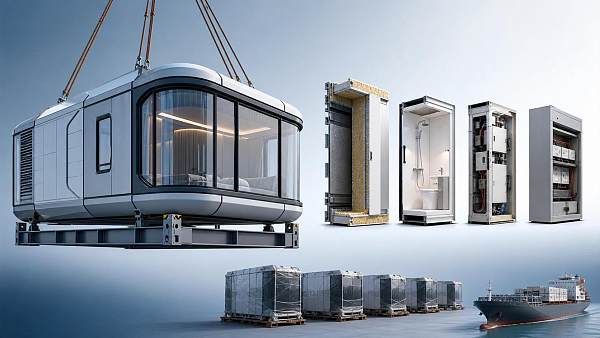
Price gaps usually come from structure, not from simple markup differences.
When reviewing a wholesale prefab space capsule offer, the visible unit price is only one layer.
The larger issue is total landed cost, including engineering changes, packaging, freight, permits, and after-sales obligations.
In practice, two capsules may look similar in photos yet differ sharply in steel grade, insulation system, wiring safety, and bathroom module quality.
That is why early quote comparison often creates false confidence.
A more reliable approach is to break the wholesale prefab space capsule cost into component groups and review each one against the intended deployment scenario.
This matters even more for cross-border sourcing, where climate conditions, local code requirements, and transport constraints can reshape the budget.
Platforms such as Global Industrial Matrix often frame this kind of decision through technical benchmarking, not sales language.
That cross-sector view helps buyers judge whether a low quote is truly efficient or simply under-scoped.
Which cost drivers matter most before placing a large order?
The biggest cost drivers usually sit upstream, long before the first unit is shipped.
Materials are the obvious starting point.
Frame thickness, corrosion treatment, glazing specification, and insulation density can swing price significantly across a wholesale prefab space capsule program.
Then comes modular engineering.
A standard shell is cheaper, but once layouts, plumbing routes, HVAC capacity, smart controls, or off-grid functions are adjusted, tooling and labor costs rise.
Interior fit-out is another major variable.
Bathroom pods, integrated lighting, fire-rated panels, and hospitality-grade finishes are not interchangeable line items.
Lead time also affects price.
Compressed production windows often require overtime, priority procurement, or parallel assembly lines.
The table below helps separate the most common quote drivers from the questions worth asking.
If a quote seems unusually low, one of these items is often missing, simplified, or shifted to the buyer side.
How do design choices change the real cost of a wholesale prefab space capsule?
Design decisions affect both purchase cost and operational cost.
For example, panoramic curved glass improves visual appeal, but it can increase breakage risk, thermal load, and replacement expense.
The same goes for capsule geometry.
A signature exterior shape may require more complex framing, finishing, and packaging than a simpler modular shell.
In colder or humid environments, insulation and vapor control become serious budget items, not optional upgrades.
A wholesale prefab space capsule intended for tourism, field accommodation, or temporary infrastructure may need different thermal and electrical priorities.
This is where technical benchmarking adds value.
GIM’s broader manufacturing perspective is useful because capsule sourcing does not happen in isolation.
Material performance, electronic controls, environmental loads, and serviceability all interact, much like in automotive cabins or smart agri-tech housings.
A practical review should include the following points:
- Whether the shell design supports easy maintenance and part replacement.
- Whether glazing and insulation match the climate, not only the showroom sample.
- Whether integrated systems use standard components or proprietary parts.
- Whether aesthetic upgrades create hidden transport or installation penalties.
More often than not, the cheapest design on paper becomes the expensive one after deployment.
Are logistics, compliance, and installation where budgets usually slip?
Yes, and this is one of the most common blind spots.
A wholesale prefab space capsule may leave the factory at a competitive price, then lose that advantage through difficult transport or incomplete compliance paperwork.
Oversized dimensions can limit container efficiency or force special shipping arrangements.
Site conditions matter as well.
If road access is narrow, or if cranes need extra mobilization, the delivered cost rises quickly.
Compliance is less visible, but just as important.
Electrical certification, fire resistance documentation, wastewater design, and local occupancy rules may differ by country or region.
Without this alignment, imported units can stall at customs or require expensive retrofits.
A quick pre-order checklist usually saves more than a late-stage price negotiation.
- Confirm packed dimensions, gross weight, and loading method for each unit.
- Request a document list covering electrical, structural, and fire compliance.
- Check whether foundations, hookups, and drainage are included or excluded.
- Verify installation support, commissioning scope, and defect response times.
These questions are not administrative details.
They shape the real economics of a wholesale prefab space capsule program.
What separates a dependable supplier from a risky low-price option?
The answer usually appears in process discipline rather than in brochure language.
A reliable source for wholesale prefab space capsule orders should provide traceable bills of materials, stable quality records, and clear version control for drawings.
It should also show how engineering changes are handled after sample approval.
In actual sourcing cycles, risk often comes from three patterns:
- The factory substitutes components without documented approval.
- The sample unit is stronger than the mass-production configuration.
- After-sales support exists in theory, but not in parts inventory or response capability.
This is why comparative supplier evaluation should include technical evidence, not only price ranking.
A cross-industry intelligence approach, similar to what GIM promotes, is especially useful here.
Factories that perform well under recognized quality frameworks often manage modular housing projects more consistently too.
When reviewing offers, it helps to ask for:
- Inspection checkpoints during frame, interior, and final assembly stages.
- Material certificates for key structural and electrical components.
- Packaging standards for sea freight and long-distance inland delivery.
- Warranty boundaries, spare part lead times, and remote support procedures.
A low number is easy to compare.
A low-risk number takes more work, but usually protects the project better.
How should you compare quotes and decide when to move forward?
The best comparison method is to normalize every quote against the same technical and commercial checklist.
Without that, a wholesale prefab space capsule comparison becomes misleading because each supplier defines scope differently.
Instead of asking only for a better price, ask for a cleaner cost map.
That means separating ex-works value, packaging, freight assumptions, compliance documents, installation support, and optional systems.
A simple judgment table can make discussions more objective.
Before confirming a wholesale prefab space capsule order, it is worth running one final review across use case, climate, compliance, and serviceability.
That final step often reveals whether the project is priced for smooth delivery or for later negotiation.
A solid next move is to build a comparison sheet, lock the must-have specifications, and test every supplier response against the same assumptions.
That is usually the clearest path to a bulk order decision with fewer surprises and better long-term cost control.

The Archive Newsletter
Critical industrial intelligence delivered every Tuesday. Peer-reviewed summaries of the week's most impactful logistics and market shifts.