Monday, May 22, 2024

Choosing a Plastic Injection Molds Manufacturer for Tight Tolerances
by
Published
Views:
Choosing the right plastic injection molds manufacturer is critical when tight tolerances affect fit, sealing, motion, and downstream yield. In cross-industry programs, the decision influences tooling life, compliance alignment, and supply continuity. A capable partner must prove precision, process discipline, and benchmarking transparency across demanding production environments.
When Tight Tolerance Requirements Change the Supplier Decision
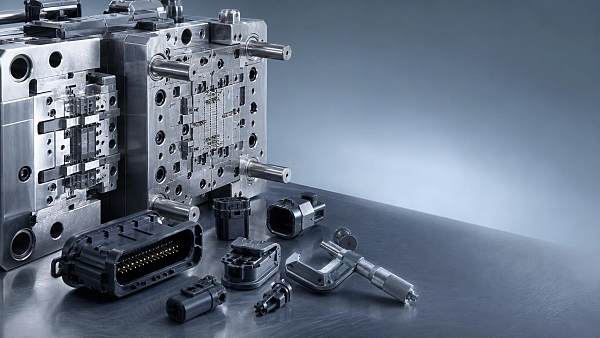
Not every precision project needs the same tooling strategy. A plastic injection molds manufacturer suitable for cosmetic housings may struggle with valve seats, connector interfaces, or multi-cavity medical-style geometries.
Tolerance demands shift with part size, resin behavior, insert complexity, and inspection methods. The best selection process starts by linking the application scene to dimensional risk, not by comparing quoted tool cost alone.
This is where a benchmarking mindset matters. Global Industrial Matrix emphasizes cross-sector evaluation because precision tooling performance often depends on lessons borrowed from electronics, mobility, filtration, and engineered infrastructure.
Scenario 1: Electronics and Connector Parts Need Repeatable Micro-Features
Fine-pitch components, sensor carriers, and connector bodies demand more than nominal cavity accuracy. They require stable shrink control, polished steel surfaces, balanced filling, and strong mold maintenance discipline.
In this scene, a plastic injection molds manufacturer should demonstrate capability in thin-wall filling, gate design for delicate features, and dimensional studies across multiple production runs, not only during first article approval.
What to verify in this scene
- CMM or vision system data for pin arrays and slot geometry
- Moldflow support for weld line and air trap prediction
- Tool steel selection for wear-sensitive micro-features
- Cavity balance evidence for family or multi-cavity tools
Scenario 2: Automotive and Mobility Programs Need Dimensional Stability at Scale
Automotive clips, sensor brackets, fluid interfaces, and EV support parts face cyclic loads, temperature swings, and traceability expectations. Here, tight tolerances are tied to long-term consistency, not just initial mold acceptance.
A reliable plastic injection molds manufacturer for mobility programs should understand PPAP-style documentation, process capability tracking, resin lot variation, and fixture-based inspection for assembly-critical dimensions.
Programs with insert molding or overmolding add another layer of complexity. Tooling alignment, insert retention, and thermal distortion must be managed from mold design through serial production validation.
Core judgment points
- Capability to hold tolerances after tool maintenance cycles
- Experience with glass-filled engineering resins
- Documented cavity pressure or process window controls
- Corrective action speed for dimensional drift
Scenario 3: Environmental and Fluid Handling Parts Need Sealing Accuracy
Filtration modules, manifold housings, dosing parts, and water system components often fail because flatness, concentricity, or mating dimensions move outside sealing limits. The tolerance question becomes a leakage risk question.
In this case, the best plastic injection molds manufacturer must show practical experience with warpage control, rib design, cooling layout, and post-molding conditioning for moisture-sensitive materials.
Tool qualification should include functional leak or pressure testing when geometry alone cannot represent true field performance. Dimensional conformance without sealing validation is often misleading.
Scenario 4: Agri-Tech and Outdoor Equipment Need Tolerance Plus Durability
Smart agriculture devices and outdoor enclosures operate under UV exposure, dust, vibration, and seasonal temperature variation. Tight tolerances still matter, but material movement over time matters just as much.
A qualified plastic injection molds manufacturer should evaluate creep, assembly retention, and environmental aging. This is especially important for snap fits, covers, sensor mounts, and irrigation control components.
Scene-based selection here means checking whether the supplier can connect tooling precision with material stabilization, weathering performance, and realistic product life conditions.
How Application Scenes Change the Requirements
The same drawing tolerance can mean different process risks in different sectors. The table below shows how a plastic injection molds manufacturer should be judged according to application context.
What a Strong Plastic Injection Molds Manufacturer Should Demonstrate
A credible plastic injection molds manufacturer should show a system, not isolated machine capability. Tight tolerance success comes from design review, steel quality, machining precision, molding discipline, and metrology closure.
Essential technical signals
- DFM feedback that challenges unrealistic tolerances early
- Tolerance stack-up understanding at assembly level
- Documented mold trials under stable process windows
- Measurement systems matched to feature scale
- Preventive maintenance tied to critical dimensions
Cross-disciplinary platforms such as GIM add value by comparing supplier readiness against standards and adjacent-industry expectations. That perspective helps identify whether apparent tooling competence can withstand complex global production demands.
Scene-Based Selection Advice for Better Fit
Use a structured screening method before nomination. It helps narrow the right plastic injection molds manufacturer according to tolerance sensitivity, annual volume, material class, and validation burden.
- If geometry is micro-scale, prioritize metrology depth over machine count.
- If production is high-volume, prioritize drift control and maintenance records.
- If sealing matters, require functional validation alongside dimensional reports.
- If outdoor exposure matters, connect tolerance review with aging performance.
- If multi-region sourcing is planned, verify documentation consistency across sites.
Common Misjudgments When Evaluating Tight Tolerance Suppliers
One common mistake is treating quoted mold tolerance as guaranteed part tolerance. Real outcomes depend on resin behavior, cooling balance, process repeatability, and inspection correlation.
Another mistake is relying on a successful sample run without checking sustained capability. A plastic injection molds manufacturer may hit target dimensions briefly yet lose control after longer production cycles.
A third issue is ignoring application transfer risk. A supplier experienced in consumer housings may not be ready for connector alignment, fluid sealing, or reinforced resin wear conditions.
Finally, many reviews underweight data transparency. Without process history, inspection repeatability, and deviation response evidence, tolerance claims remain difficult to trust at industrial scale.
Next-Step Actions for Confident Supplier Shortlisting
Build the shortlist around actual use conditions. Request scene-relevant case evidence, capability studies, mold maintenance logic, and dimensional control plans from each plastic injection molds manufacturer.
Then compare suppliers using the same technical matrix: tolerance class, resin family, cavity strategy, validation method, and control response time. This improves decision quality and reduces hidden launch risk.
For organizations managing global sourcing complexity, GIM’s cross-sector benchmarking approach helps connect precision tooling evaluation with broader supply resilience, standards alignment, and operational integrity.
When tight tolerances define product success, the right plastic injection molds manufacturer is the one that proves repeatability in your real application scene, not just capability on paper.

The Archive Newsletter
Critical industrial intelligence delivered every Tuesday. Peer-reviewed summaries of the week's most impactful logistics and market shifts.