Monday, May 22, 2024

Plastic injection molds wear out faster than expected for these reasons
by
Published
Views:
Plastic injection molds often fail sooner than planned due to material fatigue, poor cooling design, abrasive resins, weak maintenance routines, and gaps in ISO standards control. For buyers, engineers, and quality teams working across electronic components, automotive technology, and precision manufacturing with CNC milling machines, understanding these wear drivers is essential to reducing downtime, protecting tooling investment, and improving production consistency.
In multi-sector manufacturing, mold wear is rarely caused by one single defect. It usually develops through a chain of design, process, material, and maintenance decisions that gradually reduce dimensional accuracy, surface finish, and cycle stability. For procurement teams and project leaders, this means that a mold quoted for 500,000 shots may begin producing quality drift much earlier if operating conditions were underestimated.
This article explains why plastic injection molds wear out faster than expected, how the root causes vary across electronics, automotive, environmental equipment, and precision tooling applications, and what practical controls can reduce wear-related losses. It is written for technical evaluators, plant users, sourcing managers, quality personnel, and decision-makers who need reliable, cross-functional guidance before approving tooling budgets or production transfers.
Why mold life expectations often fail in real production
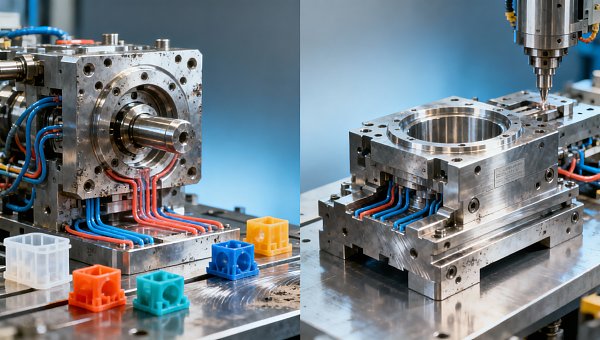
Mold life is frequently estimated under ideal laboratory assumptions, but shop-floor conditions are more demanding. A tool designed for 300,000 to 1,000,000 cycles may encounter unplanned stress from higher clamp force, inconsistent resin drying, frequent material changes, and faster-than-safe cycle times. Even a 10% increase in injection pressure can accelerate gate erosion, flash formation, and parting line wear.
In electronics and semiconductor-related plastic components, small tolerances often make wear visible earlier than in larger industrial parts. A cavity shift of only 0.01 mm to 0.03 mm can affect connector alignment, wall thickness, or sealing performance. In automotive housings and sensor covers, repeated thermal cycling may create localized fatigue at slides, lifters, and shut-off areas long before the mold reaches its theoretical shot count.
Another common issue is the disconnect between purchasing criteria and operating reality. If sourcing focuses only on upfront mold cost, the team may accept lower-grade steel, limited venting, or simplified cooling channels. These decisions can reduce initial capital outlay by 8% to 15%, but they may raise maintenance frequency, scrap rate, and line stoppage costs over the next 12 to 24 months.
The gap between quoted mold life and effective mold life
Quoted mold life usually reflects a design benchmark. Effective mold life reflects what the mold can deliver while maintaining acceptable dimensions, surface quality, cycle time, and reject rate. A mold may still run after 500,000 cycles, but if polish loss, sticking, and burr formation start at 180,000 cycles, the commercially useful life is already much shorter.
This distinction is critical in cross-industry procurement. For consumer-facing parts, surface defects become a problem earlier. For technical parts such as EV battery connectors, fluid control housings, or smart agri-sensor casings, even moderate wear can lead to fitment errors, leak risk, or assembly interruptions.
Key contributors often missed at approval stage
- Resin abrasiveness from glass fiber, mineral filler, flame retardant additives, or recycled content above 15%.
- Cooling imbalance causing one cavity zone to run 8°C to 20°C hotter than the rest of the mold.
- Insufficient venting, which increases gas burn marks and local pressure spikes at end-of-fill areas.
- Maintenance intervals based on calendar time instead of actual cycle count, resin type, and defect trend.
The main technical reasons plastic injection molds wear out faster
The fastest wear mechanisms usually combine mechanical abrasion, thermal fatigue, corrosion, and impact loading. Abrasive engineering plastics such as glass-filled nylon, PBT, PPS, and flame-retardant compounds can rapidly wear gates, runners, nozzles, and cavity edges. If the mold steel and heat treatment are not matched to the resin, wear becomes visible after tens of thousands of cycles rather than hundreds of thousands.
Poor cooling design is another major factor. When coolant channels are too far from hotspots, or when channel diameter and flow rate are undersized, mold surfaces experience repeated expansion and contraction. Over time, this thermal stress can cause microcracking, surface checking, and dimensional instability. In multi-cavity molds, uneven cooling also causes cavity imbalance, making some cavities wear 20% to 40% faster than others.
Corrosive gases from PVC, some flame-retardant systems, or moisture-related degradation can attack vents and polished surfaces. If purge discipline is poor or shutdown protection is skipped, rust and chemical attack begin at vulnerable corners, inserts, and ejector passages. This is especially relevant for plants with high ambient humidity above 60% or with irregular production scheduling.
Machining quality also matters. A mold built on CNC milling machines with insufficient surface finishing, weak concentricity control, or residual stress left after aggressive machining may fail earlier in moving areas. Slides, core pins, ejector sleeves, and shut-off faces are sensitive to micron-level alignment errors, especially in parts with thin walls below 1.5 mm or deep ribs with high aspect ratios.
Wear modes and their usual triggers
The table below shows common mold wear mechanisms, where they appear, and the production conditions that usually accelerate failure. It helps technical teams identify whether the primary issue is material-related, design-related, or maintenance-related.
For many factories, wear is not hidden; it is just misclassified. A recurring flash issue may be treated as a press setup problem when the real cause is shut-off wear. A rising reject rate on a six-cavity tool may be blamed on raw material variation when two cavities are actually running hotter and degrading faster. Cross-functional diagnosis reduces these errors.
High-risk scenarios across industries
- Automotive clips, connectors, and housings molded with 30% to 50% glass-filled resin.
- Electronics parts requiring SPI-equivalent surface consistency and tight cosmetic appearance.
- Industrial filtration or fluid-system plastics exposed to aggressive additives and repetitive pressure cycles.
- Short-run programs with frequent color and resin changes that increase contamination and cleaning risk.
How design, process settings, and standards control affect durability
Mold wear is often treated as a maintenance problem, but many failures start in design review and process setup. Cooling channel layout, vent depth, steel selection, draft angle, gate design, ejection balance, and surface treatment all determine how the tool will age. A well-built mold can still degrade early if process windows are too aggressive or if changeover teams run outside validated settings.
For example, increasing melt temperature by 15°C to improve fill in a difficult geometry may help short-term output, but it can also speed resin degradation and corrosive gas formation. Raising holding pressure to compensate for sink marks may improve appearance at first, yet it can intensify cavity stress and parting line wear. In high-volume production, these small adjustments compound quickly over 50,000 to 100,000 cycles.
Standards control also matters. ISO-based documentation, process traceability, and tool maintenance records reduce variation between shifts, suppliers, and sites. When maintenance logs are incomplete, spare insert tolerances are not standardized, or cooling circuit checks are not verified, the same mold can perform very differently across facilities. This is a major supply chain risk for global programs transferring tools between regions.
Design and process checkpoints that extend mold life
Before approving a new tool or a transfer tool, teams should assess not just part geometry but also the operating envelope. The checklist below can be used in supplier audits, new tooling approval, and technical benchmarking across electronics, mobility, and industrial equipment programs.
A consistent standards framework does not eliminate wear, but it makes wear predictable and manageable. This is especially important for procurement officers and finance approvers who need to compare tooling quotes beyond purchase price. Better records allow teams to estimate total cost of ownership, maintenance labor, spare insert consumption, and downtime risk over the full production horizon.
Practical process controls worth standardizing
- Document a validated start-up recipe with upper and lower limits for melt temperature, mold temperature, fill time, and holding pressure.
- Track cavity-specific reject patterns every shift instead of only total tool reject rate.
- Measure coolant flow and outlet temperature during planned maintenance at least once per month for high-volume tools.
- Require visual inspection of gates, vents, slides, and polished surfaces before production restart after shutdowns longer than 72 hours.
What buyers, engineers, and quality teams should evaluate before sourcing or approving molds
A durable plastic injection mold is not defined by steel grade alone. Buyers and engineers should evaluate the full tool package: resin compatibility, projected annual volume, cavity count, maintenance access, spare strategy, dimensional capability, cooling performance, and the supplier’s ability to document inspection data. A low-cost tool for 80,000 parts per year may be appropriate, while the same construction can be risky for 800,000 parts per year.
Quality teams should ask how the mold will be monitored after launch. If the supplier provides no cavity wear map, no preventive maintenance schedule, and no recommended replacement intervals for wear components, the tool will be harder to manage during production ramp-up. In regulated or safety-sensitive applications, uncontrolled wear can create traceability problems, delayed approvals, and recurring customer complaints.
Distributors, agents, and project managers also benefit from a structured evaluation approach because they often bridge the gap between commercial and technical teams. They need clear questions to compare offers, identify hidden lifecycle costs, and avoid approving a tool that appears economical but generates excessive downtime after 6 to 9 months of production.
A practical sourcing and approval framework
The table below summarizes evaluation points that can be used in RFQ reviews, supplier onboarding, and internal approval meetings. It is especially useful when comparing molds for electronics housings, automotive components, fluid-control parts, and precision industrial plastics.
This kind of matrix helps organizations move from price-led sourcing to lifecycle-led sourcing. In many cases, the right question is not whether one mold costs 12% more than another, but whether it reduces unplanned downtime by 20 hours per quarter, extends useful life by 100,000 cycles, or lowers cavity-specific rejection by 1% to 2%. Those differences can outweigh the initial quote gap quickly.
Five questions to ask every mold supplier
- What resin family and filler percentage was the mold design benchmark based on?
- Which areas are expected wear points, and what spare parts should be stocked from day one?
- How often should vents, slides, and gates be inspected under normal production conditions?
- What process window limits should not be exceeded without revalidation?
- How is dimensional drift tracked across cavities over the first 30,000, 100,000, and 250,000 cycles?
Maintenance strategy, warning signs, and practical steps to extend mold life
Preventive maintenance is still one of the most cost-effective ways to slow mold wear, but it must be matched to actual operating conditions. A generic monthly inspection is often insufficient for high-speed production with abrasive resins, while daily full teardown is unnecessary for low-volume runs. The better approach is to define three layers of care: routine checks every shift, planned preventive maintenance by cycle count, and targeted refurbishment triggered by measured wear.
Early warning signs should be monitored before severe failure occurs. These include rising injection pressure, longer fill time, cavity-to-cavity weight variation, new burn marks, sticking ejectors, increased polish loss, and flash at previously stable shut-offs. Even a modest scrap increase from 0.8% to 1.6% can signal developing wear if material and machine conditions are unchanged.
Maintenance discipline also depends on documentation. Plants that record wear observations with cycle count, resin used, defect type, and corrective action typically diagnose failure patterns faster than plants relying only on operator memory. This helps project managers forecast spare needs, finance teams budget refurbishment, and quality teams decide whether a tool should continue running or be stopped for corrective work.
A workable mold-life protection routine
- At every shift start, verify coolant flow, ejector movement, visible vent condition, and any abnormal residue on cavity surfaces.
- Every 10,000 to 30,000 cycles, clean vents, inspect gates, check slide lubrication, and compare cavity-specific part weight or key dimensions.
- Every 50,000 to 100,000 cycles, inspect high-wear inserts, guide components, parting lines, and shut-off surfaces under magnification.
- After any resin change, especially to glass-filled or flame-retardant grades, review whether cleaning agents, temperatures, and startup procedure need adjustment.
- Before shutdowns longer than 72 hours, apply corrosion protection, dry coolant passages where needed, and document the restart checklist.
Common mistakes that shorten mold life
- Using one maintenance interval for all tools regardless of resin type, cavity count, or annual volume.
- Polishing cosmetic surfaces repeatedly without checking whether venting, ejection, or temperature imbalance is the true root cause.
- Replacing inserts after failure instead of planning replacement at a measurable wear threshold.
- Ignoring machine-side contributors such as nozzle alignment, clamp imbalance, or unstable hydraulic response.
For organizations managing tooling across multiple industries, a benchmarking approach is useful. Comparing mold wear behavior by resin class, machine tonnage, cycle time, and maintenance interval can identify patterns that are not obvious within one plant alone. This is where a platform such as Global Industrial Matrix can support benchmarking decisions, supplier comparison, and risk visibility across electronics, automotive, smart equipment, infrastructure plastics, and precision tooling programs.
FAQ for teams trying to reduce premature mold wear
How do I know whether wear is caused by resin or by bad mold design?
Start by mapping the wear location. If damage concentrates at gates, runners, and leading flow edges, abrasive resin is often a strong contributor. If damage clusters around hotspots, shut-offs, or vent-starved end-of-fill zones, design and cooling are more likely involved. In many factories, both causes exist together, so review material filler level, mold temperature balance, and cavity-specific defect history over at least 3 production runs.
What maintenance frequency is typical for injection molds?
There is no single correct interval. For moderate-volume tools molding unfilled commodity resin, light inspection may be adequate every 20,000 to 50,000 cycles. For glass-filled or flame-retardant engineering plastics, vent cleaning and wear checks may be needed every 10,000 to 30,000 cycles. Critical automotive or electronics molds often use a layered approach with daily checks, cycle-based PM, and milestone refurbishment.
Are higher-cost molds always better long term?
Not always. A more expensive mold only creates value if the design, material selection, cooling, documentation, and maintenance support are aligned with the production program. For low annual volume and non-abrasive resin, a simpler tool may be commercially reasonable. For multi-cavity, high-volume, tight-tolerance applications, underbuilt tooling usually becomes more expensive after downtime, scrap, and repair are considered.
What should procurement teams ask for in a mold quotation?
Request the expected operating conditions behind the life estimate, the resin benchmark, planned wear components, spare recommendations, cooling concept, vent access details, and preventive maintenance guidance. Ask whether the mold life assumes 1 shift, 2 shifts, or 24/7 production, because annual cycle exposure changes wear rate significantly. These details create a more realistic basis for technical and financial approval.
Plastic injection molds wear out faster than expected when design assumptions, resin behavior, process settings, and maintenance discipline are not aligned with real production demands. For buyers, engineers, quality teams, and decision-makers, the most effective response is to evaluate mold life as a total operating system rather than a standalone tooling purchase. Better cooling analysis, resin-specific controls, cycle-based maintenance, and standards-driven documentation can protect both output and capital investment.
If your organization needs a clearer way to benchmark tooling risk across electronics, automotive, industrial equipment, and precision manufacturing, Global Industrial Matrix can help you compare technical variables, supplier assumptions, and lifecycle implications with greater confidence. Contact us to discuss your tooling challenges, request a tailored evaluation framework, or explore broader manufacturing intelligence solutions.

The Archive Newsletter
Critical industrial intelligence delivered every Tuesday. Peer-reviewed summaries of the week's most impactful logistics and market shifts.