Monday, May 22, 2024

Bank Hostage Incident in Sinzig Disrupts Air Freight for CNC Tools & Molds
by
Published
Views:
On May 8, 2026, a bank hostage incident in Sinzig, Rhineland-Palatinate (Germany), triggered temporary regional traffic controls and enhanced aviation security protocols—including reinforced X-ray screening of high-value industrial cargo at Frankfurt Airport’s freight zone. As Rhineland-Palatinate serves as one of Europe’s largest distribution hubs for industrial tooling and precision cutting tools, the disruption is expected to delay air shipments of CNC machining tools, plastic injection molds, and related tooling insights from China to European customers by 2–4 business days. Exporters, logistics coordinators, and procurement teams in precision manufacturing supply chains should treat this as an operational signal—not just a local incident.
Event Overview
On May 8, 2026, a bank hostage situation occurred in Sinzig, a municipality in Germany’s Rhineland-Palatinate state. In response, German authorities implemented localized traffic restrictions and elevated airport cargo screening standards—particularly for high-value industrial goods—at Frankfurt Airport’s air freight facilities. No further details on resolution timeline or extended policy duration have been officially confirmed.
Industries Affected by Segment
Direct Exporters (CNC Tools & Mold Manufacturers)
These enterprises ship finished tools and molds via air freight to meet time-sensitive European orders. The added X-ray reinspection at Frankfurt Airport directly extends cargo processing time, increasing the risk of missed delivery windows for JIT-dependent clients.
Industrial Procurement Teams (Automotive, Medical Device, Consumer Electronics)
Buyers sourcing precision tooling from China rely on predictable air transit times for production planning. A 2–4-day delay may compress lead time buffers—especially where molds are needed for new product launches or line retooling cycles.
Logistics & Forwarding Providers (Air Cargo Specialists)
Firms managing end-to-end air freight for industrial goods face increased coordination complexity: revised customs clearance timelines, tighter documentation requirements for high-value consignments, and potential rerouting decisions if Frankfurt capacity becomes constrained.
Supply Chain Visibility Platforms & Tooling Data Services
Vendors offering real-time shipment tracking or tooling lifecycle analytics must now account for non-carrier-driven delays—e.g., regulatory hold times due to security upgrades. Their dashboards and alert logic may require short-term calibration to reflect this anomaly.
What Enterprises Should Monitor & Do Now
Track official updates from German federal transport and aviation authorities
Monitor announcements from the German Federal Ministry for Digital and Transport (BMDV) and the German Aviation Authority (Luftfahrt-Bundesamt) for formal duration or scope adjustments to the enhanced screening measures.
Flag high-priority consignments bound for Rhineland-Palatinate or Frankfurt handling
Identify shipments containing CNC machining tools, plastic injection molds, or tooling-related technical documentation scheduled for air arrival at Frankfurt between May 9–15, 2026—and proactively adjust internal delivery commitments accordingly.
Distribute verified logistics status alerts to EU-based customers
Communicate transparently using objective language (e.g., “Frankfurt Airport cargo screening elevated per local security protocol; +2–4 business days expected”) and include DHL/FedEx priority lane reservation confirmation numbers where available.
Pre-validate alternative routing options—even if not yet activated
Assess feasibility of secondary air gateways (e.g., Leipzig/Halle or Munich) for urgent consignments, noting that such alternatives may involve higher cost or reduced frequency for specialized industrial freight.
Editorial Perspective / Industry Observation
Observably, this incident functions less as an isolated security event and more as a stress test for just-in-time industrial logistics reliant on concentrated European air freight infrastructure. Analysis shows that Rhineland-Palatinate’s role as a mold and tooling hub amplifies ripple effects beyond Sinzig itself—making Frankfurt’s freight zone a critical chokepoint. From an industry perspective, the current impact is operational rather than structural: no policy change has been announced, and the delay window remains bounded (2–4 days). However, it highlights how localized incidents can propagate across global precision manufacturing supply chains when high-value, low-bulk industrial goods depend heavily on air cargo velocity. Current attention should focus on near-term execution—not systemic overhaul.
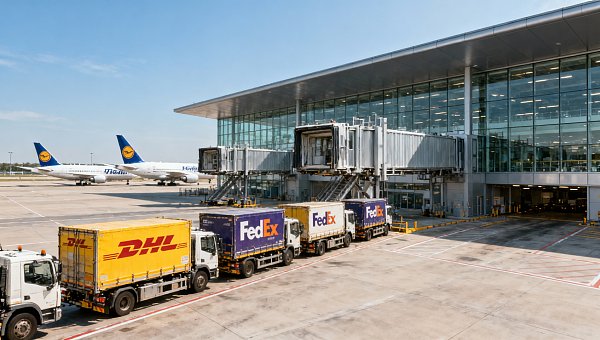
This incident underscores how physical security events intersect with industrial logistics performance metrics—particularly for sectors where tooling lead time directly influences production ramp-up schedules. It is best understood not as a long-term market shift, but as a short-duration operational variance requiring tactical responsiveness. Companies maintaining active trade flows between Asia and Central Europe should treat this as a reminder to embed flexibility into air freight planning—not only for capacity, but for regulatory contingency.
Source: Public safety advisories issued by Rhineland-Palatinate State Police and Frankfurt Airport Cargo Division (as of May 8, 2026). Ongoing monitoring advised for updates on screening protocol duration and regional traffic restoration status.

The Archive Newsletter
Critical industrial intelligence delivered every Tuesday. Peer-reviewed summaries of the week's most impactful logistics and market shifts.