Monday, May 22, 2024

CNC Cutting Equipment Selection Tips for Cleaner, Faster Cuts
by
Published
Views:
Choosing the right CNC cutting equipment can dramatically improve cut quality, reduce waste, and speed up production. For operators and shop-floor users, understanding how machine type, material compatibility, cutting precision, and maintenance needs affect performance is essential. This guide shares practical selection tips to help you achieve cleaner, faster cuts while improving daily efficiency and long-term reliability.
Why application context matters when selecting CNC cutting equipment
Many users compare CNC cutting equipment by speed, price, or advertised accuracy alone. In real production, however, cleaner and faster cuts depend on how well the machine fits the actual job: material type, sheet thickness, part complexity, shift intensity, dust conditions, operator skill level, and downstream quality expectations. A machine that performs well in one workshop may create excess burrs, heat distortion, or unplanned downtime in another.
This is especially important in cross-sector manufacturing environments such as electronics housings, automotive brackets, agricultural components, environmental infrastructure panels, and precision tooling parts. Operators are not only cutting material; they are protecting dimensional consistency, reducing scrap, and maintaining throughput for the next process. That is why CNC cutting equipment selection should always begin with the application scenario rather than the machine brochure.
For practical decision-making, think in three layers: what you cut every day, what quality standard the part must meet, and how hard the machine will be used per shift. Once these are clear, choices around laser, plasma, waterjet, router, or oxy-fuel systems become more rational and much easier to justify.
Typical production scenarios and what each one really needs
Different workshops use CNC cutting equipment for very different reasons. Some need ultra-clean edges for visible parts. Others need fast rough cutting on thick plate. Some run mixed materials in small batches, while others repeat the same profiles all day. Below is a scenario-based comparison to help operators and users judge fit more accurately.
The table shows an important principle: there is no single “best” CNC cutting equipment for all jobs. A clean cut is the result of matching process energy, machine rigidity, controls, and support systems to the actual production mix.
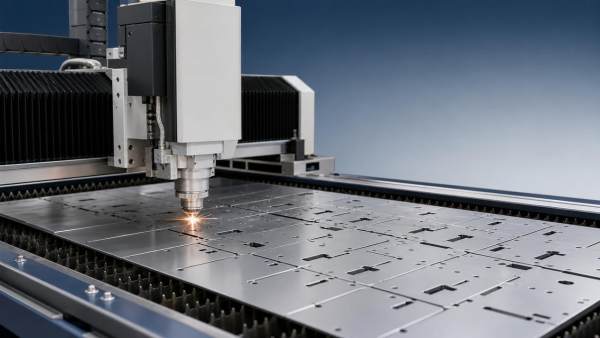
Scenario 1: When clean edge quality matters more than raw cutting speed
If you produce visible panels, precision covers, electrical cabinets, or close-tolerance components, edge quality should lead the buying decision. In these settings, operators usually spend more time correcting bad cuts than they would have spent on a slightly slower but cleaner machine. Rework from burrs, taper, dross, or edge burn can easily erase any nominal speed advantage.
For this scenario, look closely at beam stability, gantry motion accuracy, table flatness, vibration control, gas delivery, and software compensation. Fiber laser CNC cutting equipment is often the preferred choice for thin to medium metal because it supports fine features and narrow kerf widths. But the machine alone does not guarantee results. Operators should also verify nozzle condition, assist gas purity, focus control, and cut parameter libraries for stainless steel, mild steel, and aluminum.
A useful shop-floor test is to compare edge finish on corners, holes, and small slots rather than only on long straight cuts. Many machines can look good on simple profiles. The real difference appears when the geometry becomes demanding.
Scenario 2: When throughput and shift efficiency drive the decision
In job shops, automotive suppliers, and contract fabrication environments, the challenge is often not a single perfect cut but consistent output across many parts and repeated shifts. Here, CNC cutting equipment must support stable uptime, quick setup, and predictable cycle times. A machine with excellent cut quality but frequent stoppages will not satisfy production goals.
Users in this scenario should prioritize automation compatibility, nesting software, material handling, piercing speed, consumable life, and maintenance access. Operators benefit from intuitive HMIs, preset recipes, and alarms that identify nozzle wear, torch height issues, or coolant problems before scrap increases. Faster cuts are only meaningful if loading, unloading, and program switching are equally efficient.
For thicker carbon steel where ultra-fine finish is less critical, plasma CNC cutting equipment can deliver strong value. If the production line needs quick response and lower cost per cut, plasma may outperform more expensive systems. The key is to confirm whether downstream welding, grinding, or machining can absorb the resulting edge condition.
Scenario 3: Mixed materials and short runs require flexibility
Some facilities handle a rotating mix of plastics, light metals, composites, foam, insulation board, or gasket material. In these shops, flexibility matters more than maximizing one material category. The best CNC cutting equipment for this scenario often supports multiple tools or process heads, easy fixturing, and quick parameter changes.
Operators should ask practical questions: Will the machine switch efficiently between jobs? Can it hold thin or soft material flat? Does the software import common file formats cleanly? Is dust extraction adequate when cutting plastic or MDF? Can it maintain acceptable quality without long trial-and-error setup? In flexible production, ease of use becomes part of quality because every extra adjustment creates variation and delays.
For non-metal applications, a CNC router or knife system may be a better fit than metal-focused CNC cutting equipment. Choosing based only on the word “CNC” can lead to poor material handling, melted edges, or inefficient operating cost. Scenario fit always beats generic capability.
Scenario 4: Thick material, rugged environment, and demanding duty cycles
In heavy fabrication, agricultural equipment, structural frames, and infrastructure-related metalwork, ruggedness and thickness capacity often outweigh cosmetic finish. Here, users should evaluate frame strength, torch durability, table slat design, smoke extraction, and long-shift thermal stability. The wrong machine may cut acceptably during startup but lose consistency after several hours of heat and dust exposure.
For these environments, plasma or oxy-fuel CNC cutting equipment may be more practical than laser, especially when cutting very thick plate at lower cost. However, operators must plan for edge preparation, consumable replacement schedules, and safe fume control. A rugged machine with straightforward service access can be more valuable than a higher-spec model that is difficult to maintain under real workshop conditions.
How operators can judge the right fit before purchase or deployment
To select CNC cutting equipment wisely, operators should move beyond catalog claims and build a checklist around real part conditions. These factors usually reveal whether a machine will truly produce cleaner, faster cuts:
- Material range: exact grades, thickness spread, reflective surfaces, coatings, and heat sensitivity.
- Part geometry: hole size, corner sharpness, contour complexity, and tolerance expectations.
- Batch pattern: high-volume repetition, mixed-job flow, or prototype work.
- Operator workflow: setup time, programming skill, fixture changes, and maintenance discipline.
- Environment: dust, temperature variation, compressed air quality, and available utilities.
- Downstream process: welding, bending, coating, machining, or direct assembly.
If possible, request sample cuts using your own drawings and materials. A meaningful trial should include straight lines, tight radii, small holes, and production-like nesting. Measure not only dimensions but also edge finish, dross level, heat marks, and operator effort needed to keep quality stable.
Common selection mistakes in real application scenarios
One common mistake is buying CNC cutting equipment with far more power than the material mix requires. More power does not automatically mean cleaner cuts, especially on thin sheet where control and parameter stability matter more. Another mistake is ignoring support systems such as extraction, chiller capacity, gas supply, nesting software, and training. These are not accessories; they are part of cut performance.
Users also sometimes underestimate maintenance burden. A machine that looks productive on day one may become inconsistent if lens cleaning, torch alignment, filter replacement, or table cleaning are difficult. For operators, maintainability directly affects speed because unstable equipment forces slower settings and extra inspection.
Another frequent misjudgment is evaluating the machine without considering the operator’s actual experience level. Advanced CNC cutting equipment can deliver strong results, but only if the interface, diagnostics, and training are suitable for the team using it daily. In many shops, a simpler, better-supported system produces more reliable output than a feature-rich machine that few people can optimize.
A practical matching guide for cleaner, faster cuts
FAQ for users choosing CNC cutting equipment
Should I always choose laser CNC cutting equipment for the best quality?
Not always. Laser often delivers excellent edge quality on many metal applications, especially thin to medium sheet. But for thick plate, heat-sensitive non-metals, or budget-driven rough cutting, plasma, waterjet, router, or oxy-fuel may be more appropriate.
What matters most for faster cuts: machine power or workflow?
Workflow often matters more than users expect. Material handling, nesting, setup time, consumable condition, and maintenance response can affect daily throughput as much as machine power.
How can operators reduce poor cut quality after installation?
Use validated parameter libraries, inspect consumables regularly, keep support systems stable, and train operators to recognize early signs of misalignment, gas issues, vibration, or thermal drift. Good CNC cutting equipment still needs disciplined operation.
Final selection advice based on your real production scenario
The best CNC cutting equipment is not the most expensive or the most advanced on paper. It is the system that matches your materials, part geometry, quality standard, shift pattern, and operator capability with the fewest compromises. If your goal is cleaner cuts, prioritize precision, stability, and process control. If your goal is faster output, evaluate the entire workflow around the machine. If your production mix changes often, flexibility and ease of setup should be central to the decision.
For users and shop-floor teams, the smartest next step is to map your top three application scenarios, list the actual materials and thicknesses you cut most often, and compare CNC cutting equipment against those conditions instead of general claims. That scenario-based approach will help you reduce waste, improve cut consistency, and build a more reliable production process over time.

The Archive Newsletter
Critical industrial intelligence delivered every Tuesday. Peer-reviewed summaries of the week's most impactful logistics and market shifts.