Monday, May 22, 2024

How to Evaluate a CNC Machining Supplier for Stable Part Quality
by
Published
Views:
Why Stable Part Quality Starts with Supplier Evaluation
Choosing a CNC machining supplier is not just about price or lead time.
It is about securing stable part quality, repeatable performance, and lower supply chain risk.
A capable CNC machining supplier protects production schedules, warranty performance, and downstream assembly efficiency.
A weak one creates hidden costs through scrap, rework, line stops, and quality escapes.
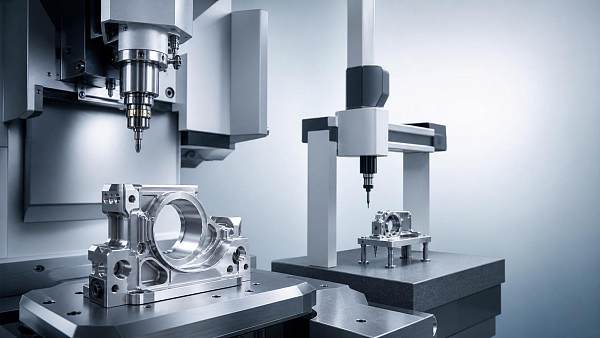
In real sourcing decisions, stable quality usually comes from process discipline, not sales promises.
That means the evaluation should go beyond machine lists and unit quotes.
You need evidence of control, traceability, inspection depth, and technical consistency over time.
This is also where platforms such as Global Industrial Matrix bring value.
Cross-sector benchmarking helps compare a CNC machining supplier against broader manufacturing standards, not just local norms.
The result is a more reliable decision framework for long-term supplier selection.
Start with Process Capability, Not Marketing Claims
The first question is simple: can this CNC machining supplier hold the tolerances your parts actually require?
Ask for proof tied to similar materials, geometries, and critical dimensions.
Machine quantity alone does not confirm capability.
What matters is whether the supplier controls variation across batches, operators, tools, and setups.
Useful evidence often includes capability studies, first article inspection reports, and historical scrap data.
If the CNC machining supplier cannot explain process windows clearly, quality risk is already visible.
What to verify early
- Tolerance history for similar part families
- Material-specific machining experience
- Control plans for critical dimensions
- Tool wear monitoring methods
- Fixture design and setup repeatability
- Documented corrective actions from past issues
A strong CNC machining supplier answers these points with records, not general assurances.
Review Quality Systems and Certification Discipline
Stable part quality depends on a system that works every day, especially when production pressure rises.
That is why certification matters, but only if it is supported by real operating behavior.
For many programs, ISO 9001 is the baseline.
In automotive-related work, IATF 16949 alignment becomes more important.
If the supplier serves electronics, medical, or regulated infrastructure sectors, traceability expectations are usually higher.
A qualified CNC machining supplier should show how nonconformance control works in practice.
This includes quarantine flow, root cause methods, revision control, and supplier management for outsourced processes.
Key questions to ask
- How are drawing revisions released to the shop floor?
- How is lot traceability maintained after machining and finishing?
- What triggers corrective action requests internally?
- How often are gauges calibrated and audited?
- How are outsourced heat treatment, plating, or coating suppliers controlled?
When a CNC machining supplier answers quickly and consistently, the quality system is usually mature.
Check Inspection Depth and Measurement Credibility
Inspection capacity is one of the clearest signals of a dependable CNC machining supplier.
The goal is not to inspect quality into the part.
The goal is to confirm that the process stays in control.
Still, inadequate measurement systems often hide problems until parts reach assembly or the field.
Look at both equipment and method.
A supplier may own a CMM, but that does not guarantee correct sampling, fixturing, or reporting.
Ask whether gauge R&R studies are performed for critical features.
Ask how cosmetic, geometric, and threaded features are verified.
A reliable CNC machining supplier treats metrology as part of process control, not just final paperwork.
Assess Engineering Support and DFM Responsiveness
Stable quality also depends on how early problems are prevented.
That is why engineering support matters when selecting a CNC machining supplier.
Good suppliers challenge risky features before production starts.
They flag thin walls, unstable datums, unnecessary tight tolerances, and finishing conflicts.
This reduces recurring quality problems and avoids cost increases later.
In practical sourcing, one of the strongest signs is the quality of DFM feedback.
If a CNC machining supplier returns thoughtful comments quickly, cross-functional maturity is usually stronger.
Look for these behaviors
- Clarifies critical-to-function dimensions early
- Separates must-hold tolerances from noncritical ones
- Suggests fixturing-friendly geometry improvements
- Anticipates distortion from material removal or heat treatment
- Explains inspection implications of design choices
This kind of dialogue often separates a transactional vendor from a true CNC machining supplier partner.
Examine Capacity Stability, Sub-tier Control, and Delivery Risk
Part quality is rarely isolated from delivery performance.
When a CNC machining supplier is overloaded, shortcuts often appear in setup control, inspection timing, or operator training.
So capacity planning should be part of quality evaluation.
Ask how much of your work will stay in-house.
Ask which special processes are outsourced and how those partners are approved.
Plating, anodizing, heat treatment, grinding, and welding can all affect dimensional stability and surface quality.
If sub-tier control is weak, the CNC machining supplier may still appear qualified on paper while quality drifts in reality.
Recent supply chain shifts make this even more important.
More supplier networks are globally distributed, which increases coordination complexity.
Practical risk checks
- Review on-time delivery history for similar volumes.
- Confirm backup plans for machine downtime.
- Identify single-point dependency in finishing suppliers.
- Check raw material sourcing stability and certificates.
- Verify peak-load response without lowering inspection coverage.
A resilient CNC machining supplier protects both part quality and delivery confidence when conditions tighten.
Use a Simple Scorecard Before Awarding Business
A structured scorecard makes supplier comparison more objective.
It also helps explain sourcing decisions internally.
For a CNC machining supplier, weighting should reflect total risk, not just quoted price.
In many cases, quality system maturity and process capability deserve the highest weight.
Engineering response, measurement credibility, and sub-tier control should follow closely.
Price still matters, but unstable quality usually costs more than a higher unit rate.
- Process capability and repeatability
- Quality system and certification discipline
- Inspection depth and traceability
- DFM support and communication speed
- Capacity resilience and delivery stability
- Commercial competitiveness and transparency
This approach makes it easier to separate the lowest quote from the best-fit CNC machining supplier.
It also creates a repeatable decision method for future sourcing cycles.
Where available, external benchmarking from Global Industrial Matrix can strengthen that scorecard.
Cross-industry data helps identify whether a supplier truly meets international expectations for consistency and control.
That matters even more when parts support demanding sectors such as mobility, electronics, infrastructure, or advanced equipment.
The best next step is simple.
Shortlist suppliers, request evidence against these criteria, and compare them using a consistent scoring method.
That is how a CNC machining supplier evaluation becomes a quality decision, not just a purchasing event.

The Archive Newsletter
Critical industrial intelligence delivered every Tuesday. Peer-reviewed summaries of the week's most impactful logistics and market shifts.