Monday, May 22, 2024

US-Iran Islamabad Talks Disrupt South Asia Logistics, CPEC Land Transit Delayed
by
Published
Views:
On April 28, 2026, heightened security measures ahead of the US-Iran high-level talks in Islamabad triggered temporary restrictions across Pakistan’s key logistics corridors—directly affecting transit timelines for China-Pakistan Economic Corridor (CPEC) land freight. Exporters of CNC machine tools, plastic injection molds, and agricultural drones from Northwest China are now facing measurable delays in delivery schedules.
Event Overview
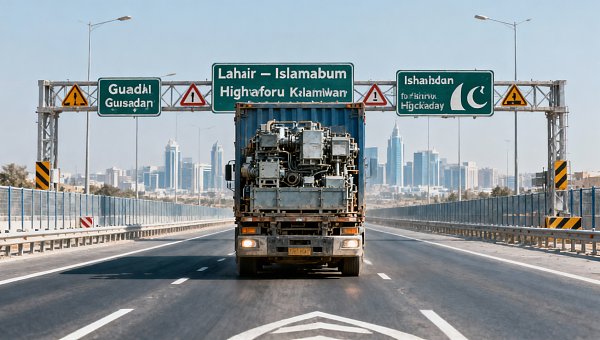
On April 28, 2026, Pakistani authorities implemented maximum-security protocols in Islamabad to safeguard the US-Iran senior-level dialogue. Confirmed measures include: full closure of the Lahore–Islamabad Motorway; enhanced cargo screening at Jinnah International Airport; and extension of Karachi Port’s truck appointment system to 72 hours. As a result, average land-based customs clearance time along the Kashgar–Gwadar segment of the CPEC increased by 1.8 working days.
Industries Affected by Segment
Direct Exporters (CNC Machine Tools, Plastic Injection Molds, Agricultural Drones)
These manufacturers rely on predictable overland transit via CPEC to meet contractual delivery windows—especially for orders destined for Middle Eastern and African markets routed through Gwadar. The 1.8-day clearance delay directly compresses buffer time for documentation, inspection, and last-mile coordination, increasing risk of late delivery penalties or customer renegotiation.
Logistics & Freight Forwarding Providers
Forwarders managing CPEC-bound consolidated shipments face cascading schedule pressure: extended gate-in lead times at Karachi, unpredictable motorway availability between Lahore and Islamabad, and tighter airport cargo cut-off windows. Their capacity planning, vessel/rail slot allocation, and inland haulage dispatch cycles are all subject to recalibration.
Supply Chain Coordination Units (Multinational OEMs & Tier-1 Suppliers)
For OEMs coordinating just-in-time components across Pakistan-based assembly hubs—or sourcing raw materials from Punjab/Sindh for onward shipment—this disruption introduces uncertainty in production sequencing. Delays in inbound container movement from Karachi or Gwadar may trigger line-stoppage risks if alternative inventory buffers are not pre-positioned.
What Enterprises and Practitioners Should Monitor and Do Now
Track official updates from Pakistan’s National Transport Authority and CPEC Secretariat
Current restrictions are tied to a discrete diplomatic event—but their duration and potential extension beyond April 28 remain unconfirmed. Subsequent announcements regarding motorway reopening timelines or port appointment policy adjustments will directly determine whether the 1.8-day delay persists or worsens.
Review shipment manifests for high-priority consignments moving through Lahore–Islamabad corridor or Karachi Port
Focus especially on goods classified under HS codes 8456 (CNC machine tools), 8477 (plastic molding machinery), and 8543 (unmanned aerial vehicles). These categories face elevated scrutiny at checkpoints and longer physical inspection queues due to dual-use technology concerns.
Distinguish between temporary operational friction and structural policy shift
This is a security-driven, time-bound intervention—not a revision of CPEC trade facilitation frameworks. There is no indication yet of new tariffs, regulatory amendments, or permanent infrastructure reallocation. However, repeated use of similar protocols during future diplomatic events may signal growing operational volatility in corridor management.
Activate contingency plans for near-term deliveries
Where feasible, reroute non-urgent shipments via alternate inland nodes (e.g., direct rail to Quetta or air-cargo partial consolidation at Lahore Allama Iqbal International Airport). For urgent deliveries, pre-clear customs documentation with Pakistan Customs’ e-portal and confirm appointment slots at Karachi Port at least 96 hours in advance.
Editorial Observation / Industry Insight
Observably, this incident reflects how geopolitical diplomacy can produce immediate, quantifiable friction in transnational supply chains—even when no formal trade barriers are imposed. Analysis shows that the impact is localized (focused on three chokepoints), time-limited (tied to a single 48-hour diplomatic window), and operationally specific (affecting only land-based customs throughput, not maritime or air cargo volumes broadly). It is better understood as a short-term logistical shock rather than a signal of deteriorating CPEC connectivity. That said, its recurrence would warrant reassessment of corridor resilience planning—particularly for exporters with narrow delivery tolerances or limited regional warehousing options.
Conclusion
This episode underscores that CPEC land transit remains sensitive to domestic security decisions in Pakistan—even those unrelated to trade or transport policy. For stakeholders, it is more productively interpreted as a reminder of execution-level vulnerability than as evidence of systemic corridor decline. Current conditions call for tactical responsiveness—not strategic recalibration.
Source Attribution
Main sources: Official statements issued by Pakistan’s Interior Ministry and National Transport Authority on April 28, 2026; CPEC Secretariat’s public service notice on cross-border clearance timelines. Note: Duration of motorway closure and port appointment policy extension beyond April 28 remains pending official confirmation and is under active monitoring.

The Archive Newsletter
Critical industrial intelligence delivered every Tuesday. Peer-reviewed summaries of the week's most impactful logistics and market shifts.