Monday, May 22, 2024

Guanghe Tech’s A+H Listing Elevates AI Server PCB Valuation
by
Published
Views:
On March 1, 2026, Guanghe Technology became the first printed circuit board (PCB) manufacturer in China to achieve dual listing on both mainland A-share and Hong Kong stock exchanges. This milestone reflects growing international investor recognition of China’s high-end PCB capacity—particularly in AI infrastructure applications—and signals evolving valuation criteria for suppliers embedded in global AI compute supply chains.
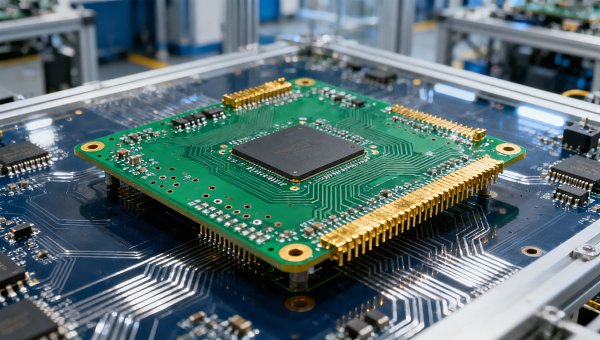
Guanghe Tech Completes Dual-Listing Milestone
In March 2026, Guanghe Technology completed its A+H dual listing, marking the first such achievement among Chinese PCB enterprises. Goldman Sachs assigned a ‘Buy’ rating to the company, citing its focused strategy on server-grade PCBs. Public disclosures confirm that Guanghe’s HDI and high-frequency/high-speed PCB orders now span the global supply chain for NVIDIA’s Rubin-architecture servers. Each GPU unit in these systems corresponds to USD 1,521 in PCB value supplied by Guanghe. The company now serves as a Tier-1 supplier offering high reliability and full traceability to overseas system integrators.
Implications Across Supply Chain Roles
Direct Exporters and Trading Enterprises
These entities face heightened scrutiny on compliance documentation, export classification (e.g., EAR99 vs. controlled items), and end-use verification—especially when supplying components integrated into AI accelerators. The growing reliance on Chinese Tier-1 PCB suppliers means trade documentation must explicitly support traceability and conformance to AI server OEM requirements.
Raw Material Procurement Firms
Suppliers of specialty laminates, low-Dk/Df prepregs, and ultra-low-profile copper foils may see increased demand—but also tighter qualification timelines. Buyers now prioritize materials pre-validated for NVIDIA Rubin architecture signal integrity and thermal cycling performance, requiring earlier technical alignment and joint qualification protocols.
PCB Fabrication and Assembly Manufacturers
Contract manufacturers serving AI server OEMs must demonstrate adherence to IPC-6012DS (for rigid high-speed boards) and IPC-A-600G Class 3 acceptance criteria. Process validation—including impedance control (±5%), microvia reliability, and solder mask-defined pad registration—has become a de facto entry requirement for Tier-1 sourcing lists.
Supply Chain Services Providers
Logistics, customs brokerage, and quality assurance firms must adapt to stricter lot-level traceability mandates. Integration with ERP and MES systems supporting real-time material genealogy (e.g., resin batch, copper foil lot, plating bath logs) is increasingly expected—not optional—for clients targeting AI infrastructure contracts.
Strategic Priorities for Suppliers and Integrators
Align Technical Specifications with Rubin Architecture Requirements
Suppliers must verify compatibility with NVIDIA’s published design guidelines for Rubin-based servers—including layer stack-up constraints, via-in-pad tolerance, and high-frequency loss budgets—rather than relying solely on generic HDI or high-speed certifications.
Strengthen Traceability Infrastructure
End-to-end digital traceability—from raw material receipt through final electrical test—is no longer a differentiator but a baseline expectation. System integrators now require serialized data packages including impedance reports, cross-section images, and thermal cycle test summaries per production lot.
Prepare for Enhanced Tier-1 Supplier Audits
With Guanghe’s listing, international OEMs are intensifying audits of second-tier suppliers (e.g., substrate providers, plating vendors). Documentation readiness—including process FMEAs, equipment calibration records, and change control logs—must extend beyond the PCB fabricator to upstream partners.
Industry Perspective: Beyond Valuation, Toward Validation
Analysis shows this milestone is less about market capitalization and more about systemic validation: Guanghe’s dual listing coincides with broader shifts in how AI infrastructure buyers assess supplier maturity. What deserves closer attention is the tightening linkage between financial transparency (e.g., audited ESG disclosures, revenue segmentation by application) and technical credibility (e.g., participation in OCP or OpenRack working groups, co-development with GPU OEMs). Observably, certification alone—such as ISO 9001 or IATF 16949—is no longer sufficient; instead, functional validation against live AI workload profiles is becoming a decisive factor in supplier selection.
What This Signals for the Broader Ecosystem
This development underscores a structural shift: Chinese high-end PCB capacity is no longer viewed as cost-competitive alternative supply, but as an integral, specification-critical node in global AI compute deployment. Its significance lies not in displacing incumbents, but in expanding the pool of qualified, scalable, and auditable sources—thereby improving supply resilience without compromising on signal integrity or thermal reliability standards.
Source Attribution and Monitoring Guidance
This article is based exclusively on the provided title, event date (2026-03-01), and summary text. Specific official source links were not provided in the input and should be verified continuously. Stakeholders are advised to monitor upcoming updates to IPC standards related to AI server interconnects (e.g., IPC-2226C revision drafts), NVIDIA’s updated supply chain compliance bulletins, and regulatory guidance from Hong Kong Exchanges and Clearing Limited (HKEX) regarding ESG reporting expectations for newly listed tech hardware firms.

The Archive Newsletter
Critical industrial intelligence delivered every Tuesday. Peer-reviewed summaries of the week's most impactful logistics and market shifts.