Monday, May 22, 2024

Agri-Drone Technology: What to Compare Before You Invest
by
Published
Views:
Investing in agri-drone technology requires more than comparing flight time or price. For procurement teams, the real value lies in benchmarking payload capacity, spraying precision, software integration, compliance standards, maintenance demands, and supplier reliability. This guide outlines the key factors to compare before you invest, helping buyers reduce operational risk and make data-driven purchasing decisions in a fast-evolving agricultural landscape.
For most buyers, the core search intent behind this topic is practical and commercial: they want to know how to compare agricultural drones before purchase, which specifications materially affect field performance, and how to avoid investing in a platform that looks impressive on paper but underperforms in real operations. Procurement teams are usually not looking for a basic explanation of what drones are. They are looking for a defensible evaluation framework.
That means the most useful article is not a generic overview of drone trends. It should help readers answer five immediate questions: Which performance metrics matter most? What hidden costs affect total ownership? Which standards, software, and service capabilities should be verified? How should different use cases change the buying criteria? And how can procurement reduce supplier and deployment risk before signing a contract?
In short, if you are buying for a farm operator, agribusiness, cooperative, service contractor, or integrated smart agriculture program, the best investment decision comes from comparing operational fit, data compatibility, supportability, and compliance—not just hardware price. That is where durable value is created.
Start with the procurement question: what problem is the drone supposed to solve?
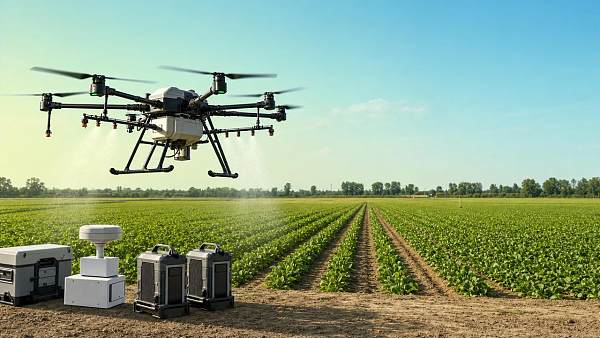
Before comparing models, procurement teams should define the actual operational objective. Agricultural drones are used for different tasks, including crop spraying, spreading, seeding, field mapping, crop health analysis, irrigation assessment, and infrastructure inspection. A drone that performs well in one scenario may be inefficient in another.
For example, a spraying drone for large-scale row crops should be evaluated differently from a multispectral mapping drone for high-value orchards or vineyards. In spraying applications, payload, droplet consistency, tank refill efficiency, and route stability often matter more than camera resolution. In mapping applications, sensor quality, georeferencing accuracy, software export formats, and analytics compatibility become far more important.
Procurement mistakes often happen when teams buy around headline specifications rather than operational workflows. A 40-minute flight claim may not mean much if the actual spray cycle is limited by tank size, battery swap time, or local wind conditions. Likewise, a low-cost drone may appear attractive until training gaps, spare part delays, and poor software integration increase downtime.
So the first comparison point is simple: define the job to be done, then compare only the systems designed to do that job consistently and compliantly.
Compare payload, coverage rate, and real field productivity—not brochure numbers
One of the most important factors in agri-drone technology procurement is true field productivity. Vendors often highlight maximum payload or ideal-area coverage per hour, but these figures can be misleading unless procurement teams ask how those numbers were derived.
Payload capacity directly affects the number of refill cycles and the efficiency of spraying or spreading operations. However, a larger payload also increases demands on motors, batteries, structural durability, and landing stability. Buyers should compare not only maximum payload, but also recommended payload under normal operating conditions, especially in heat, humidity, elevation, or moderate wind.
Coverage rate should be validated under realistic assumptions. Ask suppliers for output metrics based on actual crop type, nozzle configuration, swath width, application rate, terrain complexity, and pilot workflow. A drone that covers more hectares per hour in open flat land may perform much less efficiently in irregular fields, terraced farms, or obstacle-dense environments.
Battery logistics are also central to productivity. Compare charging time, number of batteries required per operational shift, battery cycle life, cooling requirements, transport safety, and replacement cost. In many cases, field throughput is constrained more by energy management than by aircraft speed.
Procurement should also review refill and turnaround procedures. Fast-swap tanks, easy-clean fluid systems, and rapid battery exchange can create more value than modest gains in top speed. Over a full season, these workflow efficiencies can significantly improve asset utilization.
Evaluate spraying precision, application quality, and agronomic consistency
For spraying drones, precision is often a more important buying criterion than raw size. Procurement teams should compare how accurately the drone delivers chemicals, nutrients, or biologicals to the target zone. Poor precision increases input waste, reduces treatment effectiveness, and can introduce compliance and environmental risks.
Key technical variables include nozzle type, droplet size control, spray pressure stability, flow rate modulation, anti-drift performance, altitude control, and route-following accuracy. The right setup depends on crop type and application chemistry. Fine droplets may improve certain coverage needs, but they can also increase drift risk in open environments.
Terrain-following capability is especially important in uneven farmland, orchards, and variable-canopy conditions. A drone with advanced radar, lidar, or vision-assisted positioning may maintain more consistent spray height than a lower-cost platform relying on simpler navigation inputs. That consistency translates into more uniform application quality.
Buyers should ask suppliers for field validation data, not only laboratory claims. Look for documented performance under different wind conditions, crop densities, and application rates. If possible, request demonstration runs or third-party results showing deposition quality, overlap control, and drift mitigation outcomes.
For procurement teams, the key question is not “How advanced is the drone?” but “How repeatably does it deliver the intended agronomic result?” That is the metric that protects both operational ROI and downstream crop outcomes.
Software integration may matter as much as the aircraft itself
Many drone purchases underperform because software requirements were underestimated. In modern agricultural operations, the drone is not an isolated asset. It is part of a broader digital workflow that may include farm management platforms, GIS systems, prescription maps, agronomic reporting tools, maintenance dashboards, and regulatory recordkeeping.
Procurement teams should compare mission planning software, data export compatibility, API availability, cloud synchronization, fleet management tools, user permissions, and offline functionality. If the drone cannot easily integrate with existing digital systems, data value is lost and operational friction rises.
For mapping and crop analysis applications, sensor data interoperability is critical. Check whether outputs support standard geospatial formats and whether analytics can be transferred into existing precision agriculture platforms. For spraying applications, ensure the software can handle variable-rate missions, route optimization, obstacle mapping, and job documentation.
Ease of use also matters. A technically powerful platform may still fail adoption if the interface is difficult for field operators to use under time pressure. Procurement should evaluate how many steps are required to create missions, import field boundaries, generate reports, and update firmware. Training burden is a hidden cost with real operational consequences.
Cybersecurity and data governance should not be ignored, especially for larger enterprises or cross-border agricultural programs. Buyers should confirm where data is stored, who owns it, how access is controlled, and whether software updates are reliable and traceable.
Compliance, certification, and local operating rules can change the buying decision
Agricultural drone procurement is not only a technical decision. It is also a regulatory one. Compliance requirements vary by country and region, and they may affect permissible payload, pilot licensing, spraying operations, airspace usage, chemical handling, and recordkeeping.
Before investing, buyers should verify whether the platform meets relevant local aviation requirements and whether the supplier can support documentation for registration, training, and legal operation. A drone that is technically attractive but difficult to certify or deploy in your jurisdiction may create costly delays.
For spraying platforms, procurement should also assess chemical compatibility, tank material resistance, sealing reliability, and safe handling features. Environmental compliance increasingly matters, especially where runoff, drift, and application traceability are regulated. A system with better auditability and application logging may be preferable even if its upfront price is higher.
Industrial buyers should also look for quality assurance discipline from the supplier. While the drone industry does not align to a single universal benchmark for every feature, buyers can still examine manufacturing consistency, component traceability, battery safety protocols, firmware control processes, and maintenance documentation. These indicators are strong proxies for supplier maturity.
In other words, compliance should be treated as a selection filter, not a post-purchase problem to solve later.
Benchmark maintenance demands, spare parts access, and service network depth
For procurement teams, one of the biggest differentiators between vendors is not the aircraft’s launch-day performance, but what happens after six months of field use. Agricultural environments are harsh. Dust, moisture, chemicals, vibration, transport handling, and repetitive duty cycles all affect reliability.
That is why maintenance requirements deserve close comparison. Ask how often critical parts need replacement, what preventive maintenance schedule is recommended, which components are field-serviceable, and what skills are required to perform routine upkeep. A lower-maintenance platform can generate substantial lifecycle savings.
Spare parts availability is equally important. Compare lead times for batteries, pumps, propellers, sensors, landing gear, controllers, and nozzles. If the supplier relies on a fragile cross-border spare parts chain, downtime risk rises sharply during peak season. Procurement should favor vendors with regional inventory support or clearly defined service-level commitments.
Service infrastructure matters too. Does the supplier offer local technicians, remote diagnostics, repair turnaround guarantees, and operator training? Is there escalation support for software failures during active season use? Can firmware updates be rolled back if a deployment issue appears? These are practical questions that often separate mature suppliers from opportunistic sellers.
Total cost of ownership must include planned maintenance, unplanned repairs, consumables, software subscriptions, battery replacement, transport equipment, operator certification, and training refresh cycles. Purchase price alone is not a meaningful procurement benchmark.
Assess supplier reliability, not just product specifications
In fast-moving categories like agri-drone technology, supplier stability is a strategic procurement concern. A product may look competitive today, but if the manufacturer cannot support firmware updates, replacement parts, training continuity, or product roadmap consistency, the long-term risk is high.
Procurement teams should evaluate the supplier’s installed base, customer references, financial resilience, regional partner network, technical support model, and evidence of sustained product development. A strong supplier should be able to explain not only what the drone does now, but how the platform will remain supportable over time.
It is also wise to compare documentation quality. Reliable vendors typically provide detailed manuals, maintenance procedures, training materials, safety guidelines, and specification transparency. Poor or vague documentation is often a warning sign that support quality will be inconsistent later.
If possible, request a pilot program or structured field trial before full deployment. This allows procurement to validate operational claims, training time, workflow fit, and service responsiveness in real conditions. For larger purchases, a phased deployment reduces risk and provides evidence for scaling decisions.
Supplier evaluation should include commercial terms as well. Review warranty scope, excluded failure modes, software licensing conditions, response times, and upgrade paths. A lower bid may become less attractive if contract terms transfer too much operational risk to the buyer.
Build a use-case-based comparison matrix before issuing the final purchase decision
The most effective way to compare agricultural drones is to use a weighted scorecard aligned to your intended application. This helps procurement teams avoid emotional decisions based on marketing claims or isolated demonstrations.
A practical comparison matrix should include at least these categories: intended use case fit, payload and throughput, spraying or sensing accuracy, battery and charging ecosystem, software compatibility, compliance readiness, maintenance burden, spare parts access, supplier support, operator training needs, and total cost of ownership.
Each category should be weighted according to operational priorities. For example, a commercial spraying service provider may assign the highest weight to uptime, turnaround speed, and field productivity. A plantation operator focused on crop health analytics may prioritize sensor quality, data interoperability, and mapping precision.
It is also useful to include scenario-based scoring. How does the drone perform in high-temperature conditions? What happens if connectivity is unstable? Can missions continue during minor GNSS challenges or irregular terrain? How quickly can the system return to service after a pump or battery issue? Scenario testing reveals risk that static specifications cannot show.
This structured approach is especially valuable for organizations managing multiple sites, multiple operators, or multinational sourcing decisions. It creates a defensible procurement process and improves alignment between technical evaluators, operations teams, and finance stakeholders.
Conclusion: the best agri-drone investment is the one that reduces operational uncertainty
For procurement teams, the right investment in agri-drone technology is rarely the cheapest unit or the model with the most impressive marketing sheet. The better choice is the platform that fits the intended use case, performs consistently in real field conditions, integrates into existing workflows, meets compliance requirements, and can be supported across its full service life.
When comparing options, focus on the factors that truly affect outcomes: field productivity, application precision, software interoperability, maintenance demands, service support, and supplier reliability. These are the variables that determine whether a drone becomes a productive agricultural asset or a recurring operational problem.
In a market evolving as quickly as agricultural automation, disciplined benchmarking is the procurement advantage. Buyers who compare beyond price and headline specs will be better positioned to control risk, support field teams, and capture the long-term value that drone-enabled agriculture can deliver.
The Archive Newsletter
Critical industrial intelligence delivered every Tuesday. Peer-reviewed summaries of the week's most impactful logistics and market shifts.