Monday, May 22, 2024

How to Evaluate an Agricultural Drones Supplier in 2026
by
Published
Views:
Choosing the right agricultural drones supplier in 2026 requires more than comparing prices or product catalogs. Procurement teams must assess technical compliance, data reliability, after-sales support, and supply chain resilience to reduce operational risk and secure long-term value. This guide outlines the key criteria buyers should use to evaluate suppliers in a rapidly evolving agri-tech market.
For procurement officers, the supplier decision now affects far more than unit cost. It influences field uptime, spray accuracy, spare-part availability, software continuity, operator training, and the ability to scale across multiple farms or regions.
In 2026, agricultural drone purchasing sits at the intersection of agri-tech, electronics, battery systems, environmental compliance, and digital infrastructure. That cross-sector complexity is why buyers need a structured method to evaluate any agricultural drones supplier before issuing contracts.
Why Supplier Evaluation Has Become More Demanding in 2026
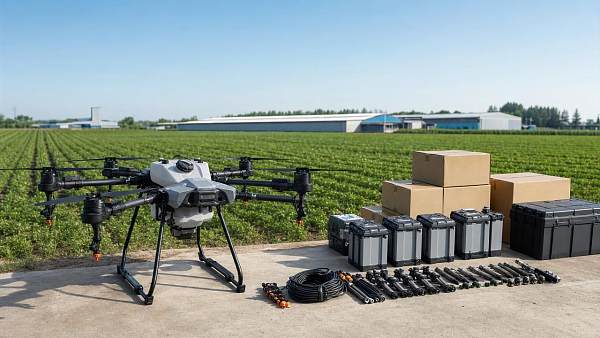
The modern agricultural drone is no longer a simple flying device with a spray tank. Most platforms now combine navigation modules, terrain-following sensors, flight control software, battery management systems, cloud-based mission planning, and precision application hardware in one procurement package.
That means supplier quality must be evaluated across at least 5 dimensions: hardware reliability, agronomic suitability, software usability, service responsiveness, and supply continuity. A weakness in any one of these areas can increase downtime by days, not hours, during peak spraying or seeding windows.
Procurement risks that matter most
Buyers often focus first on payload and price, but hidden risk usually appears later. Common failure points include delayed batteries, incompatible spare parts, weak calibration procedures, limited pilot training, and unclear warranty coverage for motors, pumps, radar modules, or flight controllers.
For large farming operations, even a 48-hour interruption can disrupt coverage plans across hundreds of hectares. In contract spraying environments, poor supplier support can also create missed service commitments and higher labor redeployment costs.
What has changed since earlier buying cycles
Compared with the 2022–2024 period, 2026 purchasing decisions are shaped more strongly by data governance, remote diagnostics, firmware update policies, and battery lifecycle economics. Buyers are also paying closer attention to whether a supplier can support operations across 2–3 growing seasons without major platform discontinuity.
An effective agricultural drones supplier should therefore be treated as a technical partner, not only a vendor. This is especially relevant for procurement teams managing multi-site fleets, dealer networks, or cross-border agricultural deployment.
Core Criteria to Evaluate an Agricultural Drones Supplier
A practical evaluation model helps procurement teams compare suppliers consistently. The table below summarizes the main checkpoints that should appear in RFQs, supplier audits, and technical review meetings before commercial negotiation begins.
The key takeaway is that a qualified agricultural drones supplier must perform well across both product and operational categories. A strong payload specification alone is not enough if service response, software support, or replacement logistics are weak.
1. Technical fit for real agricultural use
Procurement teams should match drone capability to actual field conditions rather than brochure claims. Important parameters include payload class, droplet distribution control, terrain-following stability, tank refill workflow, and endurance under temperature ranges commonly seen in outdoor farm operations.
For example, a platform designed for flat, open fields may perform poorly in orchards, terraced land, or small fragmented plots. Ask the supplier to define the recommended operating scenario in measurable terms, such as hectare coverage per hour, refill frequency, obstacle environment, and wind tolerance range.
Technical questions buyers should ask
- What payload classes are available, and how does performance change at full load?
- What is the typical battery cycle life before noticeable runtime loss?
- Can the spraying or spreading system be calibrated in the field within 15–30 minutes?
- Which components are modular and replaceable at operator level?
- What software functions remain available offline if rural connectivity is unstable?
2. Documentation, standards, and traceability
A reliable agricultural drones supplier should provide consistent technical files, not fragmented marketing PDFs. Buyers should request product specifications, battery handling instructions, maintenance schedules, packing information, firmware version control practice, and traceability for major components.
For international procurement, traceability matters because agricultural drones involve electronics, power systems, and application hardware that may be subject to different import, transport, or environmental handling requirements. Missing documentation often leads to customs delay, service confusion, or warranty disputes later.
3. Software stability and data ownership
In 2026, software is a core part of supplier evaluation. If mission planning, route history, prescription application, or maintenance alerts sit inside a closed platform, the buyer needs clarity on access rights, backup options, and export formats.
Ask whether field data can be exported in standard formats, whether firmware updates require downtime, and whether older batteries or airframes remain supported after new releases. A useful benchmark is whether the supplier publishes a support lifecycle of at least 12 months for current firmware branches.
How to Assess Manufacturing Strength and Supply Chain Resilience
For procurement teams, supplier resilience is often the difference between a successful rollout and a season of delays. Agricultural drone supply chains depend on motors, controllers, batteries, pumps, GNSS modules, sensors, plastics, and packaging. A disruption in 1 or 2 critical parts can stop delivery entirely.
That is why buyers should move beyond simple origin questions and evaluate production planning, quality control discipline, and post-sale parts support with the same rigor used in other industrial categories.
Factory and quality review points
When screening an agricultural drones supplier, ask how incoming components are checked, how final assembly is tested, and how field failures are fed back into design improvement. The best suppliers can explain their inspection flow in 3–5 stages, from incoming QC to final functional verification.
Procurement teams should also look for consistency in batch labeling, serial tracking, packaging discipline, and repair reporting. These are not cosmetic issues. They indicate whether the supplier can maintain repeatable quality at scale.
The table below helps buyers compare operational resilience factors that directly affect delivery reliability and fleet continuity after purchase.
If a supplier cannot clearly answer these operational questions, the procurement risk is high even when the equipment looks competitive. Buyers should treat vague delivery and parts language as an early warning signal.
Signs of a more resilient supplier
- Lead times are communicated in standard and peak-season versions, such as 2–4 weeks versus 5–8 weeks.
- Critical spares are identified in advance instead of only after a service issue occurs.
- Battery replacement planning is documented by cycle range, storage rules, and transport method.
- Warranty handling includes clear escalation steps and turnaround targets.
- Software and hardware revisions are tracked so fleet compatibility remains visible.
After-Sales Support, Training, and Total Cost of Ownership
The best agricultural drones supplier is not always the one with the lowest acquisition cost. For procurement teams, total cost of ownership includes batteries, chargers, wear parts, software subscriptions, maintenance labor, training, and downtime exposure over 12–36 months.
A supplier with stronger support can reduce hidden operating cost even if the purchase price is higher. This is particularly true for first-time fleet deployment or expansion into precision spraying, spreading, or mapping workflows.
Service model checkpoints
Ask how faults are handled at 3 levels: remote diagnosis, local repair, and factory escalation. A mature supplier should define which failures can be solved by the operator, which require technician involvement, and which require replacement modules or return handling.
Training is equally important. Buyers should request a structured onboarding plan covering assembly checks, battery safety, route planning, calibration, and daily maintenance. Even a 1-day basic course can reduce early misuse, but larger fleets may require 2–3 stages of technical training.
Hidden cost drivers to review before signing
- Battery replacement interval and storage loss over time
- Nozzle, pump, or spreader wear frequency during intensive use
- Software fees for fleet management or cloud analytics
- Cost and lead time for spare arms, landing gear, controllers, or radar modules
- Expected maintenance hours per 100 flight hours
Common procurement mistakes
One common mistake is buying the aircraft only and underestimating the support ecosystem. Another is failing to validate whether the agricultural drones supplier has enough batteries, chargers, and spare pumps to sustain full-day operations in peak periods.
A third mistake is ignoring software lock-in. If field data, maintenance logs, and mission records cannot be migrated, switching suppliers later may become expensive and operationally disruptive.
A Practical Supplier Selection Process for Procurement Teams
To make supplier comparison more objective, procurement teams should use a staged decision process. This helps align technical, operational, and commercial priorities while reducing the chance of overvaluing one impressive feature.
Recommended 6-step evaluation path
- Define use case by crop type, acreage range, terrain profile, and spraying or spreading task.
- Issue an RFQ with technical, service, software, and logistics requirements.
- Review documentation and shortlist 2–4 suppliers for deeper comparison.
- Run a pilot or demo focused on field workflow, calibration time, and operator usability.
- Score lifecycle cost, lead time, warranty terms, and spare-part readiness.
- Finalize supply agreement with service KPIs, training scope, and support contacts.
What to include in the final negotiation
Commercial negotiation should not stop at unit discounts. Include parts pricing, replacement lead times, training coverage, software support term, and escalation windows for critical failures. For multi-unit orders, also discuss phased delivery schedules and buffer stock planning.
Where possible, define acceptance criteria in writing. Examples include accessory completeness, flight readiness checks, battery condition on arrival, and response expectations for the first 90 days after commissioning.
How GIM-style benchmarking supports better decisions
Because agricultural drones integrate electronics, power systems, precision application hardware, and environmental operating demands, procurement benefits from cross-sector benchmarking. A technical intelligence approach helps buyers compare not just vendor claims, but the system-level reliability behind those claims.
This matters when evaluating an agricultural drones supplier across manufacturing discipline, component traceability, compliance readiness, and long-term operational support. The more complex the fleet and the broader the deployment geography, the more valuable that structured comparison becomes.
Final Buying Guidance for 2026
A strong agricultural drones supplier in 2026 should demonstrate technical clarity, stable documentation, service capability, and realistic delivery planning. Procurement teams should verify not only aircraft performance, but also batteries, software continuity, training, spare parts, and support response.
For buyers managing agricultural modernization, contract spraying, or multi-site deployment, the right supplier choice creates measurable value through lower downtime, better field consistency, and more predictable lifecycle cost. If you need a structured benchmark for supplier screening, technical comparison, or procurement planning, contact GIM to get a tailored evaluation framework and explore more agri-tech sourcing solutions.
The Archive Newsletter
Critical industrial intelligence delivered every Tuesday. Peer-reviewed summaries of the week's most impactful logistics and market shifts.